


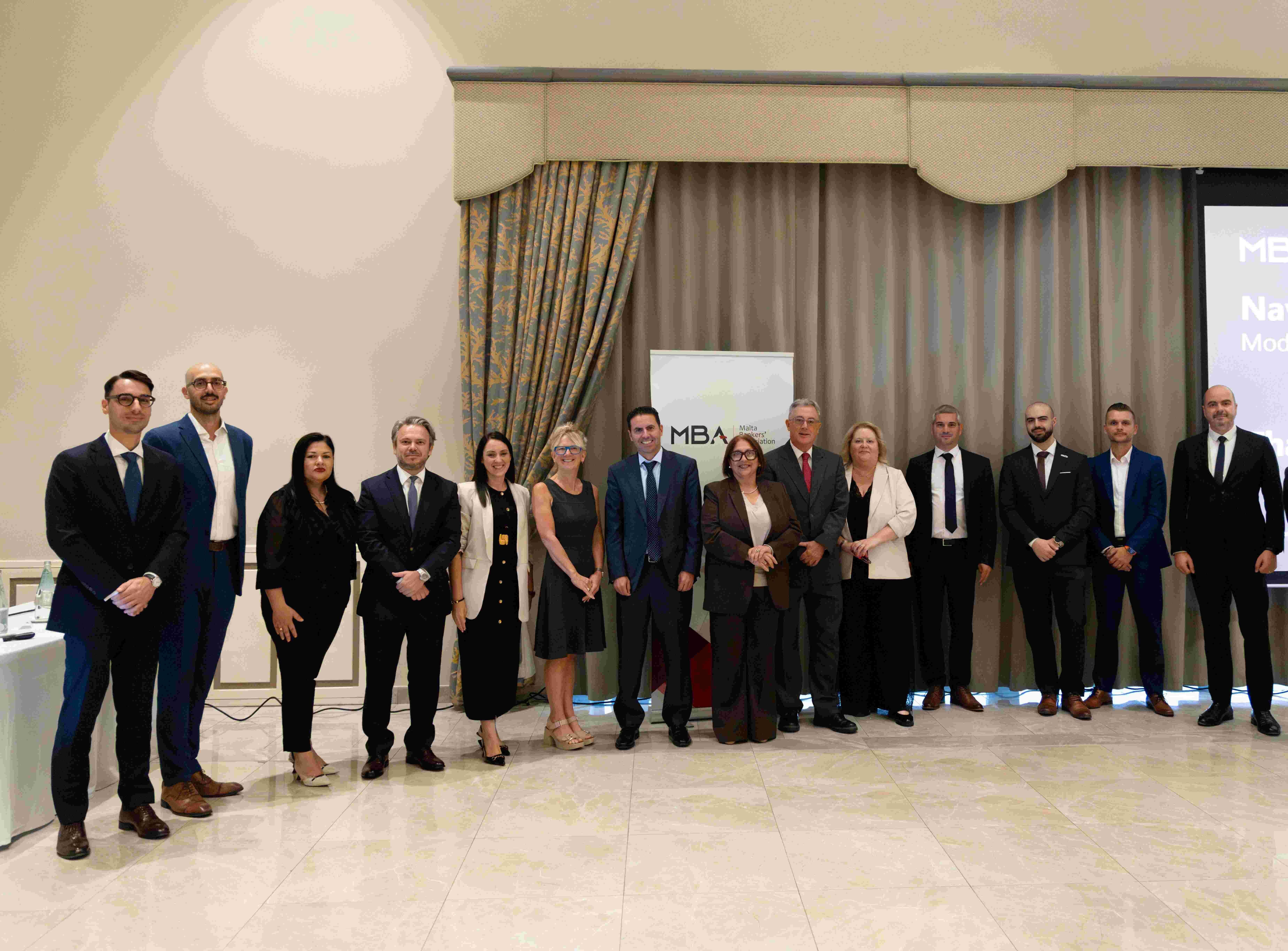
Financial institutions are facing an increasingly complex threat landscape as artificial intelligence, geopolitical tensions, sanctions and regulatory changes transform the way financial crime is carried out and detected, industry representatives have warned.
The challenges were discussed at a Malta Bankers’ Association (MBA) conference organised in collaboration with EY Malta on 29th September, attended by financial services representatives, regulators, academics and other stakeholders.
Held under the theme Navigating Complexity: Modern Defences against Financial Crime, the event addressed sanctions evasion, proliferation financing, anti-money laundering (AML) controls, human trafficking and the opportunities and risks associated with artificial intelligence.
MBA Chair Kenneth Farrugia said the financial crime environment has changed considerably over the past two decades.
A previously more straightforward transaction-processing environment has evolved to include advanced transaction-monitoring systems, more extensive controls and regulatory requirements, as well as increasingly sophisticated criminal methods.
Geopolitical tensions have further complicated the situation, particularly through the introduction and enforcement of international sanctions.
Mr Farrugia argued that the consequences extend beyond individual financial institutions, with failures in preventing financial crime potentially carrying wider reputational and economic implications for a jurisdiction.
“Our responsibility is not only to protect our respective organisations. Our responsibility extends itself to the national dimension,” he said.
He consequently called for cooperation between banks and other financial institutions, regulators, enforcement authorities and other stakeholders rather than institutions addressing the risks independently.
Cynthia Borg, Chair of the MBA's Financial, Cyber Crime & Fraud Standing Committee, meanwhile highlighted regulatory transformation, geopolitical volatility and AI as major forces reshaping the work of financial crime compliance professionals.
According to Ms Borg, institutions increasingly need to anticipate emerging risks rather than simply react to developments as they occur.
A recurring theme during the conference was the need for financial institutions to move beyond a “tick-box” approach to financial crime compliance and assess whether controls are effective in practice.
Changes to the European regulatory framework were also discussed, including the role of the EU's Anti-Money Laundering Authority (AMLA) and the implementation of new AML requirements.
The discussions also examined the financial sector's potential role in identifying financial activity linked to human trafficking.
Artificial intelligence featured from both sides of the risk equation, with participants considering the opportunities the technology could offer financial institutions alongside questions surrounding risk, accountability and oversight.
The programme included contributions from George Grech of GREX Strategies, Michael Stellini of Stellini Advisors, Ruth Dearnley from NGO Stop the Traffik, Dr Dylan Seychell from the University of Malta, Neil Micallef from the Malta Digital Innovation Authority and Manuel Delgado from EY Spain.
Representatives from the Financial Intelligence Analysis Unit (FIAU), Malta Financial Services Authority (MFSA) and MBA member banks also participated in panel discussions.
Closing the conference, MBA Secretary General Karol Gabarretta said the range of threats discussed pointed towards a common requirement for cooperation between financial institutions, regulators, supervisors and enforcement authorities, alongside technology experts, academia and civil society.
“Our task now is to translate today’s insights into stronger cooperation, more effective application of controls and enhanced oversight, ultimately leading to greater protection for our institutions, our customers and society in general,” he said.
The conference forms part of the MBA's work to facilitate discussion between its member banks and other stakeholders on issues affecting the banking and wider financial services sector.


Malta Chamber hits back at Clyde Caruana over ‘cheap foreign worker’ claims
Chamber says Minister's comments 'misdiagnose the root cause of Malta’s economic bottlenecks'

BNF Bank becomes Premium Partner of the Royal Malta Golf Club
The bank will become the principal sponsor of the club that welcomes more than 100 young golfers each season

EU ETS creating ‘serious competition distortions’, Malta Maritime Forum says
The MMF warned that losing mainline shipping services could affect Malta’s wider economy