


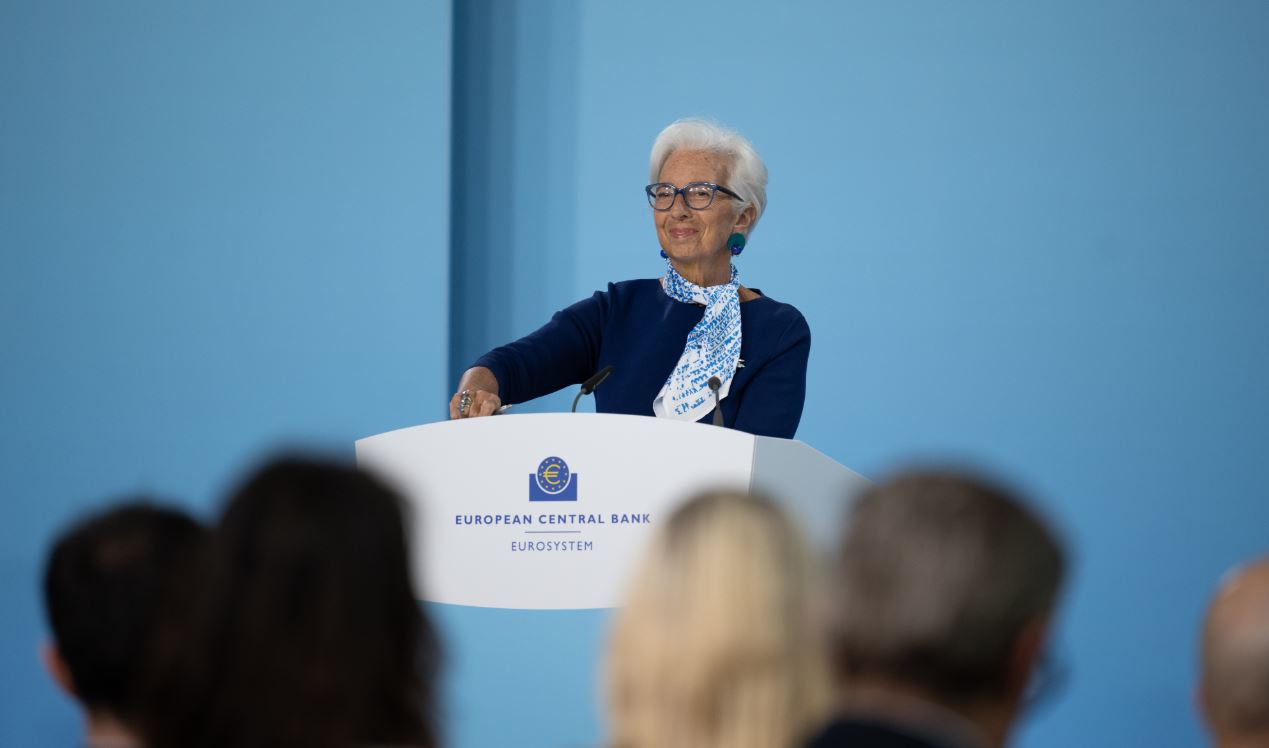
The European Central Bank’s Governing Council has decided to keep the three key ECB interest rates unchanged, noting that the outlook for energy prices, while highly volatile, currently stands close to the baseline of the June Eurosystem staff projections.
It also stands well above the levels recorded prior to the conflict in the Middle East, the European Central Bank (ECB) said. In February 2026, Iran was hit with coordinated US and Israeli strikes, which in turn saw Iran retaliate by closing the Strait of Hormuz, through which 20 per cent of the world’s oil passes. Recently, a ceasefire that was in place collapsed.
“Uncertainty remains high and the full inflationary impact of the energy shock has yet to play out,” the ECB said.
The interest rates on the deposit facility, the main refinancing operations and the marginal lending facility will remain unchanged at 2.25 per cent, 2.40 per cent and 2.65 per cent respectively. In June, the ECB had raised the three key interest rates by 25 basis points to what they are now in response to the Middle East energy shock.
The ECB said that the Governing Council is closely monitoring the intensity and duration of the shock, as well as its indirect and second-round effects.
“The Governing Council is committed to setting monetary policy to ensure that inflation stabilises at its 2 per cent target in the medium term,” the ECB added. “With today’s decision, the Governing Council remains well positioned to navigate the uncertainty caused by the conflict. It will follow a data-dependent and meeting-by-meeting approach to determining the appropriate monetary policy stance.”
In particular, the ECB said that the Governing Council’s interest rate decisions will be based on its assessment of the inflation outlook and the risks surrounding it, in light of the incoming economic and financial data, as well as the dynamics of underlying inflation and the strength of monetary policy transmission.
“The Governing Council is not pre-committing to a particular rate path.”


More than 50 startups collectively awarded €15 million in financial assistance
These businesses have created around 250 quality jobs, Government said
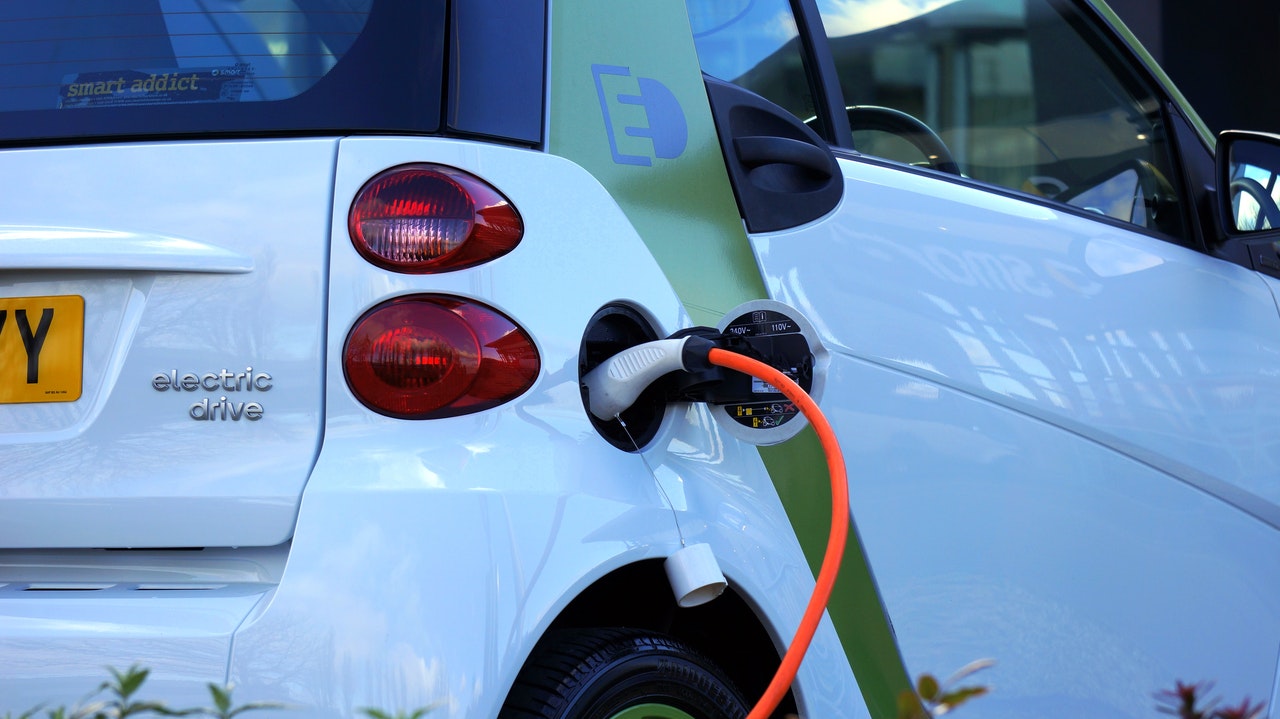
Insurers call for urgent clarity over EV disposal procedures while highlighting ‘practical difficulties’
Malta currently lacks suitable facilities for treating these batteries, association said

Working remotely abroad? Businesses warned of potential tax risks at Mobility Elite Summit
Working remotely abroad is not just a matter of finding a nice place