


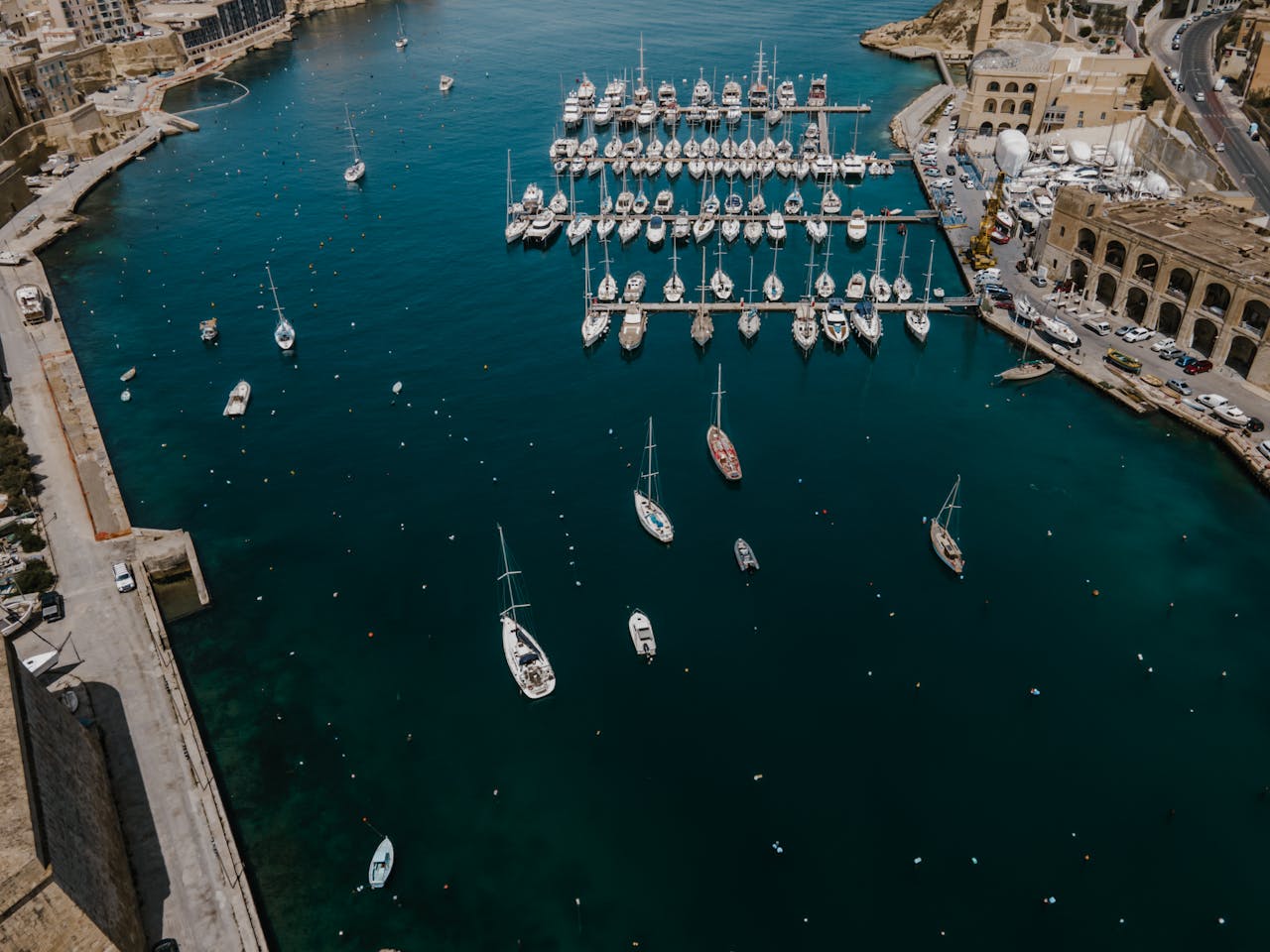
Maltese startups and SMEs operating within the maritime and blue economy sectors are being encouraged to apply for a new EU-funded acceleration programme aimed at helping them scale their innovations beyond Malta while contributing to broader sustainability goals.
The MED-Hubs Acceleration Programme, supported under the European Maritime, Fisheries and Aquaculture Fund (EMFAF), is designed to fast-track solutions across key areas including marine renewable energy, sustainable fisheries, aquaculture, smart ports and green maritime transport.
The initiative comes at a time when sustainability and digital transformation are increasingly shaping the maritime sector, offering Maltese companies an opportunity to access international markets, pilot testing environments and potential investors.
Coordinated by Spain’s Universidad Politécnica de Cartagena and delivered by a consortium of 11 European partners – including Malta-based accelerator MaltAccelerate – the 24-month programme aims to strengthen interregional cooperation across the Western Mediterranean while supporting innovation in the blue economy.
For Malta, whose economic development has long been closely linked to maritime activity, the programme aligns with the country’s Vision 2050 strategy, which aims to prioritise sustainability, climate resilience and higher value-added industries.
Running from April 2026 to September 2027, the programme will be delivered fully online in English and is open to startups incorporated from 2019 onwards that are operating at Technology Readiness Levels (TRL) 4 to 8. Participation is free of charge and equity-free, removing a common barrier for early-stage companies concerned about ownership dilution.
Selected participants will receive tailored one-to-one mentoring, access to equity investors, guidance on public funding opportunities and support in developing and piloting minimum viable products across European testbeds. The programme also includes international business development support and visibility at global events, including a Demo Day in Naples in 2027.
The initiative is structured around two main innovation hubs. The Marine Energy Hub in Spain focuses on small-scale marine renewable technologies, offering facilities for testing solutions ranging from laboratory validation to open-sea trials. Meanwhile, the ALFA Fisheries Hub in Italy supports the digitalisation of small-scale fisheries through technologies such as AI-powered species recognition, environmental monitoring systems and blockchain-based traceability tools.
These focus areas are particularly relevant to Malta, where ports, fisheries and maritime services remain central to the economy. Technologies that improve energy efficiency, reduce emissions and enhance traceability are increasingly important as the country aligns with EU climate targets and Green Deal objectives.
Stephanie Vella, CEO at the Malta West-Med Initiative and a member of the MED-Hubs observatory panel, described the programme as an important step for Malta’s innovation ecosystem.
“The blue economy is central to the long-term prosperity, sustainability and climate resilience of Malta,” she said, noting that targeted support and access to international scaling opportunities are particularly important for the country’s predominantly small and micro enterprises.
Through participation in MED-Hubs, Maltese companies will be able to validate their solutions via structured pilot processes, improve investor readiness and build partnerships across Europe – opportunities that may otherwise be difficult to access independently.

Skills strategy proposes training leave laws and incentives to push employers to upskill workforce
While Malta enjoys strong employment levels, many employers – especially SMEs – face constraints such as limited time

Government opens €300 million bond issue, may rise to €500 million on demand
The offer comprises two fixed-rate instruments
Strengthening defences: MFSA’s Thematic Review on financial crime
The review fits into a much broader national effort to combat financial crime