


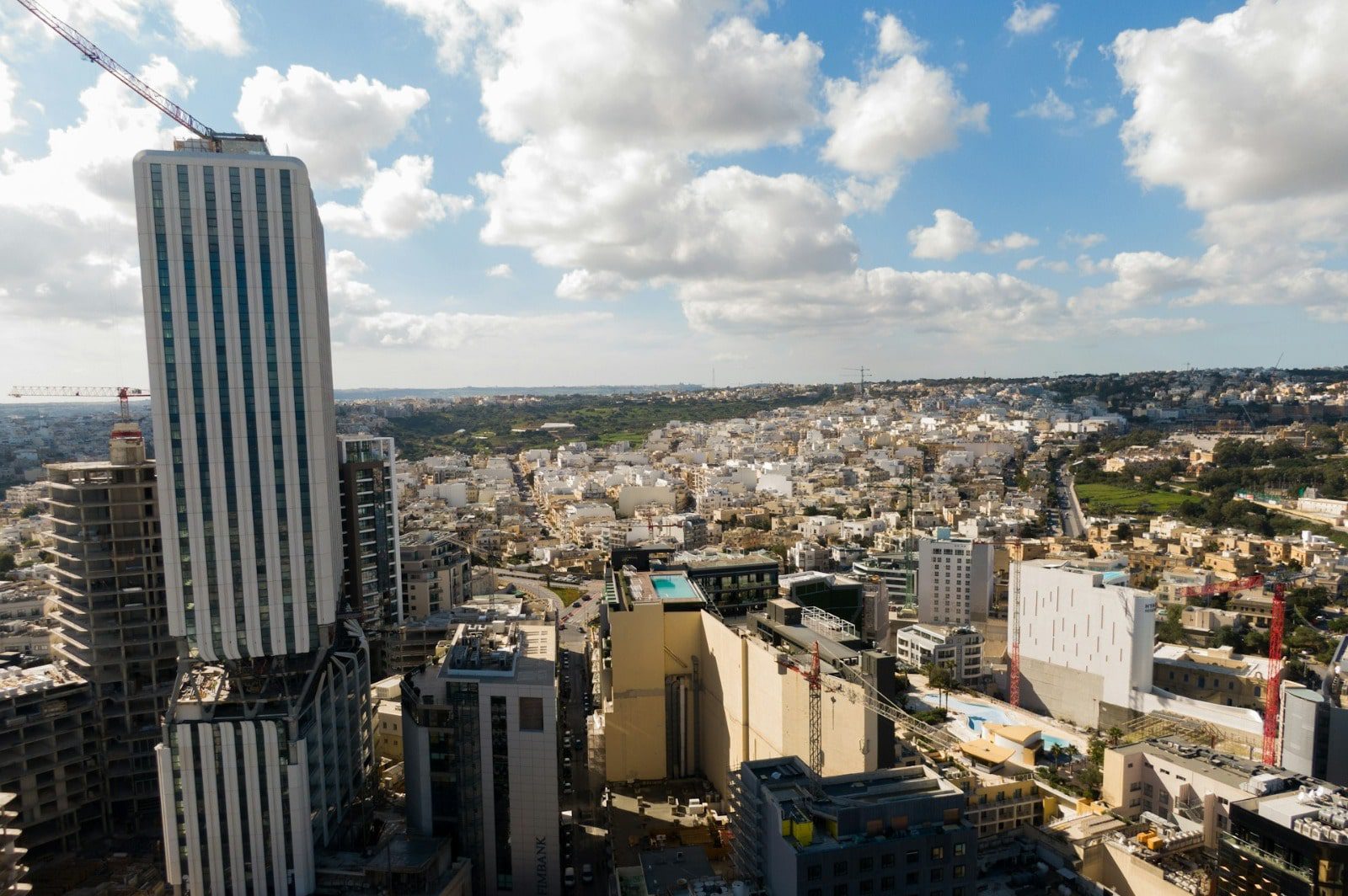
Malta’s population could realistically reach 636,000 by 2030, projections by PwC reveal.
PwC published its summer economic update edition, which reviews the country’s economic performance, and has a special focus on demographics. The document also provides projections in terms of infrastructural pressures.
Malta’s population reached 588,254 by year-end 2025, up by around 14,000 over the previous year, it said, explaining that foreign residents now represent 31 per cent of the population. In 2019, it was 20 per cent.
Its model includes a potential population range from 624,000 to 660,000 by 2030, depending on different rates of slowdown in net migration patterns. The aforementioned 636,000 figure being the halfway estimate in the range.
It explains that the projections are based on assumptions of a partial net migration slowdown over time to the levels that were observed prior to the Covid-19 pandemic. “Nonetheless, the results suggest that population would still increase significantly, with the mix of foreign to local reaching around 38% in the base case.”
Net migration averaged 11,842 people per annum over the past 10 years, PwC explained, but noted that above-average rates have been observed post-Covid.
“Most of the net migration flows stem from outside the EU, averaging 7,843 net migrants compared with 3,475 net migration from the EU.” The local population, it said, has remained at just over 400,000, also noting that there was a slight birth rate decline.
The economic update highlights that Malta, is the 4th most densely populated country in the world with its current population of 588,254, standing at around 1,862 people per square kilometre. But population density would increase to approximately 2,013 people per square kilometre based on its 636,000 projectiont.
More hospital beds needed
The review also gives some insight into pressures on infrastructure.
Using recent Eurostat data, it says that Malta ranks 17th in the EU on hospital beds per 100,000 residents, and has 397 beds per 100,000. The EU average stands at 511 beds per 100,000, it says.
“Assuming a projected population of 636,000 by 2030, this would imply the need to add 329 (c.15 per cent) more beds over the next five years simply to maintain this standing. In order to achieve parity with the European average, i.e. 511 beds per 100,000, then Malta would need to increase bed capacity by 1,054 beds (or 48 per cent) by 2030.”
As for energy production, in 2024 Malta produced 2,138k MWh of locally generated electricity. To meet demand, a net 970,000 MWh of electricity were imported.
This represents around 5.4 MWh of electricity per capita for that year, it said.
Based on the 636,000 projected population while assuming the same level of local energy generation, Malta would need to import 1,304k MWh of electricity to keep the same level of per capita electricity use – representing a circa 25 per cent increase in imported energy.
In terms of economic growth, it said that in Q1 2026, year-on-year growth remained strong at 3.9 per cent. It said that when measured on a per capita basis, Malta’s convergence with Euro Area growth becomes more apparent. “Malta’s per capita growth rate in the first quarter of 2026 measures 1.7 per cent, compared with 0.8 per cent in the euro-area.”
PwC concludes that population growth is expected to continue at a pace unmatched by many EU member states, “bringing with it both economic opportunities and increasing demands on the resources and systems that support daily life.”
It identifies the key challenges for the coning years as ensuring that infrastructure, public services and long-term planning keep pace with this changing reality.
“Sustaining economic prosperity will depend not only on the rate of growth itself, but on Malta's ability to translate that growth into higher productivity, improved quality of life and resilient infrastructure capable of supporting a larger population.”


Planning Malta’s future, one shared map at a time
Ahead of the PA's annual conference, Joseph Gauci discusses integrated planning, 3D mapping and global insights for Malta’s future.
PA CEO resigns as director of his consultancy firm
The PA CEO remains the sole shareholder of the consultancy firm, under his legal name 'John Buttigieg'
Maltese innovation leaders propose tax incentives for environmentally responsible commuters
The proposal was one of five proposed by stakeholders at a Sustainable Mobility Mixer