


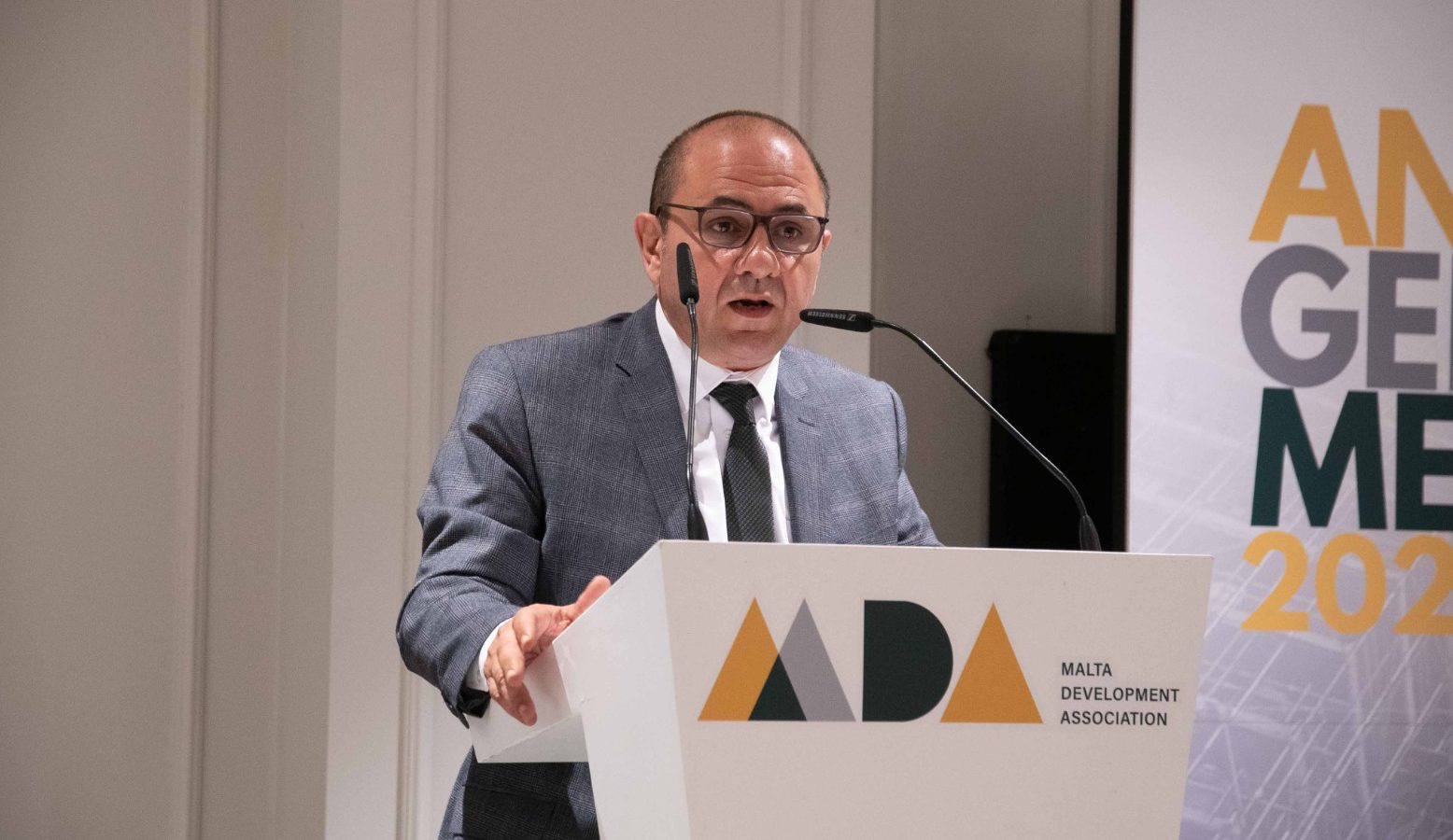
The Malta Development Association (MDA) has issued a fresh statement defending its opposition to Malta’s new affordable housing scheme, pushing back against criticism from civil society group Il-Kollettiv and addressing growing tensions within its own ranks.
The statement follows a public dispute that has intensified in recent days, including the resignation of three senior MDA officials – Anton Camilleri, Pio Vassallo, and Paul Attard – reportedly in protest over the association’s decision to request a European Commission review of the scheme.
In its latest communication, the MDA reiterated its concerns about the Government–Church initiative, which aims to deliver affordable housing units at below-market prices on publicly provided land.
The association has argued that the model risks distorting the market and questioned whether the benefits of free land are being fully passed on to buyers. It previously claimed that developers involved in the scheme could achieve profit margins of up to 33 per cent – more than double the typical 15 per cent – even while selling units at a discount.
“This is not affordable housing,” the MDA had stated in earlier correspondence to the Prime Minister and Archbishop, describing the initiative as “speculation disguised as social policy.”
The association also raised concerns about governance and transparency, warning that the scheme may bypass established procurement procedures and calling for it to be paused until what it described as “fundamental issues” are addressed.
Il-Kollettiv: ‘Attempt to control prices’
The MDA’s position has been strongly contested by Il-Kollettiv, which framed the dispute as part of a broader struggle over property pricing in Malta.

According to Il-Kollettiv secretary Wayne Flask, the association’s actions reflect an effort to maintain high property prices rather than improve market accessibility.
“Out of so many grants and subsidies over the years, this is the only one which makes property affordable,” he said, arguing that this explains the MDA’s opposition.
Citing National Statistics Office data, Mr Flask noted that between 2020 and 2024 Malta’s population grew by 11.5 per cent, while dwelling permits increased by 15.2 per cent. Over the same period, property prices rose by 29 per cent, climbing further to 35 per cent by 2025.
“It is clear that supply exceeds demand,” he said. “So why are prices going up?”
Il-Kollettiv has also alleged that the MDA’s integration of estate agents within its structure creates what it described as a “property cartel,” effectively consolidating influence over pricing across the market.
The NGO further questioned the MDA’s data on property transactions, noting discrepancies with official figures and highlighting that the methodology behind the association’s estimates has not been publicly disclosed.
Another point of contention is the MDA’s proposed ‘transparent price index’, which reportedly costs €3,600 for a two-year subscription.
“That’s very expensive for anything that claims to be transparent,” Mr Flask remarked, raising concerns about accessibility and accountability in the sector.
Il-Kollettiv also criticised what it described as inconsistencies in the MDA’s position, pointing to past instances where public land allocations to developers were not challenged, while the association is now opposing a scheme intended to expand homeownership among younger buyers.
Scheme aims to widen access to homeownership
The affordable housing initiative, led by the Foundation for Affordable Housing – a collaboration between the Government and the Archdiocese of Malta – is designed to target individuals and couples who fall outside existing Housing Authority support schemes but still struggle to purchase property.
The project will see private developers build units on land transferred to the Foundation, with apartments sold at up to 30 per cent below market value. Eligibility is capped at individuals earning up to €33,000 annually and couples earning up to €38,000.
Safeguards built into the model include a non-redeemable ground rent and restrictions preventing resale or full ownership transfer for 20 years, measures intended to limit speculative activity.
Foundation CEO Jake Azzopardi has defended the scheme, stating that it is designed “not to distort the market, but to extend it,” by introducing a structured pathway to homeownership for a segment currently priced out.


Malta’s property prices rise 6.1% in Q4 2025
Price increases remained broad-based across property types

Paceville as it now stands
Philip Fenech says people should look beyond nostalgia and recognise Paceville’s prime position in the new economy

Ryanair urges early bookings as Middle East conflict prompts fuel price concerns
The airline said passengers who book early could 'be insulated from inevitable airfare and accommodation cost increases'