


Vessel sales and registration account for roughly two-thirds of the Maltese superyacht sector’s €61 million direct economic contribution in 2022, according to a newly published study from the NSO analysing the structure and scale of this industry.
The findings highlight how tax-related inflows, particularly those linked to the purchase and registration of superyachts, dominate the sector’s overall contribution, outweighing operational activities such as refit works, marinas and ancillary services.
VAT generated by superyacht sales and registration accounted for 43 per cent of the total economic activity generated by the sector, while corporate services, law and accounting firms made up another 16 per cent. When including agents (6 per cent), sales and registration accounted for 65 per cent of the superyacht sector’s combined economic contribution.
Much of the remaining activity is generated by yacht yards (20 per cent) and yacht marinas (6 per cent), with ancillary services, like crew supply, fuel supply, surveyors and charters making up 8 per cent. (edited)
The sector demonstrates strong output per employee, reflecting its focus on specialised, high-value services.
Employee benefit costs are highest within yards and refit operations, reflecting the demand for specialised technical roles such as engineers, electricians and mechanics. Professional services and agents also report relatively high compensation levels, while marinas and ancillary services tend to operate with lower labour costs, consistent with more operational and customer-facing roles.
When measured in terms of economic contribution per employee, marinas emerge as the most productive segment, generating approximately €139,000 per FTE.
Yards and refit operations (€103,000 per FTE) and professional services (€100,000 per FTE) also demonstrate strong productivity levels, reflecting the high-value and technical nature of their services.
Yards and refit operations (€103,000 per FTE) and professional services (€100,000 per FTE) also demonstrate strong productivity levels, reflecting the high-value and technical nature of their services.
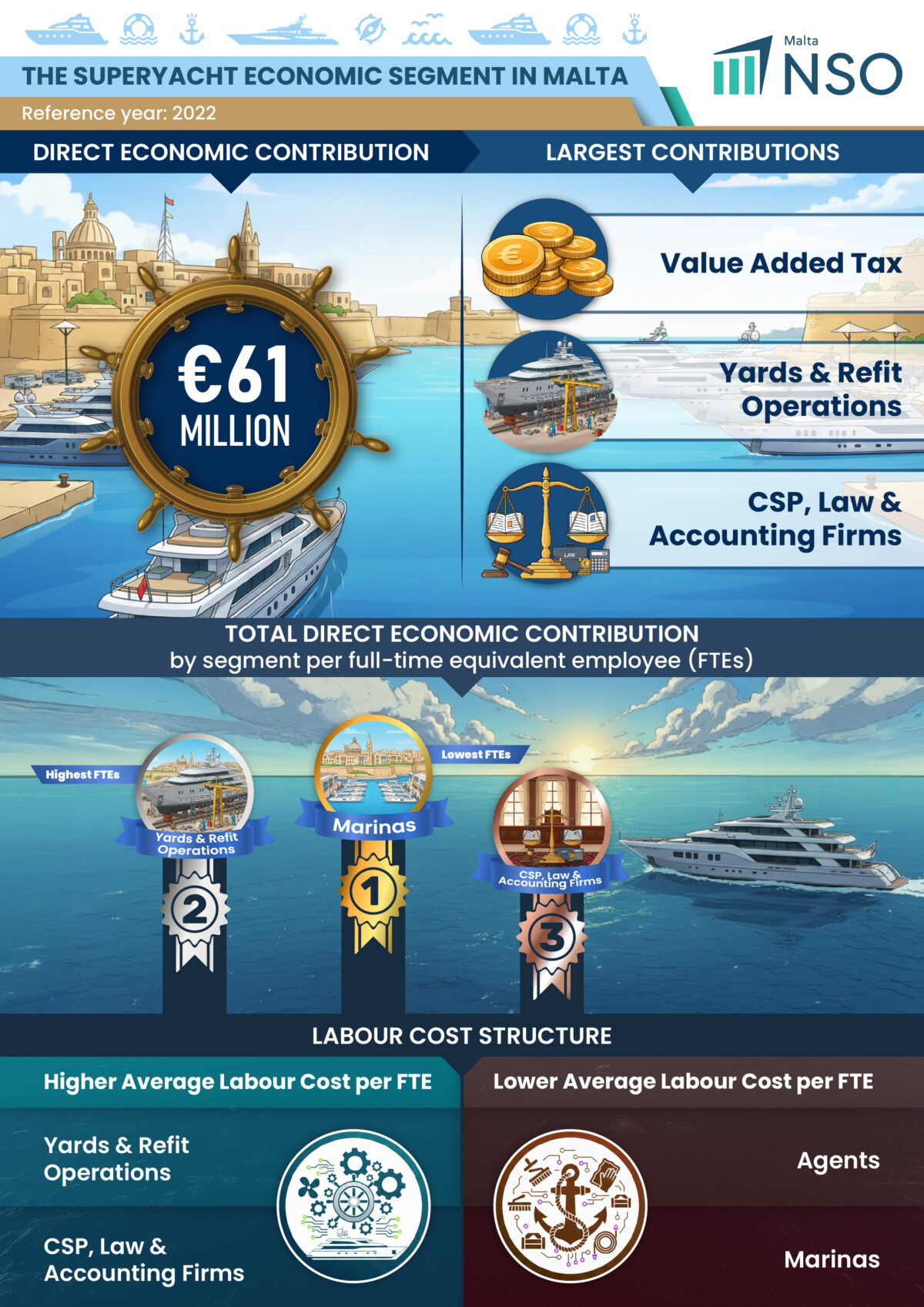
In contrast, agents (€96,000 per FTE) and ancillary service providers (€66,000 per FTE) record lower output per employee, suggesting more labour-intensive business models with comparatively lower margins.
Meanwhile, employment within the superyacht segment varies significantly across activities. Shipyards and refit operations employ the largest number of full-time equivalent (FTE) workers dedicated to superyacht services, at 117 FTEs, followed by professional service firms at 100 FTEs.
Ancillary service providers account for 74 FTEs, while agents and marinas employ 40 and 28 FTEs respectively.
For companies involved in the sector, superyacht-related work represents a significant share of their overall economic activity. In yards and refit operations, as much as 85 per cent of total contribution is tied directly to superyacht services.
Agents also show a strong reliance on the segment, with 61 per cent of their activity linked to superyachts. Meanwhile, marinas (33 per cent), professional services (26 per cent) and ancillary providers (17 per cent) demonstrate more diversified business models.
Featured Image:
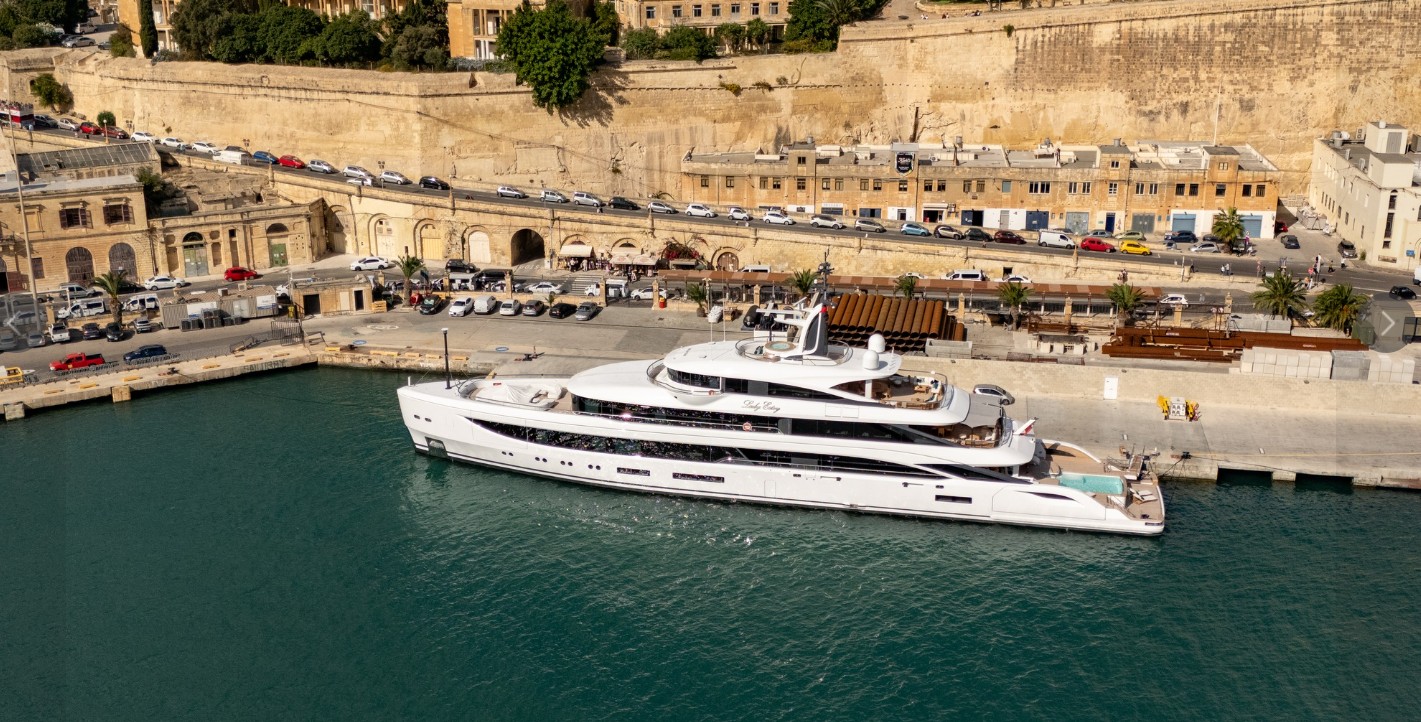
A Benetti superyacht docked in Malta’s Grand Harbour / photographed by KCS Photography / facebook.com/kcs200 / @ kcs.pics_
Mġarr Harbour: Gozo’s lifeline under growing strain
Planning, infrastructure, and Gozo's future
European Parliament delegation flags concerns on EU funds oversight in Malta, Government pushes back
The Government insists that Malta’s systems remain robust and compliant
‘We realise the importance of Gozo as part of our economy’ – FBO Regulator
Joseph Gerada on the Gozitan microclimate, the urgency of succession planning, and the importance of corporate governance