


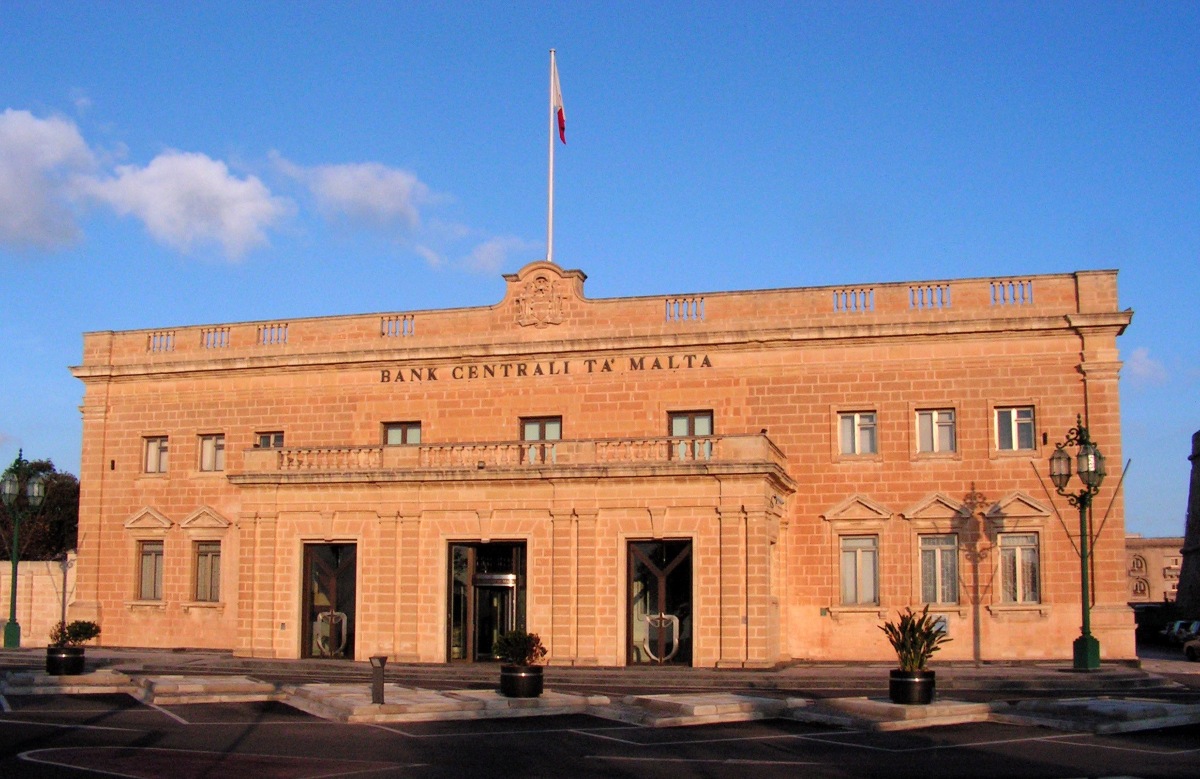
Malta’s economy is expected to expand at a slower pace over the coming years, with growth gradually converging towards its long-term potential, according to the Central Bank of Malta’s latest economic outlook.
Real GDP growth is forecast to ease from 5.9 per cent in 2024 to 3.9 per cent in 2025, before slowing further to 3.3 per cent by 2027. The Bank noted that while activity remains resilient, the post-pandemic rebound is fading, external demand is weakening, and global uncertainty persists.
Private consumption is projected to remain the main driver of growth, supported by robust disposable income and the widening of income tax bands. Investment is also expected to recover in the short term, particularly in EU-funded projects, though government investment is set to decline after 2026 as Recovery and Resilience Facility funds are exhausted. Net exports are forecast to contribute positively but modestly, driven largely by trade in services.
Labour market pressures
Employment growth is expected to moderate, slowing from 5.3 per cent in 2024 to 3.0 per cent this year, and further to 2.3 per cent by 2027. This reflects both softer economic activity and new measures regulating inward migration, such as the skills card system and restrictions on temping agencies.
Despite this slowdown, the labour market is set to remain tight, with unemployment edging down to 2.7 per cent by the end of the forecast horizon. Wage growth, which stood at 6.3 per cent in 2024, is projected to ease to 4.4 per cent in 2025 and fall further in subsequent years as inflationary pressures subside and competitiveness concerns weigh on pay settlements.
Inflation outlook
Annual inflation, as measured by the Harmonised Index of Consumer Prices (HICP), is forecast to average 2.3 per cent in 2025, broadly in line with the European Central Bank’s 2 per cent target. Inflation is then expected to decline to 2.0 per cent by 2027, largely reflecting lower services inflation.
Notably, passenger air transport has emerged as a major driver of price pressures, with fares rising sharply in recent months amid strong demand, limited seat capacity, and higher input costs. The Bank expects this component of inflation to remain elevated until mid-2026 before gradually normalising.
Fiscal position
On the public finance front, the government deficit is set to narrow from 3.7 per cent of GDP in 2024 to 2.6 per cent in 2027, while the debt ratio is projected to peak at 48.7 per cent in 2026 before edging lower. The Central Bank stressed that the improvement will be underpinned by lower capital transfers, the tapering of energy support measures, and stable revenue inflows, though risks of overspending remain.
Balanced risks
The Bank assessed risks to growth as broadly balanced. Downside risks include geopolitical tensions and the impact of US tariffs on EU trade, while upside potential stems from stronger-than-expected household consumption and wage dynamics. Inflation risks also remain balanced, with renewed supply bottlenecks or higher energy prices potentially offset by weaker euro area growth or increased competition in global markets.
The Central Bank concluded that Malta’s economy is transitioning towards a more sustainable growth path, with domestic demand underpinning activity, inflation gradually easing, and public finances set to improve, albeit against a backdrop of international uncertainty.
Read next: MFSA issues consumer warnings against unauthorised firms misusing Maltese company details

‘We realise the importance of Gozo as part of our economy’ – FBO Regulator
Joseph Gerada on the Gozitan microclimate, the urgency of succession planning, and the importance of corporate governance
Malta sets up group to make share trades settle faster by 2027
The move aligns Malta with a broader EU-wide initiative to shorten settlement times

Is Malta emerging as a preferred hub for EMI licensing as Lithuania tightens oversight?
People are highlighting Malta’s positioning as an alternative jurisdiction to Lithuania when it comes to EMI licensing