

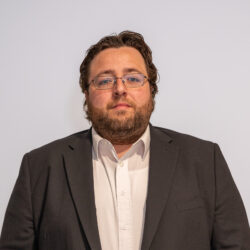
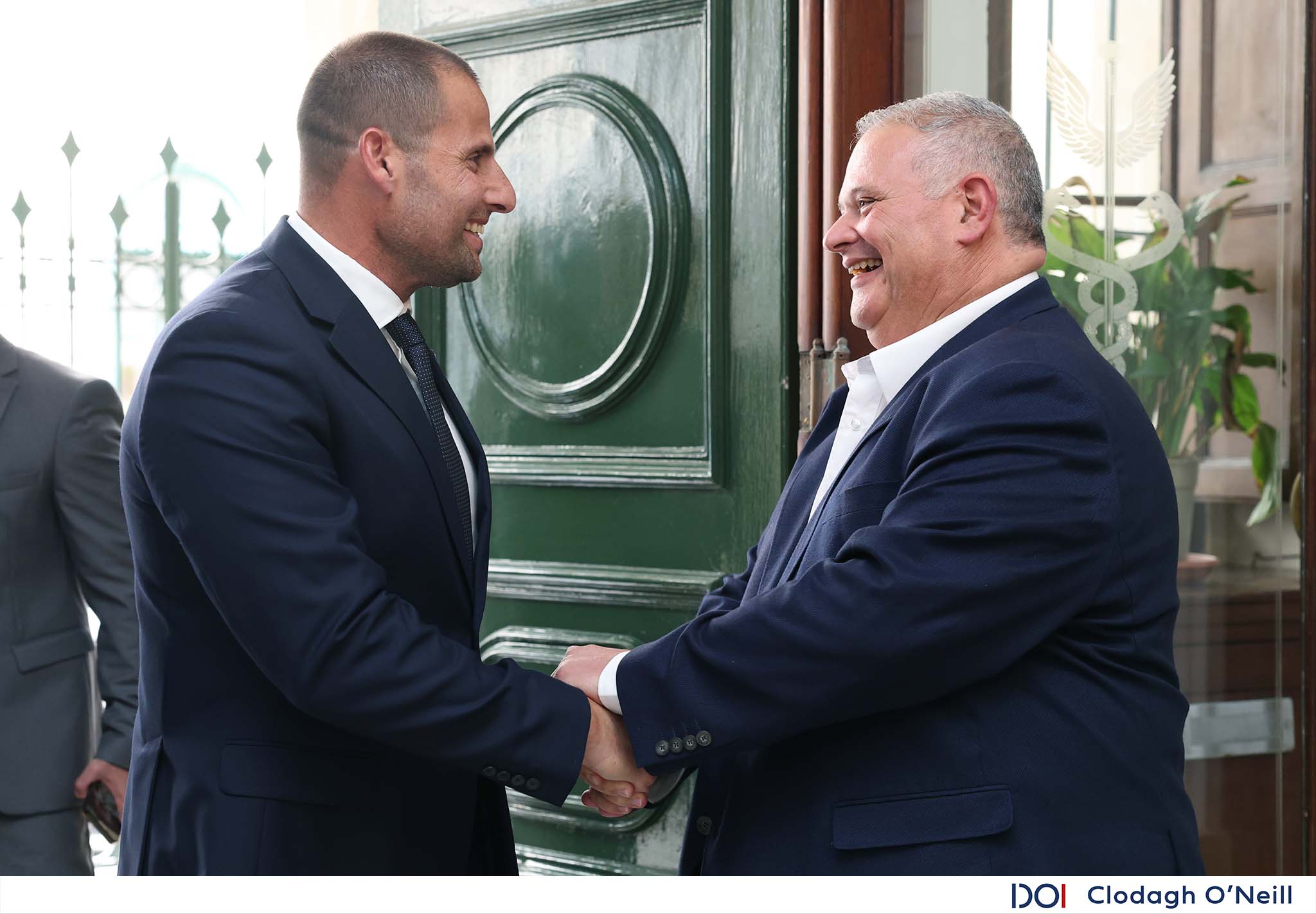
Malta Chamber of Commerce President William Spiteri Bailey pushed for the publication of KM Malta Airlines' financial statements during a meeting he held with Prime Minister Robert Abela.
"Why haven't the financial statement not yet been published? This is not a partisan question. It is a question of good governance," he said, underlining the importance of transparency.
The Malta Chamber President met with Prime Minister Robert Abela, in which a number of issues were discussed.
Mr Spiteri Baily underlined eight points during the meeting.
The first was the country’s economic model.
While Malta’s economy has grown strongly, The Malta Chamber of Commerce President says that the question now needs to be, “are we growing in quality, or, despite the Vision 2050 narrative, are we still too focused on quantity?”
He noted that for many years the country increased its output by increasing the number of people working, “but this model has its limits. We cannot continue adding people, cars, construction and infrastructural pressures, and think that this alone means progress. A country does not become wealthier simply because it has more people. It becomes wealthier when each individual is able to create greater value.”
He stressed the need to move towards an economy based on productivity
This brought him to his second point, productivity.
Here, he underlined the need to invest in technology, Aim, automation, digitalisation, re-engineering processes, reskilling and upskilling. “We need to provide businesses with the conditions to make this transformation.”
The third point he made was the need to choose value over volume, highlighting that other small countries have done this. “We cannot compete on size, we must compete in quality.”
“Not on how many people we have, but on talent. Not on how much we produce, but on the value we create.”
The fourth point was tourism, where he said that one cannot just celebrate with numbers. “The aim cannot be to have so many tourist record-breaking numbers, the aim needs to be how much value each tourist leaves in the country.”
Among other things, here he questioned why the major activities remain concentrated in the same summer months, saying they should be divided throughout the year.
His fifth point was traffic, arguing that it is an expense on the economy, lost time for workers, causes missed appointments and lost productivity. “Above all it has an impact on people’s wellbeing. We cannot continue normalising traffic.”
The Chamber President said that courageous long-term decisions are needed.
His sixth point was about energy, explaining that the recent power cuts need to be a wake-up call.
“When a business loses power, it does not just mean they lose a few hours. They could lose production, data, stock, clients and income.” He said that climate change and heatwaves are no surprise. “While we speak about AI, data centres, more digitalisation and electric vehicles, which is all good, a digital economy needs a modern, trustworthy and robust grid."
"We cannot build tomorrow's economy on infrastructure that does not cope with today's demand."
The seventh point he made regards governance and transparency. Here he gave the example of KM Malta Airlines and questioned why its financial statements have not yet been published. “Transparency is a citizen’s right.”
His final point was about Vision 2050. While saying that the Chamber supports a long-term vision, he stressed that a vision means choices, priorities and execution.
He reiterated some of the above points as the changes that need to be made
During the meeting Prime Minister Abela urged the Chamber to put forward recommendations aligned with the principles of the Malta Labour Migration Policy in order for the economic model to continue generating greater value added without needing more workers.
Prime Minister Abela said that there are some who say the Government was too aggressive with the implementation of the Labour Migration Policy, but said that the country’s choice the county has is to continue evolving the economic model with sustainable economic growth based on quality. This is aligned with the Vision 2050, he said.
Dr Abela said that the Government is focusing on a more digitalised economy. He also said that the economic model pursued in past years, thanks in part to the contribution of the business community, has enabled the Maltese economy to achieve the highest rate of economic growth in the European Union.
“This is our starting point. Without the rate of growth we have achieved, the opportunities and priorities we are talking about today would not have been possible,” Dr Abela said.
He said that this economic growth allowed the Government to continue attracting investment and creating jobs. He said that the Government’s duty is to continue working to improve infrastructure and services.
He spoke of past Government investment in energy infrastructure, including the construction of a new power station, concluding works on the first interconnector,and “unprecedented investment in the distribution network began.” He recognised that there is still work that needs to be done to strengthen the system.
He gave a guarantee that work in the energy distribution network would continue.
Featured image: DOI/Clodagh O'Neill
Tourist spending hits €1.21 billion in Malta in second quarter of 2026
The average length of stay per tourist dropped from six nights in 2025 to 5.5 nights this year

Revolut won’t disclose number of data breach victims in Malta, but there is at least one
Hackers obtained files by compromising an Italian government email system
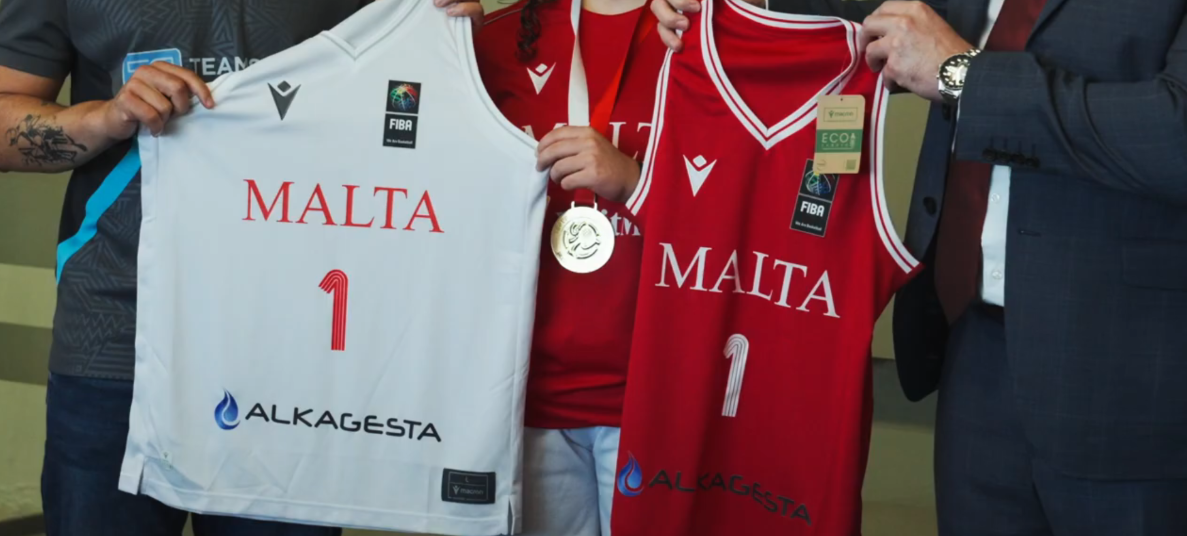
Alkagesta hosts Malta U16 women’s basketball champions at Malta office
The Maltese team won with a score of 76-51