



Subsidies for fossil fuels have reached record highs, according to new data published by the International Monetary Fund (IMF), which says that such subsidies amount to $7.1 trillion (€6.54 trillion) – the equivalent of 7.1 per cent of global GDP.
The organisation pointed out that this is more than governments spend on education (4.3 per cent of global income) and about two-thirds of healthcare spending (10.9 per cent).
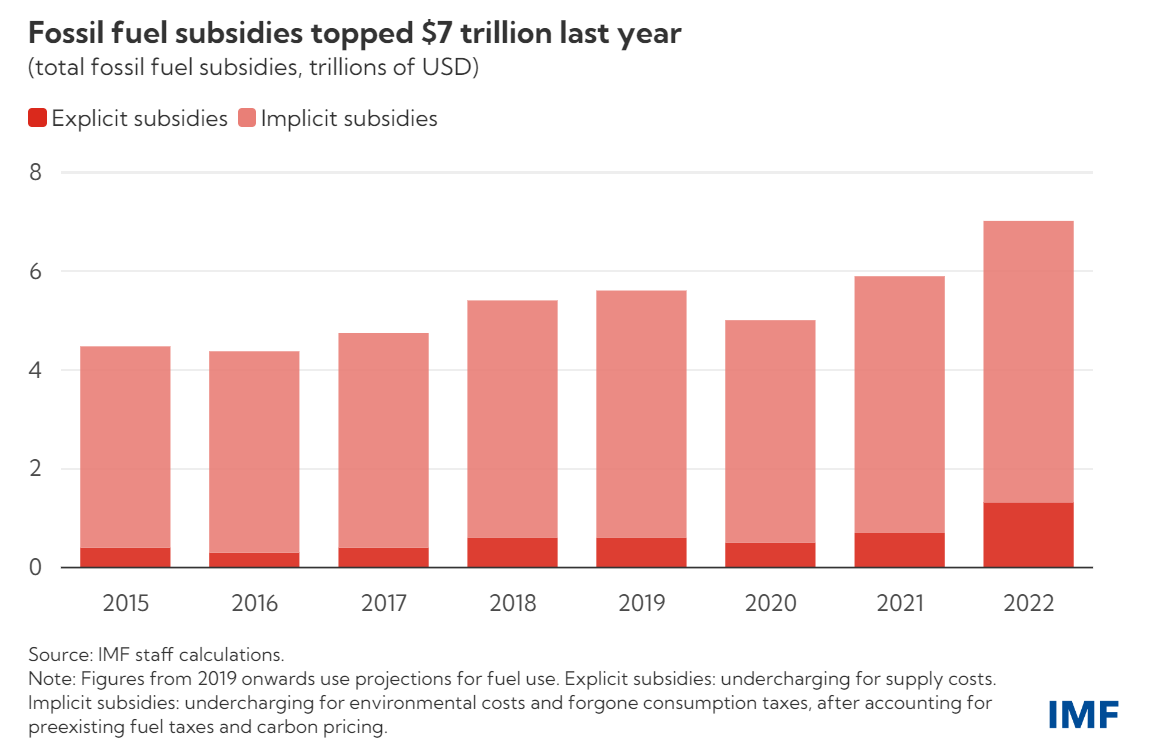
The IMF splits fossil fuel subsidies into explicit and implicit subsidies.
Explicit subsidies are direct subsidies through undercharging for supply costs, whereas implicit subsidies involve undercharging for environmental costs and forgone consumption taxes.
Its data, covering 170 countries, shows that explicit subsidies more than doubled over the last two years, and now amount to $1.3 trillion (€1.2 trillion). Meanwhile, consumers did not pay for over $5 trillion (€4.6 trillion) in environmental costs last year, although this is likely an underestimate – the IMF noted that this figure would almost double if damage to the climate was valued in line with the latest research.
The authors of the report – Simon Black, Ian Parry and Nate Vernon – estimate that scrapping explicit and implicit subsidies would “prevent 1.6 million premature deaths annually, raise government revenues by $4.4 trillion (€4 trillion), and put emissions on track toward reaching global warming targets”.


Ferrari unveils ‘Luce’: Its first fully electric supercar set for 2028
Pricing is anticipated to sit well above €500,000

Malta’s trade deficit narrows as import shifts and export rebalancing continue in 2026
Over the full year, Malta’s trade deficit narrowed by €444.1 million compared with 2024

Thinking of housing as part of an urban system: what Malta can learn from Singapore’s public housing
Five lessons we can take from the nation twice the size of Malta