


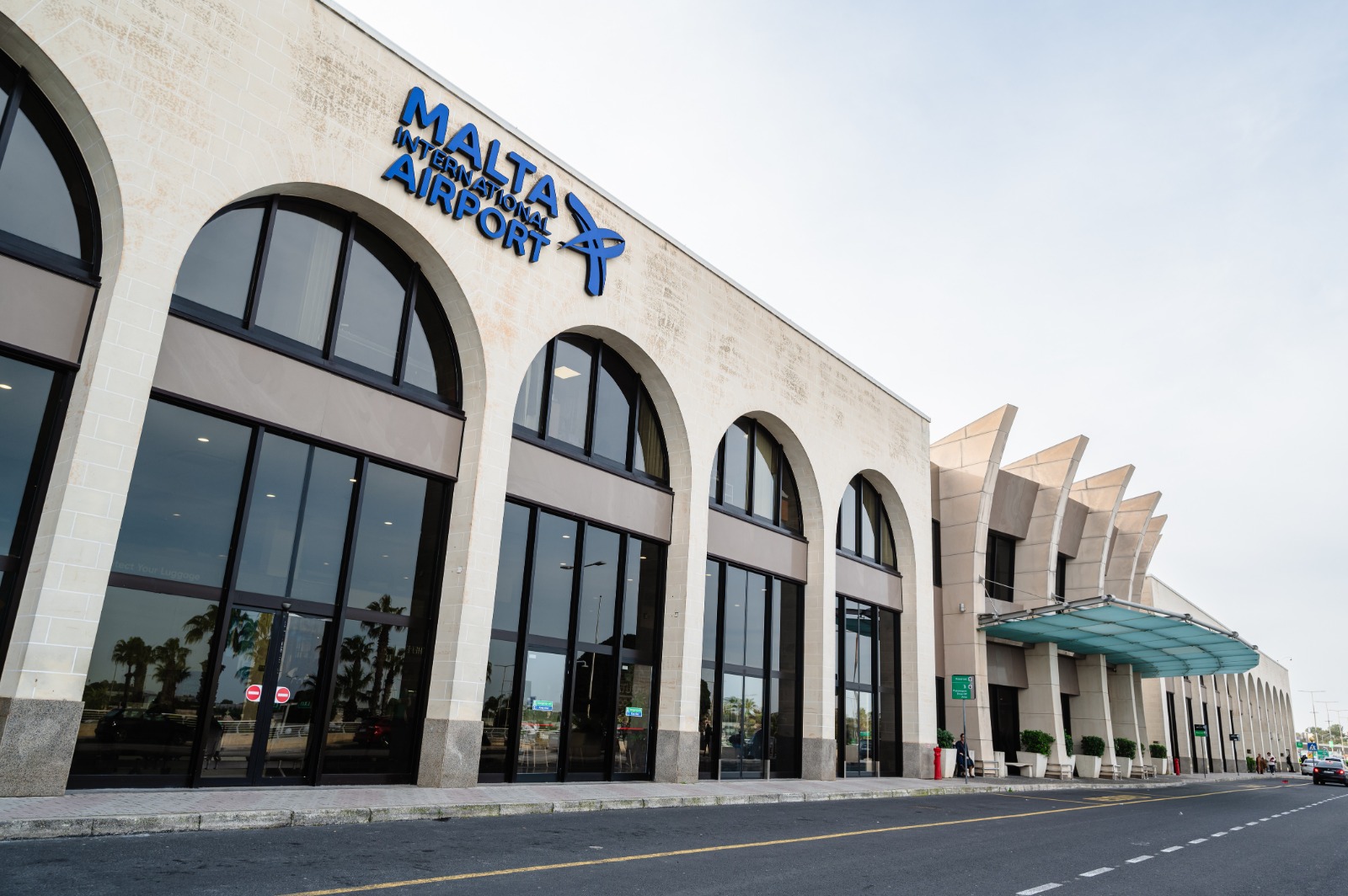
The Malta Chamber of Geologists has put forward a bold proposal to relocate Malta International Airport, along with the Freeport and power station, to a newly created offshore artificial island.
The plan, outlined in its pre-budget document for 2026, is aimed at freeing up valuable land for agriculture and reforestation while also reducing inconvenience for residents living near major infrastructure hubs.
The Chamber argues that Malta’s limited land resources and high population density make it necessary to rethink how space is used. By shifting the airport and other large land-consuming facilities to an offshore site, connected to Malta by a bridge, the island would alleviate land pressures and create new opportunities for sustainable land use on the main island.
“Creating an offshore island close to Malta is possible if water depth and seabed geology are carefully considered,” the Chamber stated, noting that such a project could also ease environmental and social burdens caused by current infrastructure.
The proposal is tied to a wider strategy to address Malta’s chronic congestion. The Chamber suggests building vehicle tunnels beneath major urban areas, including the Sliema–St Julian’s–Paceville conurbation, to ease surface traffic and reduce pollution. Public transport would remain at street level but would benefit from reduced competition with private cars.
Beyond land reclamation and traffic management, the Chamber highlights climate change as a growing threat to Malta’s quality of life. It calls for stronger geological oversight to mitigate hazards such as rock falls, slope instability, flooding, and coastal erosion, all of which are expected to worsen with climate change.
Central to its proposals is the creation of a National Geological Service, which Malta currently lacks – making it the only European country without one. The Chamber argues that such a service would be essential to advise government on natural resources, produce hazard maps, and ensure the quality of building materials.
The Chamber also emphasises Malta’s underexplored continental shelf, spanning more than 70,000 square kilometres, as a potential source of hydrocarbons and natural gas. It notes that the EU recognises natural gas as a transitional fuel, and revenue from such resources could be reinvested in renewable energy projects, following examples such as Denmark.
In its conclusion, the Chamber stresses that geology should be at the heart of Malta’s future planning. Recognising the geologist profession, investing in natural resource exploration, and applying geological expertise to infrastructure and land use could, it argues, create a “more prosperous, sustainable, and safer future for the country.”
‘We realise the importance of Gozo as part of our economy’ – FBO Regulator
Joseph Gerada on the Gozitan microclimate, the urgency of succession planning, and the importance of corporate governance
Malta sets up group to make share trades settle faster by 2027
The move aligns Malta with a broader EU-wide initiative to shorten settlement times
Is Malta emerging as a preferred hub for EMI licensing as Lithuania tightens oversight?
People are highlighting Malta’s positioning as an alternative jurisdiction to Lithuania when it comes to EMI licensing