


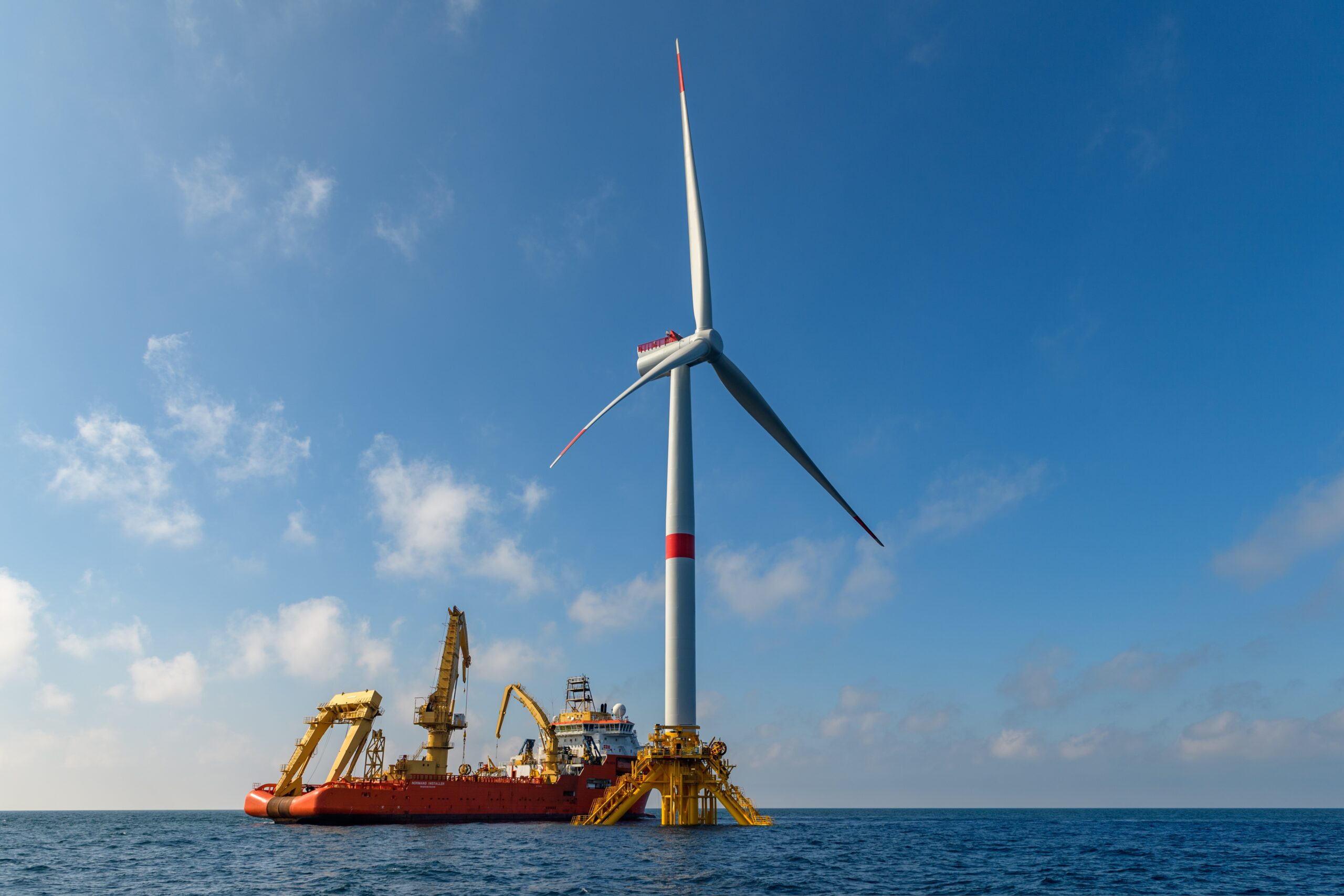
The Maltese Government has taken a further step towards developing its first offshore wind farm, with InterConnect Malta issuing a €3.6 million tender for studies on two shortlisted sites within the country’s Exclusive Economic Zone.
The tender, published through the Department of Contracts, calls for the provision of metocean surveys, collecting detailed meteorological and oceanographic data, to support the planned floating wind project.
This follows earlier confirmation by Energy Minister Miriam Dalli that six potential offshore sites identified in national policy had been narrowed down to two, based on technical feasibility, economic viability and environmental considerations.
Two-year data campaign to underpin investment
According to InterConnect Malta, the studies will involve a two-year data collection campaign aimed at reducing uncertainty for developers and improving the project’s bankability.
The surveys will gather site-specific data on:
- Wind speed and direction
- Wave conditions and sea currents
- Environmental factors, including bird and bat activity
This information is considered critical for prospective developers to prepare technical and financial proposals, particularly as current assessments rely largely on modelling rather than real-world data.
The tender document specifies that the contract will run for two years and four months, covering deployment, monitoring, and reporting phases.
The data collection will be carried out using floating buoys equipped with LiDAR (Light Detection and Ranging) systems, capable of measuring wind conditions with high accuracy.
Each site will host a buoy anchored offshore, designed to withstand varying weather conditions while continuously recording data over the study period.
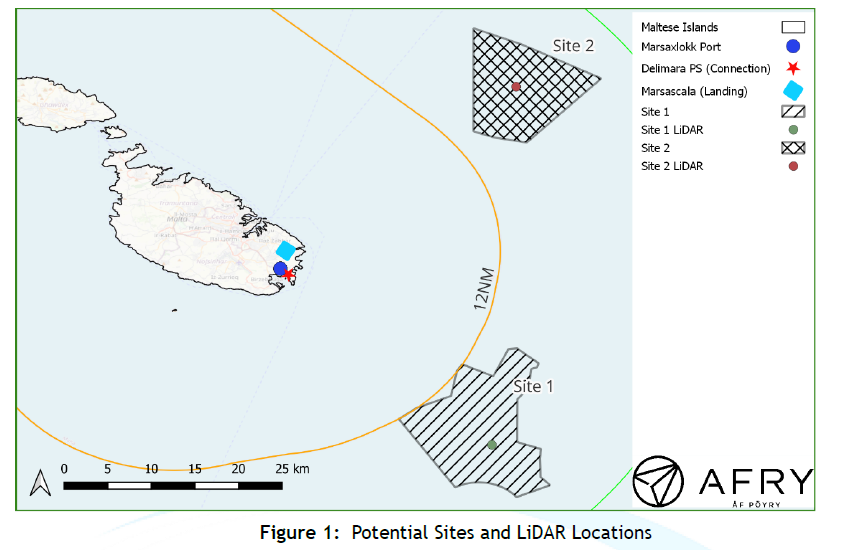
The two sites are located offshore at distances of approximately 25km and 28km from the coast, reflecting Malta’s move towards deeper-water floating wind solutions.
Key to energy transition
The offshore wind initiative forms part of Malta’s broader strategy to diversify its energy mix and reduce reliance on imported fossil fuels.
InterConnect Malta estimates that a fully developed wind farm of this scale could generate renewable energy equivalent to around 25 per cent of Malta’s electricity demand based on 2025 levels.
Minister Miriam Dalli described the project as “an integral part” of the country’s long-term energy strategy, aimed at supporting the transition to a more sustainable generation mix.
Next phase in a multi-stage process
The metocean surveys represent a key step in a wider procurement and development process already underway.
The offshore wind project has progressed through an initial prequalification stage, with shortlisted developers expected to participate in a competitive dialogue process before submitting final bids.
Data from the surveys will feed into:
- Energy yield assessments
- Engineering design of floating structures
- Environmental impact considerations
Ultimately, this will inform the selection of the final site and developer.
Interested bidders have until 21 May 2026 to submit proposals, with the contract to be awarded based on the lowest compliant bid meeting technical and administrative criteria.

Financial knowledge alone is not enough to improve financial wellbeing, experts warn
Experts are discussing how financial education can be translated into better financial decisions

Tourism intensity climbs as Malta’s effective population tops 670,000 in August
During August 2025, St Julian’s tourism intensity reached 143 tourists per 100 residents

Millions in taxable income declared by 81 companies with no employees
Tax declared by US multinationals in Malta rose to €118 million in 2024, up from €24.7 million in 2020