


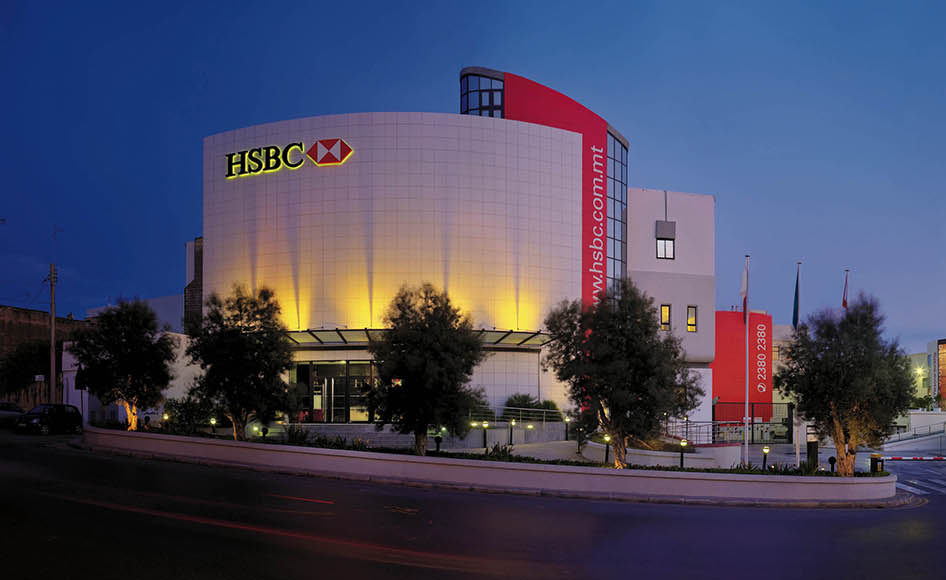
HSBC Malta has announced that amidst the alarming rise of COVID cases in the country it is, with immediate effect, introducing a temporary minimum cash withdrawal policy in its branches.
Under the new rule, customers will only be able to withdraw cash from branch tellers from a minimum of €500, and anyone needing less must use its ATMs.
This, it said, announcing the requirement on social media, is part of tis efforts to keep customers and employees safe following the recent sharp increase in COVID cases recorded locally.
"This decision has been taken to reduce the amount of times customers need to visit our branches, thus reducing unnecessary queuing and contact."
The bank clarified that customers not in possession of a debit card will be permitted to make a one-time withdrawal in person with a teller, but will also be requested to apply for a card, which will be necessary to make future withdrawals.
Finally, it "strongly encourages" its customers to book an appointment in advance if they need to visit a branch to discuss borrowing or wealth management needs, and call the Contact Centre for any queries related to their accounts.
The move comes as positive COVID cases have forced HSBC Malta's competitor Bank of Valletta to close a number of branches as some staff have tested positive for the virus and others are in mandatory isolation after coming into contact with them.
What is driving cost expectations higher among Maltese businesses?
Labour shortages and geopolitical tensions fuel expectations of further cost increases among Maltese businesses
Businesses report slower improvement in operating conditions
The Central Bank’s latest Business Dialogue found that most surveyed firms reported stable or improving conditions
MCA at 25: taking the lead on the European stage
Robert Mifsud explains how a small regulator can still make its voice heard where the big decisions are taken