



Malta’s average salary continues to trail the European Union average, even after accounting for differences in the cost of living, according to the latest Eurostat data for 2025.
Figures show that the average annual salary per employee in Malta, adjusted to reflect full-time work, stood at €33,499 in 2024. This is notably lower than the EU average of €39,808, placing Malta below the bloc’s midpoint in nominal salary terms.
The gap narrows slightly when wages are measured in purchasing power standards (PPS) – a metric that adjusts for variations in living costs across countries. On this basis, Malta’s average full-time adjusted salary rises to 35,987 PPS, but still falls short of the EU benchmark.
Purchasing power standards are designed to show how far salaries stretch in real terms, rather than simply comparing headline figures. While Malta’s relatively lower cost of living improves its ranking compared to nominal wages alone, the data suggests this adjustment is not sufficient to close the gap with higher-income EU countries.
Across the EU, full-time adjusted salaries measured in PPS range from 21,644 in Greece to 55,051 in Luxembourg, reducing the disparity between the highest- and lowest-earning countries from a ratio of 5.4 to around 2.5. Malta sits closer to the middle of this range but remains below the EU average.
Structural factors weigh on wage levels
According to economists, cross-country wage differences are largely driven by productivity levels and the structure of national economies. Countries with a higher concentration of high-value-added sectors – such as finance, information technology and advanced manufacturing – tend to sustain higher wages.
While Malta has made significant strides in attracting industries such as financial services, gaming and technology, a large share of employment remains concentrated in sectors with lower value added, including tourism, retail and basic services. This continues to place downward pressure on average wage levels.
Eurostat’s figures are adjusted to reflect what salaries would look like if all employees worked full-time, accounting for the prevalence of part-time work in many countries. This adjustment is particularly relevant for Malta, where part-time and flexible employment arrangements are common across several sectors.
Despite strong employment growth in recent years, the data suggests that wage progression has not kept pace with EU-wide averages, raising questions about productivity growth, skills development and long-term competitiveness.
The salary data adds to ongoing discussions around Malta’s economic model, particularly as businesses face rising costs and workers grapple with inflationary pressures. While employment remains high, the figures highlight the challenge of translating economic expansion into stronger wage growth.

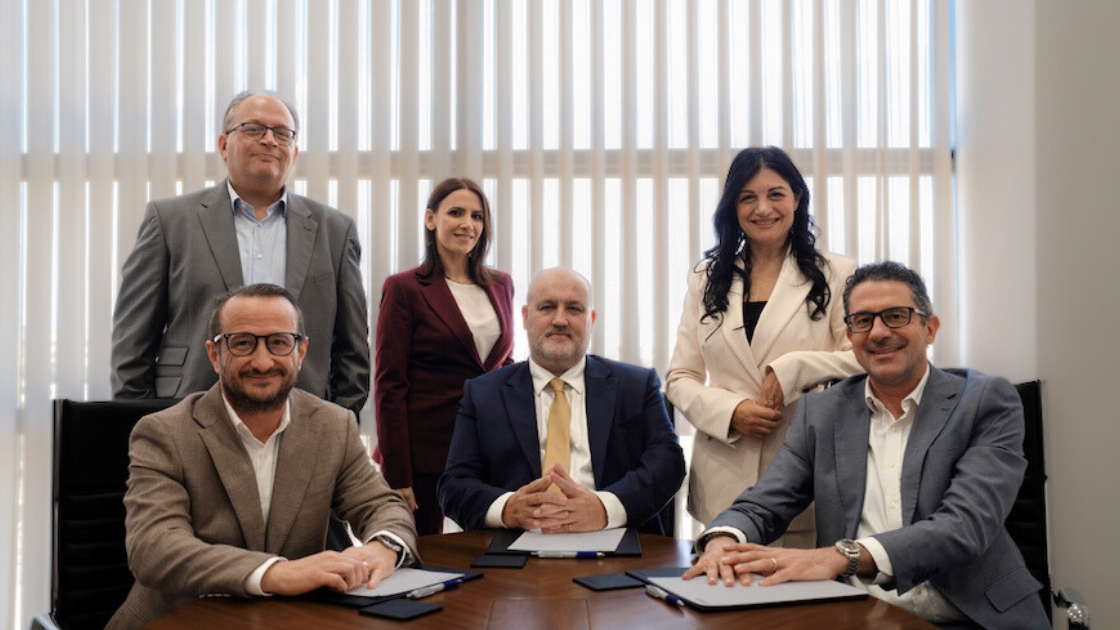
The Remarkable Collective welcomes collaboration with NOUV, completing end-to-end business services portfolio
The addition directly addresses the sophisticated needs of today’s businesses
Malta Maritime Forum warns EU ‘green’ law driving business to North Africa
Malta Maritime Forum warns southern EU ports risk becoming feeder hubs playing a secondary role to extra-EU ports

Hotel bedspace increases by 27% since 2022
The sector is steadily expanding its accommodation supply