



The Malta Communications Authority (MCA) has reported a year of significant progress for Malta’s electronic communications sector, with continued growth in mobile, broadband, and Pay-TV services, alongside a broadening of the MCA’s regulatory responsibilities into digital governance.
According to its Annual Report and Financial Statements for 2024, the Authority saw “a substantial volume of regulatory, supervisory and strategic policy work,” reflecting not only an evolving market but also the MCA’s expanded mandate.
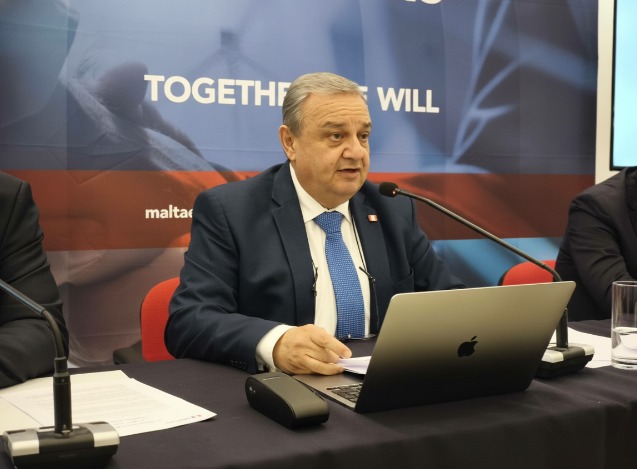
“2024 was a landmark year in the Malta Communications Authority’s journey, a year that saw us step confidently into new territory,” said MCA CEO Jesmond Bugeja in the foreword.
He described the adoption of the DSA and cybersecurity framework preparations as “a bold new chapter in digital governance.”
Fixed broadband nearing full fibre rollout
Broadband subscriptions increased by 1.8 per cent to 240,162 by the end of 2024, with nationwide uptake driven by high-speed plans. Gigabit-capable subscribers now account for one in every five fixed internet connections, with gigabit user penetration rising from 12.1 per cent in 2023 to 16.8 per cent in 2024.
GO’s Fibre-to-the-Home (FTTH) coverage reached 93.5 per cent of national dwellings, while Melita reported its first year of fibre deployment, covering 7.7 per cent. Epic, a later entrant, covered 6.9 per cent of households.
Cable and FTTH remain the most used broadband technologies, representing 45.6 per cent and 43.8 per cent of subscriptions respectively. Fixed wireless and copper-based DSL connections now account for less than 11 per cent combined.
The average broadband revenue per user (ARPU) fell marginally from €269.46 in 2023 to €267.36 in 2024, as operators migrated customers to faster plans without significant price hikes. The price paid per Mbps dropped to €0.41, reflecting improved consumer value.
Mobile market record: Post-paid overtakes pre-paid for the first time
The mobile telephony segment recorded 766,620 subscriptions by December 2024, up 2.3 per cent year-on-year. For the first time since records began, post-paid plans surpassed pre-paid, representing 53.4 per cent of subscriptions.
Mobile penetration reached 133.4 per cent of the population, with ARPU modestly rising to €156.99, an increase of 0.8 per cent as data-rich plans drove revenue stability.
Consumers continued to pivot away from traditional voice calls and SMS, with the average user sending just 158 text messages in 2024, down from 194 the previous year. Meanwhile, mobile data consumption surged to 138.6 petabytes – more than quadruple the data used just four years earlier.
Shift to IPTV, with bundled sales still dominant
Pay-TV subscriptions grew by 2.3 per cent to 194,431 in 2024. While digital cable remains the most widespread platform with 52.5 per cent market share, IPTV now represents 47.5 per cent of all Pay-TV subscriptions.
Bundled uptake remains strong: 83 per cent of Pay-TV subscriptions are included within multi-service bundles, predominantly triple-play packages featuring TV, broadband, and fixed telephony.
Average revenue per Pay-TV user rose from €167.66 to €170.57, driven by take-up of premium services and the expanded availability of app-based features.
MCA strengthens fight against scam calls
A notable regulatory milestone in 2024 was the MCA’s issuance of a decision requiring all operators to “implement network-level call blocking measures” by 1 November 2024 to combat spoofing and vishing scams that exploit Maltese numbers.
The Authority also launched a test line (+356 2400 2400) for businesses to verify the legitimacy of cloud-based communication solutions, alongside a public awareness campaign.
The MCA will launch a full public consultation in early 2025 on the wholesale broadband market, following a European Commission veto last March of its proposed deregulation. The reassessment, the Authority confirmed, “will take into account the positions expressed by both the European Commission and BEREC.”
As the Authority approaches its 25th anniversary in 2026, CEO Jesmond Bugeja affirmed its continued focus on “effective regulation, innovation, and the public interest,” noting its expanding role as a coordinator of digital services and platform governance at EU and national levels.


Mandatory culture and language course introduced for foreign workers seeking longer permits
The reform aims to improve labour market stability by ensuring that foreign workers are better integrated and trained

Malta explores importing renewable energy from North Africa
The project is targeting the importation of approximately 0.8 terawatt-hours (TWh) of renewable energy annually
Employers call for moratorium on public sector recruitment ahead of elections
Malta Employers President Ivan Refalo once against raised concerns about politically driven recruitment