


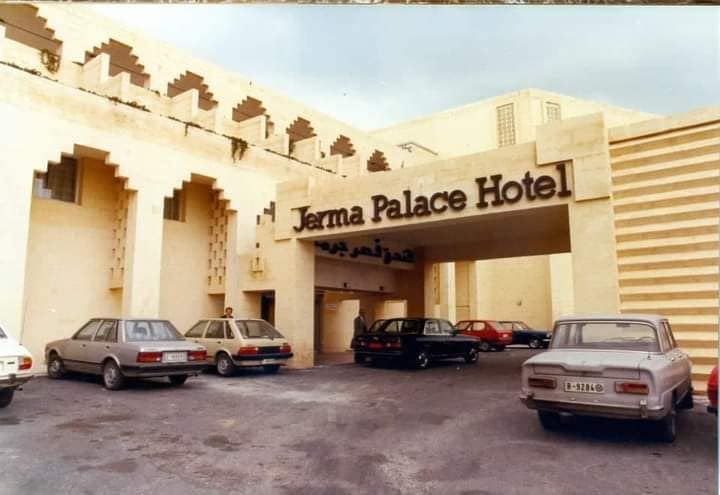
The closure of the Jerma Palace Hotel nearly two decades ago continues to cast a long shadow over Marsaskala’s economy, with new research highlighting how the loss of the landmark establishment disrupted the locality’s tourism ecosystem and left smaller businesses struggling.
According to a recent academic study penned by Karl Agius, Michael Briguglio, and Jorge Luis Bermúdez Pérez, examining the urban transformation of Marsaskala, the now defunct four-star hotel had been a cornerstone of the town’s development during its peak years. Interviewees stressed that the Jerma Palace Hotel was consistently fully booked, with demand often spilling over to smaller guesthouses and hotels in the area. Its half-board packages also benefitted nearby restaurants, as guests frequently dined outside the hotel.
“When the Jerma closed, small hotels collapsed and restaurants were also badly impacted,” the study said, underlining the hotel’s central role in sustaining Marsaskala’s tourism economy.
From anchor to absence
The Jerma Palace Hotel, which operated between 1982 and 2007, was once the South of Malta’s premier tourist resort, attracting foreign visitors and serving as a hub for locals.
Marsaskala retained a steady stream of second-home owners and domestic visitors. In fact, my parents often recall to me how, in their dating days, they’d stop at the hotel for a drink.
Eventually, its closure marked a turning point, as the absence of a major hotel anchor left a gap in the locality’s tourism offering that has never fully been replaced.
The study notes that in the past five years boutique hotels and refurbished properties have attempted to revive interest in Marsaskala. Short-let rentals through platforms such as Airbnb and Booking.com have proliferated, with researchers identifying more than 170 listings in late 2023. Yet, the impact has been uneven: Although these developments bring visitors, they also contribute to rising property prices, overdevelopment, and a decline in quality of life for residents.
A town under pressure
Marsaskala’s population has surged dramatically in recent decades, rising from fewer than 5,000 residents in the mid-1990s to almost 17,000 by 2021. Much of this growth has been fuelled by foreign workers, many of whom are employed in the hospitality and catering sector.
However, this rapid expansion has placed strain on the town’s infrastructure. Interviewees cited constant construction, lack of parking, and shrinking green spaces as pressing issues. One resident described the situation bluntly: “This is not development but overdevelopment.”
The proposed redevelopment of the Jerma site itself remains contentious. Plans for a complex combining a 500-room hotel with more than 100 apartments have sparked debate, with some locals warning it risks further fuelling congestion and real estate speculation. Others see it as a necessary step to put Marsaskala back on the tourism map.
Lessons for coastal governance
The researchers argue that Marsaskala exemplifies a wider trend in Mediterranean coastal towns where tourism gradually gives way to real estate speculation. They describe this as a new stage in urban transformation – “real estateisation” – in which property development reshapes localities more profoundly than tourism itself.
For Marsaskala, the Jerma Palace Hotel stands as both a reminder of what the town once offered and a flashpoint in debates about what kind of development should define its future. Whether its long-awaited redevelopment will revive tourism or deepen existing challenges remains a question with no easy answers.
Featured Image:
Facebook / Maria Micallef
French NGO accuses Metsola and MEP of working with USA to dismantle Green Deal
Bloom calls out EU officials for 'adopting the Trump administration's strategy' to torpedo corporate environmental due diligence
Storm-hit businesses can now apply under amended Malta Enterprise scheme
A new measure offers targeted aid to storm-hit businesses while giving non-compliant operators one year to regularise their permits
Access to finance and rising fraud risks discussed at Malta Women & Finance Summit 2026
Expert advice for spotting scams and opinions on investing