



The Malta Chamber of Commerce has published its pre-budget proposals, stressing that for Malta to remain competitive and resilient, the country must quickly pivot to value-based growth built on productivity, innovation and efficiency.
“Improving Malta’s productivity is definitely one of the priorities that Government needs to focus on. It is no longer a desirable economic objective. It is an urgent national imperative,” the Malta Chamber said. “If Malta fails to improve productivity, the consequences will be severe.” The Chamber said that Budget 2027 must place productivity at the centre of national policy.
Its pre-budget document, called “Reset and Lead”, is structured in two sections, proposals for execution within the first year of the legislature, and proposals for reforms for quality, sustainability and governance for the period 2027 to the end of the legislature.
Both the President of the Chamber, William Spiteri Bailey and the CEO, Marthese Portelli, spoke at the event. “We need to RESET what is not working and have the courage to LEAD through the realities we face,” the Chamber President said.
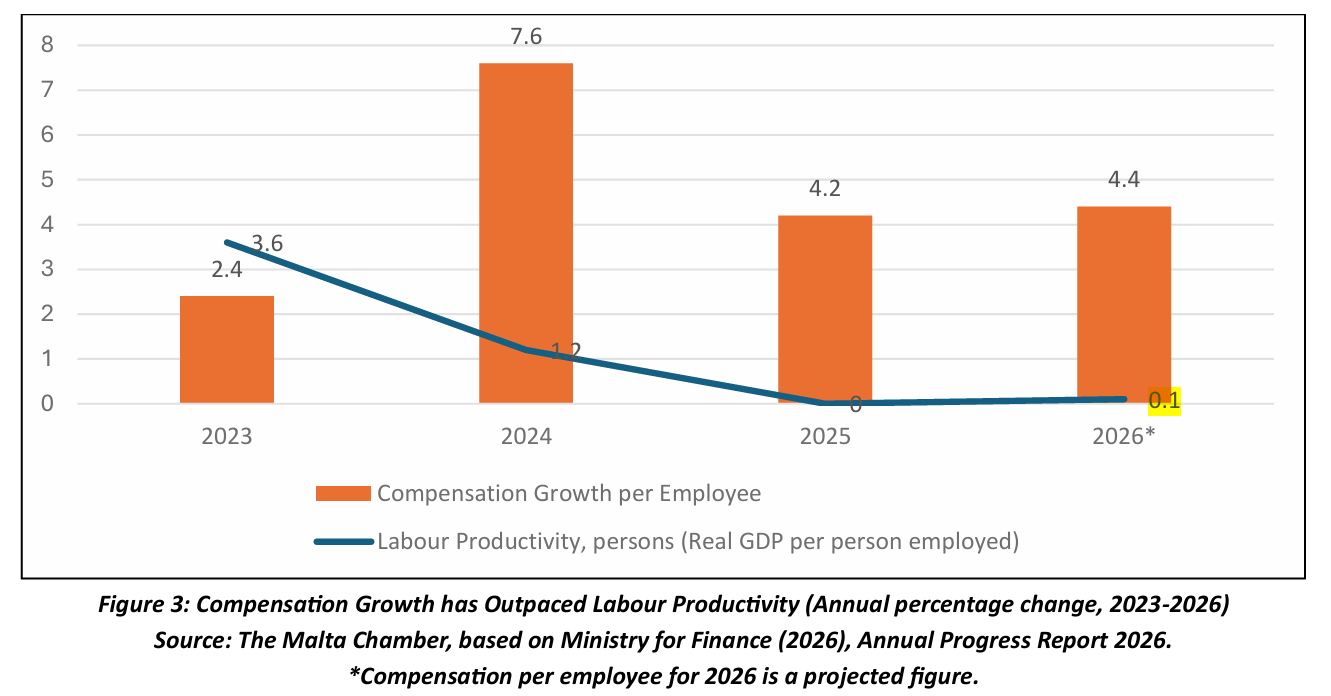
The CEO highlighted productivity issues in Malta, saying that wage compensation in Malta this year is to rise by roughly 4.4 per cent, but labour productivity is projected to rise by just 0.1 per cent.
Dr Portelli delivered a presentation of the Chambers proposals, which number over 150.
Proposals for the first year
Funding for businesses
As part of its proposals, the Malta Chamber is pushing for funding support measures for businesses. Here, the Chamber proposes establishing a multi-year Transformation Fund supporting the take-up and implementation of digitalisation, cyber resilience and skills development.
It also proposes introducing a mechanism allowing businesses to receive an upfront cash payment representing a percentage of the total grant for which they are eligible for new digital or automation systems/solutions that improve productivity as well as for audited cybersecurity setups.
Another suggestion is to introduce safeguards to prevent government entities “absorbing a disproportionate share of EU funds.”
In terms of investment support, the Malta Chamber is pushing for the introduction of Venture Capital Tax credits with 100 per cent tax offsets for Malta based investors who provide seed capital to Maltese based startups.

Reduce the corporate tax rate
Regarding taxation, it wants the corporate tax rate for all businesses reduced from 35 per cent to 25 per cent, and down to 20 per cent for compliant business to reward ethical businesses.
To encourage timely succession planning among family businesses, it also suggests reducing the tax on company transfers conducted inter vivos (when the owner is still alive) to make it lower than the rate applied on such transfers following their death (at causa mortis stage).
To entice more R&I, it suggests increasing Malta’s tax deduction on qualifying R&I expenditure from 175 per cent to 200 per cent.
Labour Migration Policy
The Malta Chamber is calling on the Government to review and update the Labour Migration Policy, with proposals aimed at ensuring applications are processed within a shorter time frame, and shortened response times for urgent employment quota waivers tied directly to verified business growth and/or industrial expansion.
The Chamber also called for the removal of the mandatory 3-week vacancy advertising requirements for recruitment of third-country nationals to help businesses facing acute local skills shortage in critical roles.
In terms of other human resources proposals, The Malta Chamber calls for the introduction of a 5-year income tax exemption for highly qualified Maltese nationals who reside abroad to come back to the country. It also calls for the removal of tax on the COLA, and a tax rate reduction on overtime hours for full-time employees.
Regarding training, one of the Chamber’s proposals is for the Government to allocate a dedicated budget allowing employers to claim direct tax credit on actual incurred costs for knowledge training (locally and internationally) against measurable business productivity gains.
Technology support
One of the proposals is for the Government to build on the €100 million allocation to businesses investing in digitalisation that was present in the Budget for 2026, calling for a similar allocation for next year, topping it up with unused funds this year.
Automated and AI-enabled monitoring systems should also be deployed across Government to identify and flag potential violations, the Chamber said, which would apply clear and constant criteria and strengthen transparency, among other things, while retaining appropriate human oversight for final decisions.
Infrastructure
With regards to planning, the Chamber put forward a proposal to combat illegal development. It calls for the introduction of a strict no-benefit-from-illegality rule within planning and licensing frameworks, prohibiting the retrospective approval, regularisation, sanctioning of developments or operations deliberately commenced without the required permits, save for narrowly defined minor technical discrepancies. This, it said, would close the “build first, sanction later” abuse and restore fairness for compliant operators.
This seems to be a direct response to recently proposed legal notices intended to formalise the retroactive sanctioning of illegal developments, as well as a controversial policy currently in place whereby enforcement of illegal development is suspended once a planning application is filed.
It also calls for financial disincentives which escalate to be introduced for developments not completed within a permit’s validity period.
Mobility
In terms of mobility, it reiterated its call for a mobility e-wallet supported through both public funds and also targeted urban parking management revenues.
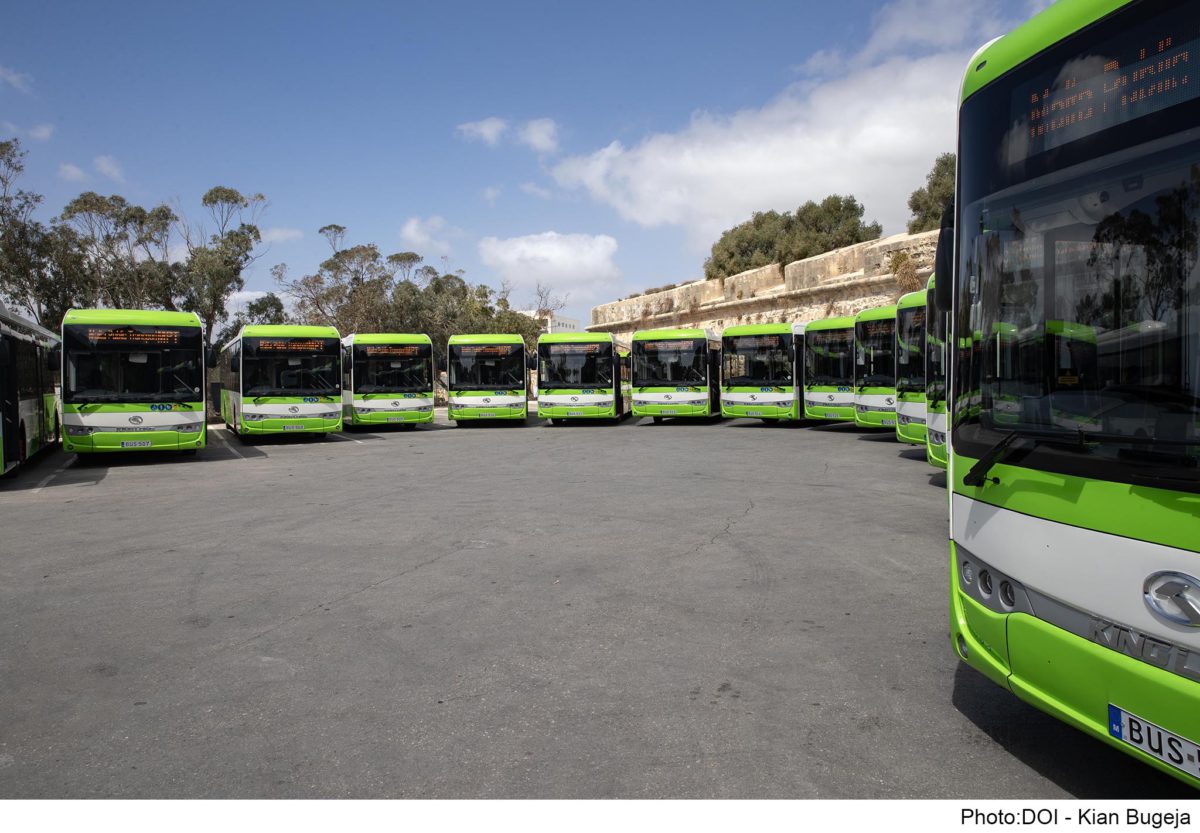
Regarding the public transport system, the Chamber wants the Government to ensure funding addresses the reasons car-users do not shift to public transport, and improvements should focus on direct and faster routes and better peak-time capacity, among others. It also called for school transport to be organised on a geographic-zone basis.
Among its proposals is a suggestion to create designated pick-up and drop-off areas for Y-plate vehicles.
Energy
Regarding the energy subsidies, it wants Government to gradually reallocate recurrent public expenditure currently directed towards broad conventional energy subsidies towards long-term investment in renewable energy infrastructure, grid reinforcement and energy resilience.
It is also calling for increased public expenditure in Malta’s energy system.
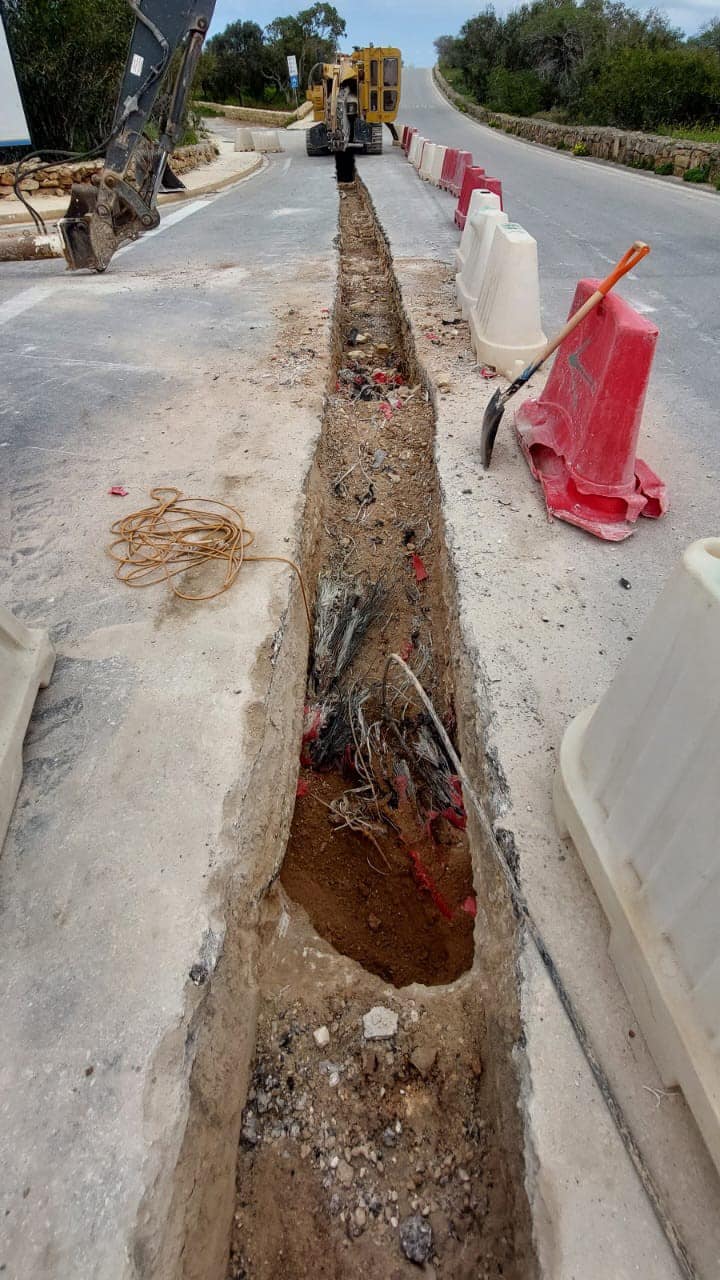
Regarding PV infrastructure, it suggests that a rolling call be opened for renewable energy financing, to ensure continuous access to funding for renewable energy investments, rather than the stop-start schemes. It wants the Government to publish a three-to-five-year renewable energy support roadmap, with a clear national target, setting out indicative funding allocations, available support mechanisms, feed-in tariffs, etc.
Regarding waste collection, among other things the Chamber wants new multi-unit developments to provide waste collection and storage facilities proportionate to occupancy levels.
Tourism sector
The Chamber is calling for the development of a multi-purpose conference centre to support year-round MICE demand, the reinvestment of a percentage of VAT generated in a locality into projects which enhance the destination in that locality, and the harmonisation of VAT rates across tourism-related services to reduce distortions between tourism sub-sectors. The latter is ostensibly a reference to the different VAT rates applied to stand-alone restaurants and restaurants within hotels, with the latter benefitting from the lower rates enjoyed by the hotel itself.
Level playing field and island state drawbacks
The proposals also include ones to create a better level-playing field for businesses, and at addressing island state drawbacks.
It calls for the application of a principle aimed at preventing direct completion from Government entities with private operators across a number of areas.
Regarding the Emissions Trading System (ETS) specifically, it wants full transparency on the amount and use of ETS funds collected to date by Government and direct support back to ETS payers and affected operators to reinvest in technology and clean fuels.
It is also calling on Government to deploy immediate, aggressive diplomacy on critical dossiers impacting geographic isolation, and among other things it wants Government to lobby to reinstate and revise Combined Transport Directive rules that disadvantage peripheral islands, and to lobby to exempt island states from aviation anti-tankering regulations.
Another call by the Chamber is for a clear industrial policy for the manufacturing industry to be set out, which outlines priorities, support instruments, policies related to trade, innovation, technology etc.
It also wants the country to embark on a concerted effort to identify markets that offer real potential for local businesses to grow.
Longer-term
The second part of the Chamber’s document focuses on longer-term structural transformation that it wants implemented during the current five-year electoral cycle.
In terms of planning, here it is calling for the Strategic Plan for Environment and Development 2015 to be revised and updated, “ensuring alignment across all planning policies, clear hierarchy of rules, and removal of ambiguity that enables inconsistent application, supported by a carrying capacity assessment of Malta’s built and natural environment.”
The Chamber is also calling for the introduction of a National Architecture, Aesthetics and Landscape Policy to safeguard Malta’s cultural, historical and natural identity.
It also wants the National Land Registration System to be reformed, ensuring that all land and property in Malta and Gozo is registered within a continuously updated title register.
Transportation
The Chamber’s document reiterates the call for the deployment of smart parking information systems in congestion-prone areas, informing drivers of closest parking spaces.
Another proposal is to assess and develop “evidence-based logistics consolidation hubs through public-private partnership models, reducing warehousing, distribution and last-mile delivery inefficiencies.”
The Chamber also called on the Government to secure a dedicated national budget line to advance the 45,000 sqm Ħal Far International Logistics Hub proposal into its public consultation phase.
Regarding the Grand Harbour and Malta Freeport, it wants them to be formally recognised as critical national infrastructure essential to national supply chain continuity, and for Government to implement a framework for its regeneration and long-term safeguarding. It wants the commissioning and publishing a comprehensive Maritime Impact Assessment covering berth capacity under multiple growth scenarios, traffic and congestion implications and national trade resilience.
Regarding Malta’s energy system, it wants the Government to Initiate early-stage mapping and preparatory work for the post-2035 liberalisation of Malta’s energy distribution and supply framework, “in the event that a derogation extending beyond 2027 is secured, ensuring that Malta does not use the derogation period as a reason for institutional delay, but rather as a transition period for proper regulatory, technical and market preparation.”
It also fielded proposals to implement a “resilient and reliable” system that can sufficiently provide for the country’s energy requirements, which should include the establishment of a solar-as-service framework and the identification of renewable energy zones where large scale projects can be carried out.
Digital transformation
The Malta Chamber also issued proposals regarding the digital transformation, proposing that Government establish a National Digital and AI Readiness Framework for Maltese businesses over the 2027–2031 period, which would support their progression towards data analytics, automation and AI-enabled operations.
It is also pushing for the establishment of a national AI Lab as a public-private partnership, which would develop commercially deployable AI solutions to address national and business related challenges in strategic sectors.

Education
An overhaul of the education system is needed according to the Chamber, to ensure market-aligned skills. Here, it calls for the introduction of an overhauled National Education Curriculum by the 2029 scholastic year, as well as a revamped skills-based assessment for students and teacher professional development.
“The reformed curriculum should mandate STEAM, digital and financial literacy into the primary core curriculum from the start – concurrently fund classroom resources, including in private education, to practically integrate AI tools and critical thinking across all subjects.”
In order to tackle early school leaving, it is proposing the integration of alternative learning programs from Year 9 by providing early access to technical training, work experience, and industry placements.
Public procurement
A few of the points raised by the Malta Chamber regarding public procurement include pushing for a “fully reformed, adequately resourced and technically competent central procurement authority,” ensuring procurement decisions prioritise expertise, data and accountability over price-only considerations, and Institutionalising a six-month rolling public procurement outlook.
It is also reiterating its call for a robust supplier whitelisting framework, based on clear financial, legal and performance criteria, and the enforcement of a clear blacklisting regime for defaulting contractors.
Pensions reform
The Malta Chamber continues advocating for the introduction of flexible auto-enrolment workplace (second-pillar) pensions.
Its proposals include a call for the Government to introduce a phased rollout of the auto enrolment pension scheme over the course of the legislature and the introduction of enhanced tax incentives for employers who voluntarily contribute to workplace pension schemes.

Malta among EU countries with lowest reported levels of work-related stress, depression or anxiety
The figures contrast with countries commonly associated with strong work-life balance

July tourist arrivals increase by 20.8% to nearly 490,000
Expenditure per tourist for the first seven months of 2026 saw a slight decrease to €890, compared with €912 in ...

Anthropic is suddenly everywhere: What is happening at the Claude maker?
What exactly is happening at Anthropic – and why does it matter?