


Finance and Employment Minister Clyde Caruana believes that the bureaucratic trappings of an airtight regulatory system has more positives than negatives for Malta, crediting the country’s rapid compliance with the requirements of the Financial Action Task Force in its exit from the financial grey list for endowing the jurisdiction with “credibility to get things done”.
Speaking during a panel on bureaucracy at the Institute of Financial Services Practitioners’ (IFSP) annual conference last week, the Minister said that the compliance regime currently in effect in Malta is a way for the country to continue to attract good business.
“Let us be clear,” he told the assembled delegates. “Not all business is good. It is better to avoid business we can do without, because of the consequences this can have – as we have experienced.”
During the panel, IFSP president Tonio Zarb described the bureaucratic burden as a “damned if you do, damned if you don’t” situation. “It is necessary to enforce good governance, and it is effective when it is purposeful. But when it is mindless, it is harmful, quickly crossing the line of inefficiency.”
Mr Zarb argued that Malta “cannot afford to have inefficient systems”, and called on Government to take stock of the elements within its control to make sure that the various systems touching on financial services become more streamlined.
“We possibly need to invest a lot more into the capital side than the people side,” he said, “because what we need is to simplify processes as much as possible.”
Recently appointed Malta Financial Services Authority CEO Kenneth Farrugia, in his first public appearance in the role, said that the regulator has learned many lessons over the last years, spurred in part by the jurisdiction’s greylisting.
“We have learned to implement measures far more efficiently and effectively,” he said. “If we hadn’t, it would have taken us three years to get off the grey list, rather than one.”
The challenge ahead, Mr Farrugia continued, is to retain the same mentality without the impetus provided by having a supranational authority pushing for fast reform.
“Now, it’s all about execution. It is nice to propose and plan, but everything boils down to implementation.”
He lauded the unity and support of the Governmental, regulatory and industry stakeholders during Malta’s efforts to get off the grey list, and said that this “successful recipe” needs to continue to be followed during the implementation of Malta’s new national strategy for financial services, launched in March.
“If we revert back to silos, it is not going to work,” he said.
Featured Image:
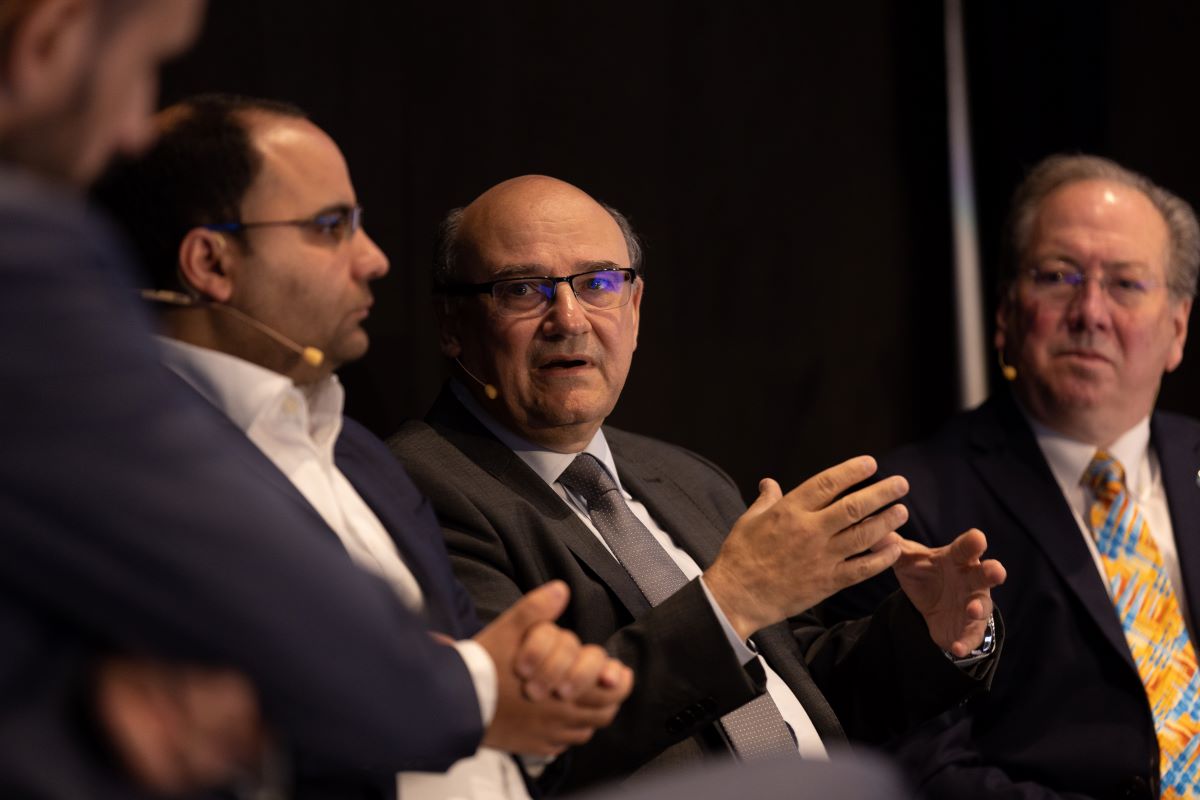
(L-R) Finance and Employment Minister Clyde Caruana, IFSP President Tonio Zarb, Professor Michael Mainelli

Financial knowledge alone is not enough to improve financial wellbeing, experts warn
Experts are discussing how financial education can be translated into better financial decisions
Tourism intensity climbs as Malta’s effective population tops 670,000 in August
During August 2025, St Julian’s tourism intensity reached 143 tourists per 100 residents

Millions in taxable income declared by 81 companies with no employees
Tax declared by US multinationals in Malta rose to €118 million in 2024, up from €24.7 million in 2020