


The Malta Chamber of SMEs is calling for the introduction of a taxpayer points system that would drive treatment by the tax authorities.
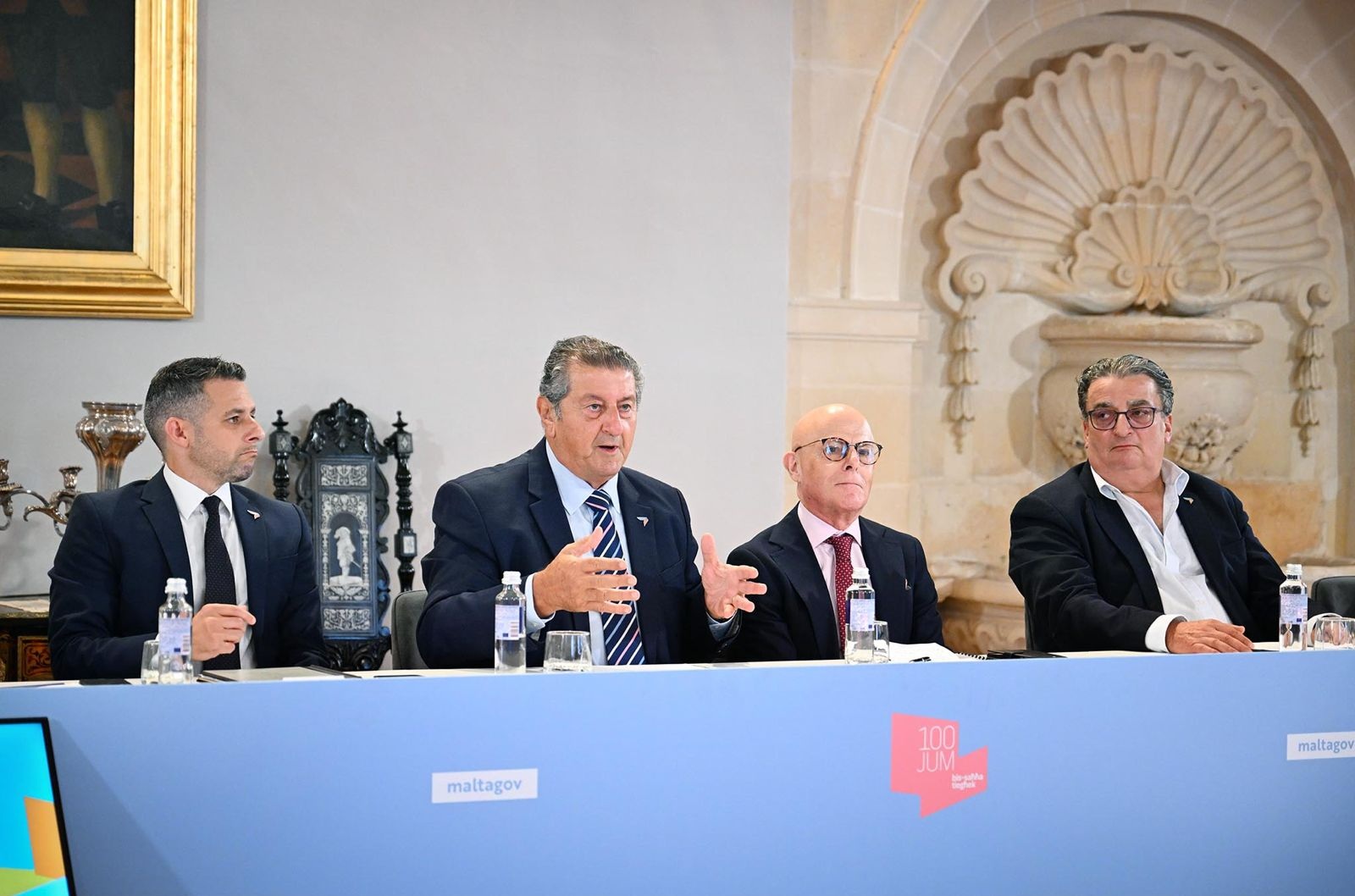
This was one of the 40 proposals issued by the Malta Chamber of SMEs in its proposals for the 2027, which it presented to the Prime Minister on Wednesday.
This points system would be administered by Malta’s Tax and Customs Administration, creating a compliance score. Under the proposed system, points would be deducted for defined failures and restored over time through a clean record.
For example, points would be deducted for late payment of due tax, or late VAT or corporate income tax returns.
Taxpayers would be banded under the proposal, with the band determining how the MTCA treats them. For instance, the top band would have fewer audits and inspections, priority refund processing and a compliance mark businesses can cite in tenders and financing, while the bottom band would face closer scrutiny and no access to certain grants or fast-track schemes until their rating recovers.
The middle band would receive standard treatment.
Another of the Chamber’s proposals calls for the formation of a cross-party taskforce on Malta’s long-term priorities, “recognising that some of the decisions Malta needs to take will inevitably be difficult and at times, unpopular with the general public.”
The purpose of this forum would be to allow both the Government and the Opposition, as well as key stakeholders, to confront difficult choices collectively, and agree on a long-term direction. This would be done without a political party being able to gain an electoral advantage by opposing or supporting necessary reforms, it said.
“Malta needs a mechanism that allows difficult but necessary decisions to be taken in the national interest, rather than decisions being avoided simply because they are politically inconvenient,” it said.
The Chamber of SME’s proposals are divided into five pillars.
Incentivising investment and compliance
It wants the corporate tax rate reduced to 25 per cent, and the introduction of a 15 per cent deferred tax rate on retained and reinvested SME profits.
Other proposals include reducing the tax rate on overtime to 10 per cent on the first €15,000 pegged at a basic weekly wage of €500, a business investment scheme for the general public to lend local businesses funds up to a certain threshold, and a Founder Reinvestment Relief program, which encourages entrepreneurs to reinvest proceeds from qualifying business exits into start-ups and growing SMEs carrying out substantive economic activity in Malta.
Proportionality, good governance and fair competition
Under this pillar, the Chamber of SMEs calls for the strengthening of enforcement against unfair competition, making public procurement more accessible to SMEs, establishing stronger independent procurement oversight and ensuring regulation reflects the size and capacity of smaller businesses.
Among other things, it calls for an independent procurement watchdog, or strengthened existing oversight function, to examine recurring procedural problems, direct orders, inadequate specifications, unfair terms and non-performance in tenders.
A productivity driven policy
In another proposal, it is calling for the introduction of a mandatory SME Test, for every new domestic law, regulation, license condition and major administrative procedure that does not simply reproduce an unavoidable EU obligation, which among other things would quantify the time and direct cost of compliance and whether less burdensome alternatives are available.
It is also calling on Government to implement the Once-Only principle through a secure digital business account. It said that information already held by one public entity should be pre-filled or retrieved for another lawful purpose, subject to data-protection.
The Chamber also called for a one-stop-shop for SMEs to recruit third country nationals, to guide businesses through the entire process from initial application.
Another suggestion is for the introduction of a productivity tech kit, which would cover a bundled package of essential cloud-based productivity tools and implementation support for businesses, where eligible expenditure would include accounting, bookkeeping and structured e-invoicing software; employee scheduling and workforce-management tools, among others. The support, it said, should include assessment of existing systems and assistance with the adoption of compatible solutions. “Support intensity should be highest for sole traders and micro enterprises.”
Other proposals include the introduction of a tax-efficient employee share option scheme, which it said would enable SMEs and start-ups to offer employees a meaningful stake in the future success of the business. Among other things, no tax would arise when a qualifying option is granted and any increase in value should generally be taxed when the shares are eventually sold.
Energy and resource efficiency
Among its proposals in this pillar, the SME Chamber is calling on Government to help businesses turn energy audits into investment, support commercial energy storage, and improve access to the electricity grid.
It said that businesses that complete an approved audit should have direct and simplified access to grants or financing to implement identified improvements.
It is also calling for a dedicated one-stop shop through Business First for larger renewable energy projects to be created, and the introduction of “a transparent and proportionate” methodology for grid connection charges.
The Chamber also wants the ESG Grant that helped businesses carry out their first ESG assessment to be reintroduced and modified to make it more practical and attractive for SMEs, by allowing businesses not only to carry out an ESG assessment but also to engage professional advisors who can recommend practical improvements.
Transport and mobility
Under this pillar, the Chamber of SMEs called for a Smart Traffic Package. “Government should introduce mobility wallets or vouchers for employees who regularly use public transport, shared transport, cycling, walking or sea transport.” At the same time, SMEs should have access to grants for secure bicycle parking, employee mobility coordination, among other things, it said.
It is also calling for multimodal transport to be improved, with more frequent bus services, reliable real-time passenger information, and better connected park-and-ride facilities, among other things.
Another suggestion is the introduction of a new vehicle registration category with reduced annual license fees for vehicles that are voluntarily restricted from travelling during the busiest periods of the day. “The scheme could apply to vehicles that do not operate during peak hours, such as those used by retirees, businesses, employees and self-employed individuals with flexible working arrangements, and certain delivery operators.”
The Chamber is also calling for waste to be collected at night, and for off-peak deliveries for businesses to be incentivised.
Regarding freight to Gozo, the SME Chamber proposes the establishment of a Gozo Logistics and Connectivity Compact, which includes a dedicated freight and consolidation hub, better separation between freight, passenger and tourism traffic, and a digital booking system with priority access for essential goods.
Featured Image:
DOI / Clifton Fenech


Malta Chamber hits back at Clyde Caruana over ‘cheap foreign worker’ claims
Chamber says Minister's comments 'misdiagnose the root cause of Malta’s economic bottlenecks'
AI, sanctions, and sophisticated crime are reshaping financial sector’s risk, bankers told
The challenges were discussed at a Malta Bankers’ Association (MBA) conference

BNF Bank becomes Premium Partner of the Royal Malta Golf Club
The bank will become the principal sponsor of the club that welcomes more than 100 young golfers each season