


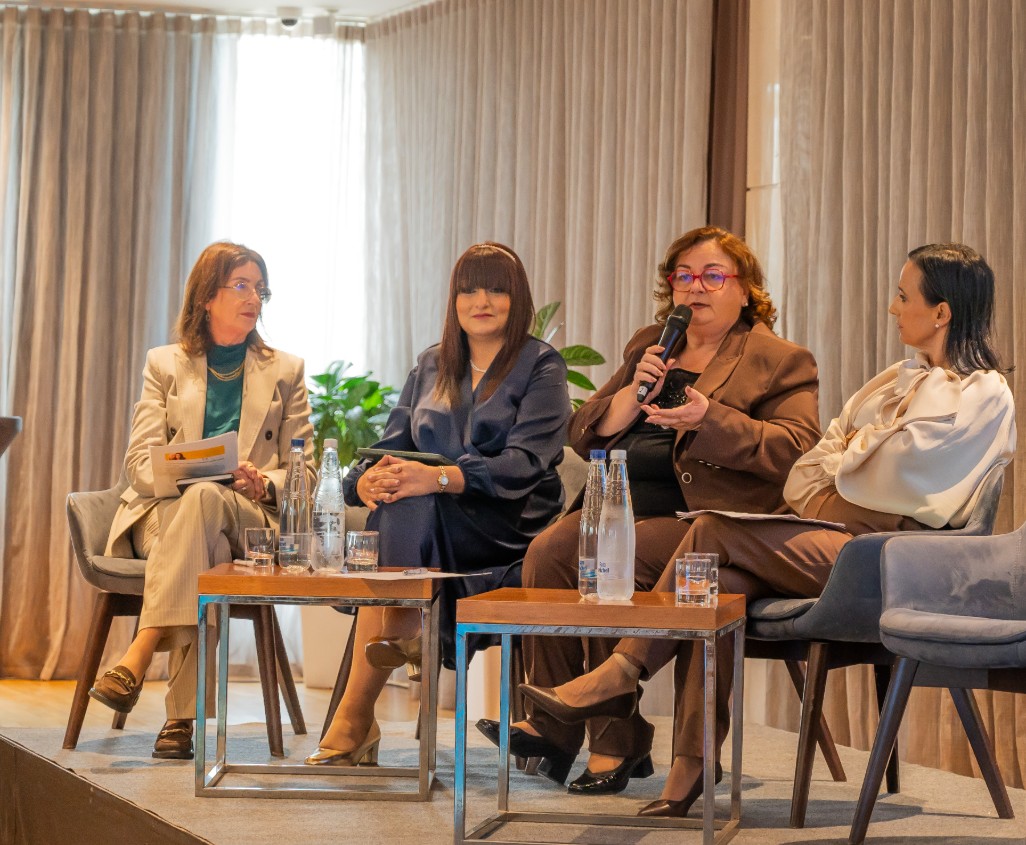
Two panel discussions at the Malta Women & Finance Summit 2026 focused on practical financial decision-making across life stages and the growing risks posed by scams and fraud, bringing together representatives from banking, regulation, education, and financial technology.
The event was organised by Business and Professional Women (BPW) Valletta Malta in collaboration with Market Accents and Capable Minds
The sessions moved the discussion away from theory and into real-life scenarios, examining how women in Malta navigate everyday money management, long-term financial planning and digital financial risks.
The first panel, moderated by Petra Ellul Mercer, explored access to finance across ages through three case studies representing different stages of life.
Panellists included Catherine Calleja, Managing Director at Atlas Healthcare; Therese Demanuele, Senior Lecturer at MCAST; Graziella Grech, Executive Director at Cashplus; and Sharon Pollacco, Manager at Bank of Valletta.
An initial audience survey revealed that current financial concerns were split almost evenly between budgeting (25 per cent), investing (24 per cent), debt (18 per cent) and starting a business (14 per cent). When asked to identify examples of fintech, 35 per cent of attendees were unsure of what it actually means.
Ms Grech explained that financial technology often goes unnoticed in daily life, citing examples such as transport cards, e-ID access to childcare refunds and app-based financial services as practical forms of fintech already widely used.
Case study A – a 24-year-old starting out
In discussing a hypothetical 24-year-old considering a car loan, Ms Calleja cautioned that vehicles lose value immediately after purchase. She suggested that early contributions to a pension scheme – even from as little as €25 per month – could have a more meaningful long-term impact.
Ms Demanuele emphasised the importance of budgeting from the outset, outlining three core components: cash inflows, budgeted outflows and savings. On property, she expressed support for buying rather than renting, provided the purchase remains within one’s financial means.
Ms Grech noted that modern banking apps allow users to set monthly spending limits, while Ms Pollacco added that owning and using a credit card responsibly requires discipline and awareness of spending habits.
Case study B – returning to work at 41
The second scenario examined a 41-year-old woman returning to work after a break, offered a premium banking package and access to credit facilities.
Ms Pollacco encouraged women in this situation to think beyond immediate family responsibilities and consider their own retirement planning.
Ms Calleja highlighted the role of health insurance in protecting against unforeseen medical expenses, noting that certain procedures can involve long waiting times in the public system and high private costs. She also referred to the government’s 25 per cent tax rebate on pension contributions.
Ms Demanuele stressed the importance of discussing budgeting within relationships and involving children in conversations about household bills to build financial awareness from a young age.
Case study C – approaching retirement at 56
The final case focused on a 56-year-old considering buy-to-let property to supplement retirement income but concerned about liquidity.
Ms Pollacco advised maintaining a balance between property investment and accessible funds, suggesting that retaining a portion of savings in liquid form is essential.
Ms Calleja noted that property should complement, not replace, a pension plan. Ms Grech reassured attendees that fintech tools can also help detect and prevent scams when used correctly.
Scams, cloned websites and human behaviour
The second panel, moderated by Noreen Burroughes Cesareo, addressed the increasing sophistication of scams targeting bank customers and digital users.
Panellists included Sarah Pulis, Head Conduct Supervisor at the Malta Financial Services Authority; Geoffrey Bezzina, Chairman of the Board of Management and Administration at the Office of the Arbiter for Financial Services; and Gilbert Gatt, Head of Fraud Investigations and Oversight Management at APS Bank.
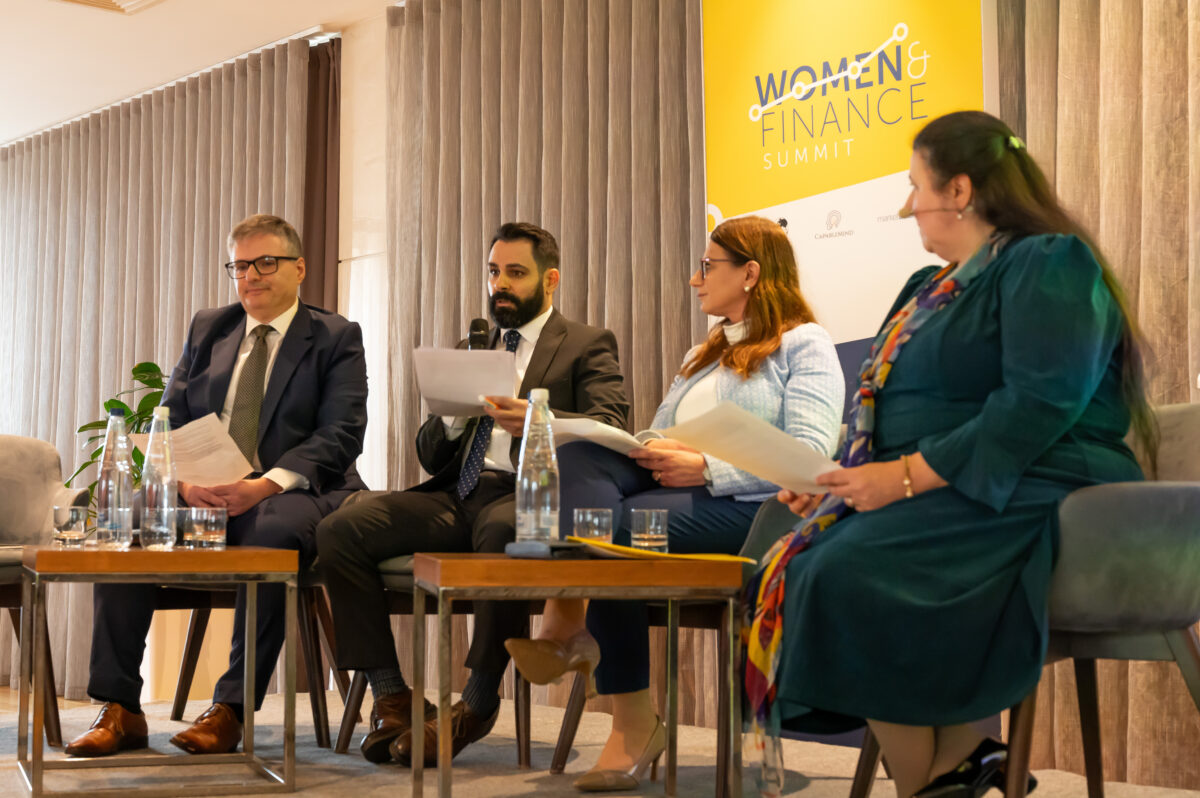
Ms Pulis explained that scams are becoming increasingly sophisticated, with fraudsters cloning legitimate websites by altering a single character in a URL. She also warned about financial advice shared by unverified “finfluencers” on social media, as well as the rise of crypto-related and impersonation scams.
Mr Gatt highlighted cases where customers were encouraged to download remote access applications, allowing scammers to gain control of their devices.
Mr Bezzina referred to incidents in 2023 and 2024 where scammers mirrored banking apps and sent fraudulent SMS messages containing malicious links to customers. Despite public awareness campaigns, he noted that many still fall victim due to human behaviour and the urgency created by such messages.
Panellists consistently advised against reacting immediately to messages purportedly sent by banks. Instead, individuals should pause, verify independently and check whether entities are listed on the MFSA’s official register, as some scammers have even produced fake certificates.
Mr Gatt concluded by stressing the importance of informing banks immediately when a scam is suspected, as swift reporting can limit financial damage.
Featured Image:
Catherine Calleja, Managing Director at Atlas Healthcare; Therese Demanuele, Senior Lecturer at MCAST; Graziella Grech, Executive Director at Cashplus; and Sharon Pollacco, Manager at Bank of Valletta
‘We realise the importance of Gozo as part of our economy’ – FBO Regulator
Joseph Gerada on the Gozitan microclimate, the urgency of succession planning, and the importance of corporate governance
Malta sets up group to make share trades settle faster by 2027
The move aligns Malta with a broader EU-wide initiative to shorten settlement times
Is Malta emerging as a preferred hub for EMI licensing as Lithuania tightens oversight?
People are highlighting Malta’s positioning as an alternative jurisdiction to Lithuania when it comes to EMI licensing