



A new report by the Central Bank of Malta’s chief economist takes aim at reports of widespread low wages and high inequality by applying a critical lens to tax data, finding that local wages are in fact significantly higher than previously thought.
The report finds that Malta’s median employment income stands at €29,137, rising to €32,500 for Maltese nationals.
On the other hand, non-EU nationals earn markedly less at €18,200.
Around 10 per cent of full-timers earn over €60,000, qualifying for the highest tax band, while just 6 per cent earn less than €12,000 and therefore pay no tax.
The new findings come as a response to claims, derived from tax data filed in Parliament, that a full quarter of Malta’s full-time employees earn less than €1,000 a month.

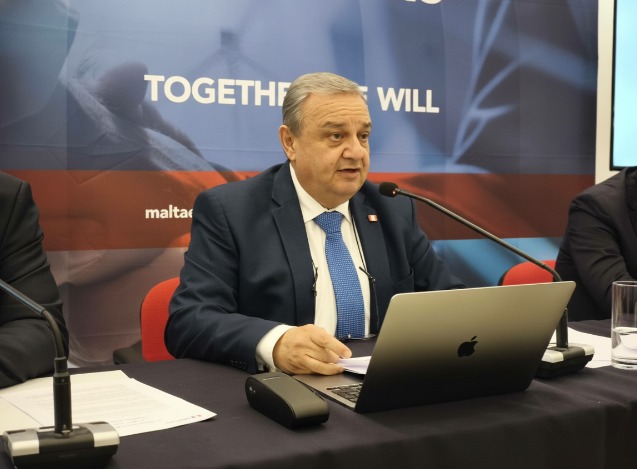
Aaron G. Grech, who serves as the Chief Officer of the Economics Division at the Central Bank of Malta, did not shy away from expressing his frustration at the “misinterpretation” of data that is reported “unquestioningly, without a reality check against official statistics.”
The issue, he said, is that the dataset on which claims of low wages was based included many workers who did not spend a full year in employment.
On paper, a person who worked 6 months and earned €10,000 while a colleague worked for 12 months and earned €20,000 would have vastly different incomes. An analysis that includes the person who worked – and earned – less therefore skews the results, dragging the median wage downwards.
The problem is compounded by the very large number of persons who worked for less than a full year – around 38 per cent of the total.
Dr Grech therefore approached the question of Malta’s median wage levels by focusing attention on those persons who worked for a full year, allowing him to obtain results that better capture what earnings are like for most workers.
“The inclusion of so many taxpayers with just a few months of employment income depressed greatly the average and median wage and skewed the wage distribution towards the lowest wage brackets,” he wrote.
The impact of removing all those who worked for less than 12 months is stark, with the median income for Maltese workers rising from around €27,500 to €32,500, for third country nationals from €14,500 to €18,200 and most notably, for EU workers from €21,500 to €32,700.
Dr Grech admitted that restricting the data set only to those who complete a full year may skew compensation figures upwards “as it might exclude disproportionately workers from sectors where there is a lot of labour turnover, such as accommodation and catering, and which tend to have lower wage levels.”
Nonetheless, “on balance, adopting this approach is undoubtedly superior to not adjusting the wage distribution for the effects of labour turnover.”
These major changes, argued Dr Grech, show that earlier – lower – wage estimates were simply the result of “ignoring the well-known fact that Malta’s labour force s characterised by an ever-increasing labour turnover rate.”
These, he said, “gave a completely wrong impression of the local economy’s wage structure.”


Tax cuts, AI incentives and infrastructure investment: What businesses want from Budget 2027
From corporate tax reductions and digitalisation grants to infrastructure investment and workforce development
Education system ‘stifles creativity’, Malta Employers’ chief says as association calls for ‘transformation’
Association's Director General says system is geared towards conformity

MFSA flags missing information in pension statements
Some pension statements omitted key details on investments, fees, contributions and account changes