


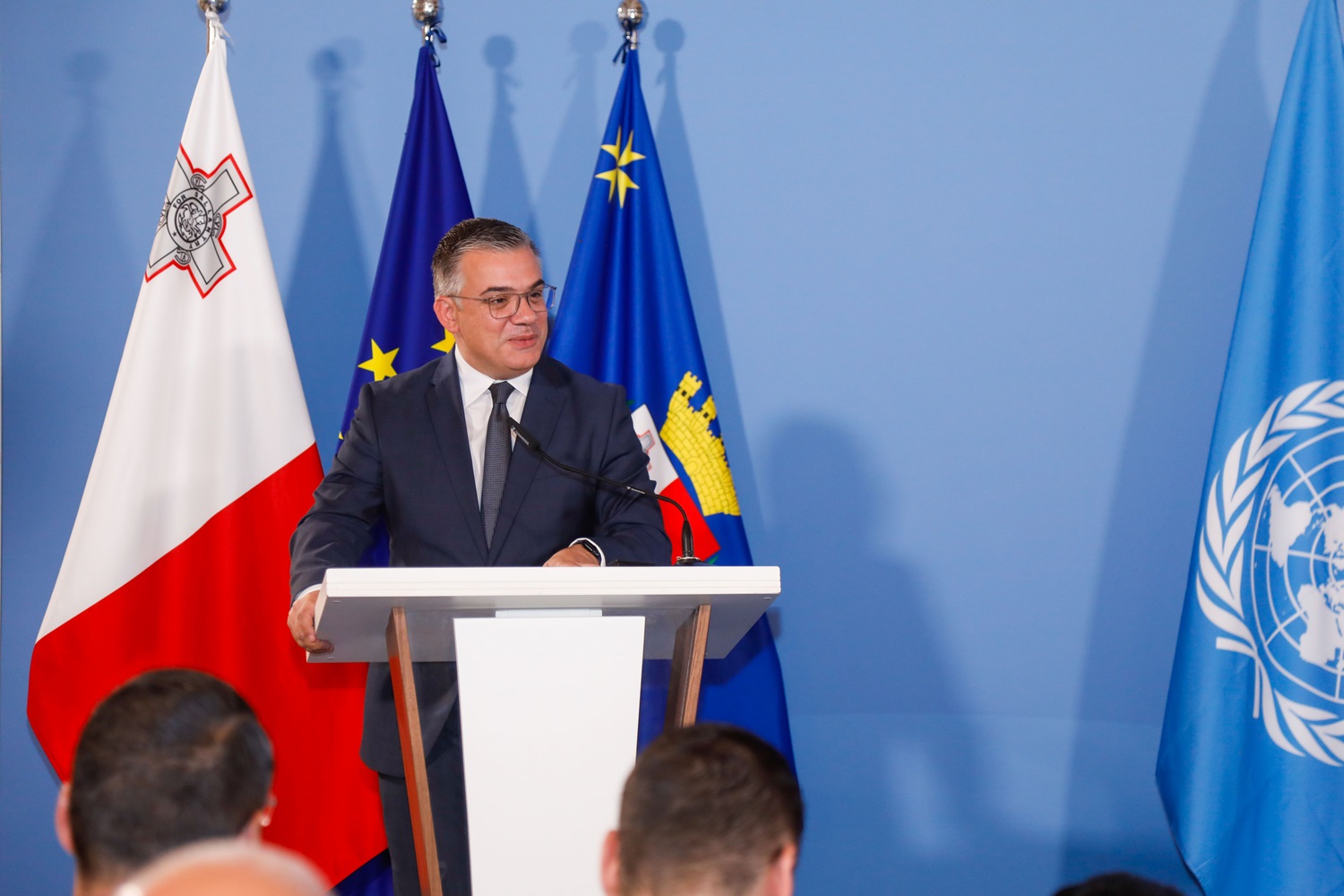
The Government has launched a plan aimed at better integrating the different modes of transport and introducing a light rail system.
The plan, called Malta in Motion, is grounded in the National Integrated Transport Plan, in which there are six core components. These are a rapid transit system, bus network and services, maritime network and ferry services, road network efficiency, public realm and active travel access, and parking policy and strategy.
Transport Minister Chris Bonett described it as the largest infrastructure and transport project the country has seen. The new plan is a 15-year-vision, with an integrated system giving people different options for transport, Minister Bonett said.
The Minister said that public transport always went to Valletta because activity centres around the Capital city and the port. He believes that where transport hubs move, businesses will follow.
“If there are stations in areas spread from North to the South of the country, we will have significant and widespread change in daily activity. Transport will be the catalyst for that spread,” the minister said,.
Transport Malta CEO Kurt Farrugia delivered a press briefing earlier in the day, and explained that this plan is not just about a mass transport system, but a whole synchronised network where one mode leads to the other.
The 24km light rail system would start off with one line, called the La Valette Line, connecting St Paul’s Bay to the Malta International Airport. Valletta, Qormi and Mater Dei Hospital will be connected.
It is estimated that this line, which would include underground, street-level and overground components, would cost around €2.8 billion (including risks).
Mr Farrugia said that other stops along the route are being studied and that the government has allocated funds for geotechnical studies, which will soon start.
Larissa Miller, an Associate Director of ARUP, an international consulting firm engaged by the government, said that they are investigating the typology of every section of the proposed line, taking the built environment into consideration.
Donal McDaid, ARUP Director, said that the construction phase alone of the La Valette Line would take 3-4 years, if not longer, and there are other phases.
A slide presented during the minister's presentation showed that the line would be completed in 10-15 years. The first phase, connecting the airport to Valletta, is estimated to start operating in 5-10 years time.
Asked whether the rail line would be free of charge for the public, Mr Farrugia said that it would depend on the government policy of the time.
Bus network redesign
The bus network will be redesigned with the aim of improving reliability and efficiently connecting people across centres and surrounding regions, with stronger links to key centres of activity, officials said.
With the current bus concession ending in 2029, Transport Malta CEO Farrugia said that this was identified as an opportunity to ensure that the new bus network will be integrated with the rapid transit system being proposed.
He said that the current infrastructure is already strained, with 250,000 bus passengers daily.
Experts said that the plan would include bus priority measures.
During a presentation of the plan for the press, it was said that the network would include primary and secondary bus routes and also local and on demand bus services.
Regarding the maritime network and ferry services, Mr Farrugia said that within the next two to three weeks, a new route connecting Sliema to Buġibba and Gozo will launch, and a route is also planned from Marsascala to Valletta.
Walking and cycling investments will support first and last mile connections to public transport for a balanced system and better connected centres.
Regarding road network efficiency, officials said that smart processes and technologies will be used to support a fair and efficient flow of movement across the road network. Among other things, intelligent transport systems and dynamic signage were mentioned.
Officials also said that the plan includes better managed parking to support access to the transport system.
The press was informed that the plan remains flexible, adapting to new evidence, community feedback, changing travel and land use patterns, and Malta’s evolving opportunities and needs.
Core delivery of the programme is planned over the next 15 years.
ARUP has appointed environmental architects, Mizzi Studio, and its production and public engagement platform Living Bridge Studios, as the local partners to support the Integrated Transport Plan.
Questioned by the press, Mr Farrugia said it was not Government's policy to introduce paid on-street parking.
Concerns about costs of a rail project have been present since the original Metro proposal in 2021, which was different to the proposal presented today. Recently, Finance Minister Clyde Caruana said that economic projections showing a surplus for Malta in 2029 and 2030 do not take into consideration a new mass transport system.

MFSA flags missing information in pension statements
Some pension statements omitted key details on investments, fees, contributions and account changes
Budget should support sustainable economic growth, promote financial stability – BOV
Maintaining a stable and predictable business environment, encouraging investment in productivity remain important, it said
Identità aims to shorten waiting times and simplify procedures as part of its vision for coming years
Improvements must be achieved without compromising identity security or personal data protection, it said