


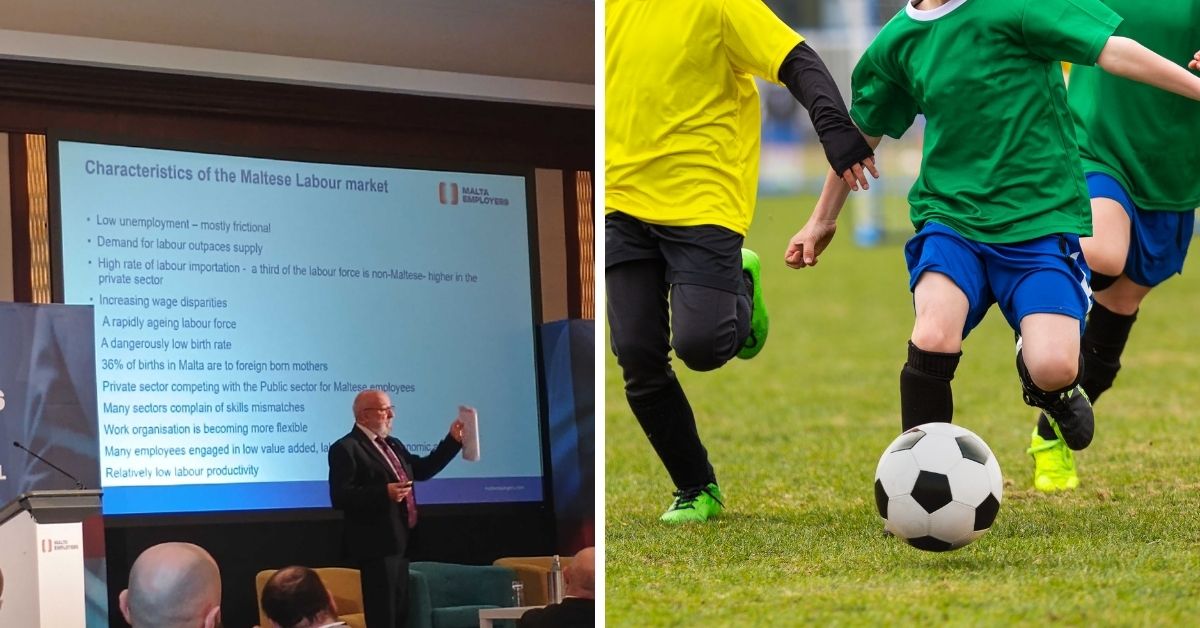
A report on the feasibility of a four-day work week prepared by Malta Employers suggests that families reduce “excessive afterwork activities” that are “a source of anxiety”.
“Rushing from work to take children to after school activities every day, involves time and commuting which takes up a good part of – if not all – leisure time,” the report states.
“Many employees often express the sentiment that they feel less stressed at work than when they leave the workplace.”
“A reduction in such afterwork commitments is also a way to increase relaxation time without sacrificing working hours.”
The recommendation to implement lifestyle changes as a way to combat stress is one of 11 made in a position paper by Malta’s employer association.
It is one of several targeted towards families with children, with other suggestions including an extension of school hours, an extension of childcare facilities, and a scheme whereby parents with a second child within six years can work reduced hours, with a corresponding reduction in wages.
The proposal suggests that Government would step in to partly cover the loss in earnings.
Malta Employers made it clear that a mandated reduction in working hours is a non-starter, arguing that “blanket measures bring pain to both workers and companies.”
“Government should lead with incentives, not legislation,” it said, adding that “once such measures are introduced, they are next to impossible to retract, even if they incur a negative net benefit to society.
“Mandating a reduced hour week will be political suicide for a party in government to withdraw, even if introduced on a test basis.”


Employers take umbrage at video promoting public sector’s flexible work arrangements
The video outlines a range of flexibility options available to public sector employees
Malta’s inflation eases to 2.5% in January as food prices remain main driver
While overall inflation continued to moderate at the start of the year, price pressures remain uneven across categories
Final call for food and beverage manufacturers to exhibit at SIAL Paris
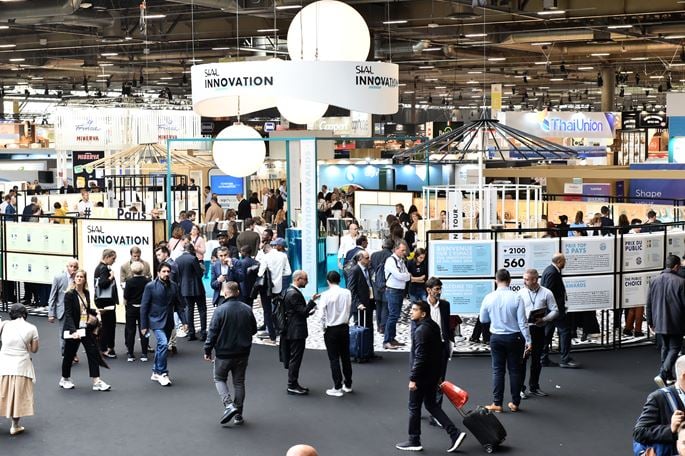
SIAL Paris is one of the world’s leading international food and beverage exhibitions