



In my article of 23rd July commenting on the persistent volatility in euro area bond yields and the resultant movement in bond prices, I cautioned that fixed income instruments (bonds), often regarded as the natural home for cautious Maltese investors, were no longer offering the tranquility many had come to expect with wide fluctuations in price from one week to the next.
At the time, the European Central Bank (ECB) had just announced its first interest rate increase in over two years and lifted its deposit rate to 2.25 per cent. The 10-year German Bund yield had climbed back to 3.15 per cent at the time compared to a level of below 2.7 per cent at the start of the year.
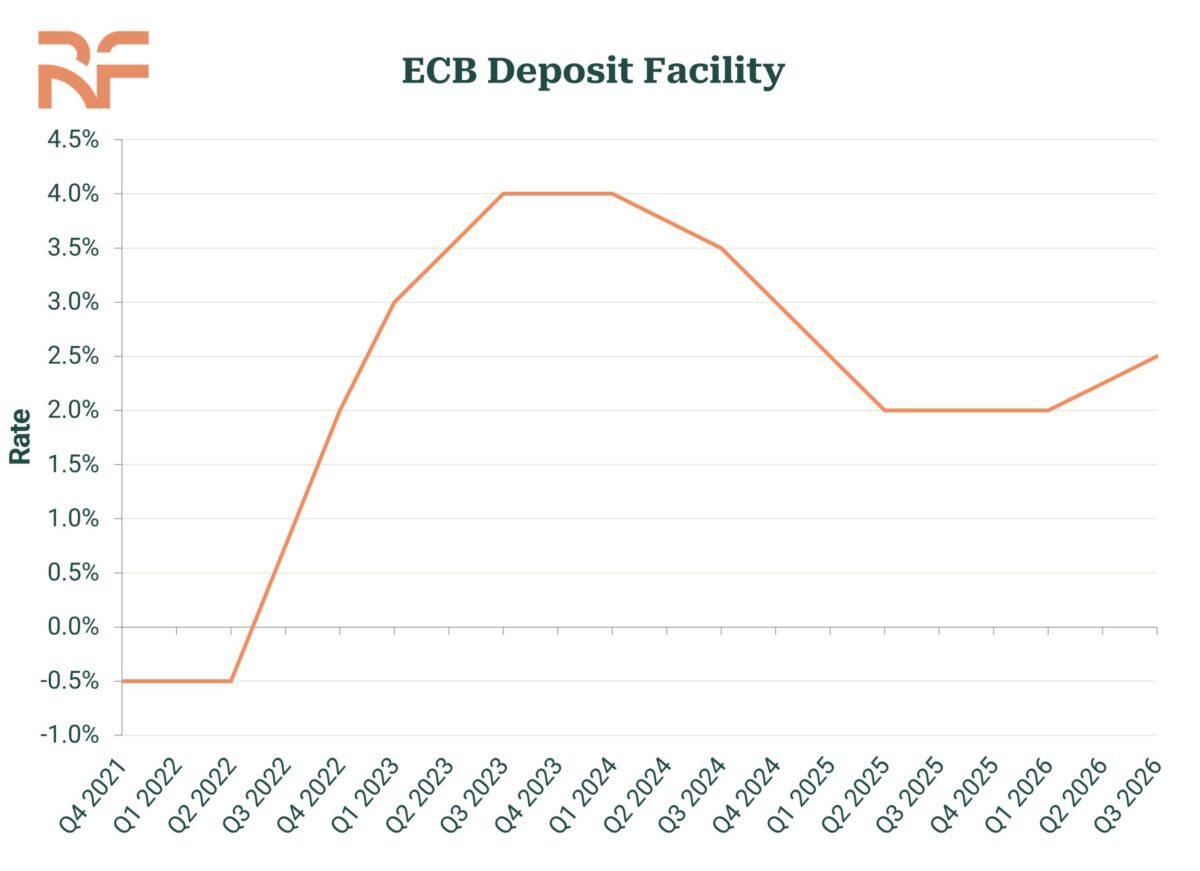
Last Thursday, the Governing Council of the ECB raised its deposit rate by a further quarter point to 2.5 per cent. The decision was widely expected and in the words of ECB President Christine Lagarde, a “no-brainer”.
The main background to this is the jump of around 40 per cent in the oil price since the collapse of the US-Iran ceasefire in early July to over USD105 per barrel and the euro area inflation rate standing at 3.3 per cent in August marking the sixth consecutive month above the 2 per cent target.
The ongoing geopolitical developments are leading to changes in inflation rates as well as interest rates which are impacting various asset classes.
Further rate hikes ahead
Although last week’s hike was widely expected, the statements by the ECB sent important messages to investors on upcoming changes in monetary policy decisions. The ECB noted that the conflict in the Middle East “continues to generate inflation pressures” and inflation “is set to remain well above target for an extended period”.
In fact, the ECB amended its projections and the inflation rate for 2027 was revised upwards to 2.5 per cent. Ms Lagarde stated clearly that “inflation will be longer lasting than we anticipated” and that the 2 per cent objective would only be met “by the end of 2027”.
Although the ECB President declined to pre-commit to further hikes in interest rates, several economists and market commentators expect additional hikes in the very near term.
Current indications are that another rise in the ECB deposit rate of 0.25 percentage points to 2.75 per cent could take place as early as next month with a further move also of a quarter-point increase either by the end of the year or during the first quarter of 2027.
MGS prices decline sharply
The bond markets had been reacting to the jump in the oil price and higher inflation reading for several weeks. In fact, the 10-year Bund yield has been rising consistently over the summer. It surpassed a level of 3.50 per cent in recent days (the highest level since 2011) from below 2.7 per cent at the start of the year. The rise of 0.8 per cent percentage points in the Bund yield (the benchmark reference for the euro area) implies a significant downturn in bond prices.
The bond market sell-off was especially severe in France given the overall public debt levels and the high cost of servicing the debt as I explained in another article recently. France’s 10-year yield reached 4.40 per cent (the highest since 2008) and more importantly, the spread over Germany widened to above 0.90 percentage points. This is the largest premium since the eurozone debt crisis indicating the evident concerns around the fiscal situation in France.
The impact of such strong moves across the Malta Government Stock market was immediate as the indicative bid prices across all MGS’s track the eurozone benchmarks closely. The decline in MGS prices was significant especially across the longer-dated maturities.
This may not be important for the numerous buy-to-hold investors in Malta although they could be taken aback when reviewing their investment portfolios. On the other hand, for those investors who may need to sell medium to long-dated MGS before maturity, they could be facing meaningful capital risk should yields climb further in the weeks and months ahead.
As I had stated, investors need to be increasingly focused on matching their bond maturities to their own investment horizon rather than reaching out for the longest bond simply because it offers the highest coupon.
Corporate Bond prices stable
Since no liquidity provider or market maker operates across the corporate bond market in Malta, indicative prices are not published daily across all bonds based on the movements in MGS prices and yields.
Price of MSE-listed corporate bonds are simply established by trades passing through the market based on demand and supply dynamics. Most corporate bonds have been largely insulated by the recent sharp movements seen elsewhere.
It would be interesting however to monitor the interest rates that will be offered on new bonds coming to the market and to then gauge the reaction from investors since the yield on a 10-year MGS is now above the 4.20 per cent level for the first time since October 2023.
Positive for bank profitability
The implications of higher interest rates on the equity market are wide-ranging. Incidentally last week, Professor Aswath Damodaran of NYU Stern published a length post titled “Interest Rates and Stock Prices: An Old Debate Flares Up”. Professor Aswath Damodaran is widely recognised as the ‘Dean of Valuation’.
In his recent post, he explained that while the discount rate used in valuation models rises when interest rates also rise, cash flows also change, and the net effect depends on why interest rates rose, how much pricing power a company has to pass on inflation, and how margins respond to higher input and interest costs.
He divides companies into three groups, namely those negatively impacted since the discount rate effect dominates the outcome, those unaffected because the two effects cancel out, and those companies that benefit since cash flows rise by more than enough to compensate for the negative impact of a higher discount rate.
In Malta, the composition of the equity market makes this analysis particularly relevant since the banking sector is hugely dominant. Bank of Valletta plc is the largest company on the Borza with a market capitalization exceeding €1.5 billion.
Together with HSBC Bank Malta plc, APS Bank plc and Lombard Bank Malta plc, the retail banking sector accounts for over 42 per cent of the total equity market capitalization. Banks are the main beneficiaries of rising interest rates as loans and treasury portfolios reprice upwards while a large proportion of funding consisting of customer deposits continue to offer minimal returns to customers. This margin expansion is what drove the surge in profitability across most of the Maltese banks in 2023 and 2024 as the ECB hiked interest rates rapidly as from the second half of 2022.
On the other hand, companies with significant borrowings at floating rates (typically bank facilities linked to the Euribor) suffer from higher finance costs thereby lowering profitability levels and the cash available for dividends.
This is when the bond market is very helpful for companies needing debt funding since upon the issuance of a bond, a company would lock in an interest rate through the term of the bond (typically 10 years) without needing to worry about interest rate risk.
It is amply evident that this rate hike cycle by the ECB is not yet over. This will have ongoing implications for investors across all asset classes and one should not assume that the deposit rate by the ECB will quickly retreat once the Middle East conflict subsides.
On the other hand, bond yields across the international markets generally react immediately to geopolitical and economic developments. This scenario requires ongoing monitoring of investor portfolios amid individual investor objectives.

The article contains public information only and is published solely for informational purposes. It should not be construed as a solicitation or an offer to buy or sell any securities or related financial instruments. No representation or warranty, either expressed or implied, is provided in relation to the accuracy, completeness or reliability of the information contained herein, nor is it intended to be a complete statement or summary of the securities, markets or developments referred to in this article. Rizzo, Farrugia & Co. (Stockbrokers) Ltd (“Rizzo Farrugia”) is under no obligation to update or keep current the information contained herein. Since the buying and selling of securities by any person is dependent on that person’s financial situation and an assessment of the suitability and appropriateness of the proposed transaction, no person should act upon any recommendation in this article without first obtaining investment advice. Rizzo Farrugia, its directors, the author of this article, other employees or clients may have or have had interests in the securities referred to herein and may at any time make purchases and/or sales in them as principal or agent. Furthermore, Rizzo Farrugia may have or have had a relationship with or may provide or has provided other services of a corporate nature to companies herein mentioned. Stock markets are volatile and subject to fluctuations which cannot be reasonably foreseen. Past performance is not necessarily indicative of future results. Foreign currency rates of exchange may adversely affect the value, price or income of any security mentioned in this article. Neither Rizzo Farrugia, nor any of its directors or employees accepts any liability for any loss or damage arising out of the use of all or any part of this article.


Alkagesta hosts banking partners summit as international financial support exceeds $1 billion
Malta's strong regulatory framework, EU membership, and expanding logistics infrastructure continue to attract international trading companies and their financial partners

Malta’s bond market in Q4
The next few months could prove to be an eventful period for the bond market

Heading into the fourth quarter
The fourth quarter of the year commences next week