



Global tourism is entering a new phase, and the signals are clear: event tourism is becoming one of the industry’s most powerful growth drivers. From major sporting tournaments and international summits to music megastars and cultural festivals, travellers are increasingly planning their trips around experiences rather than destinations alone. By 2026, this shift will be defining.
Sports tourism already accounts for around 10 per cent of global tourism spending, while the wider event tourism market – valued at $1.7 trillion (€1.5 trillion) – is expected to grow to $2.6 trillion by 2035. Younger travellers are accelerating this change: 62 per cent of Gen Z travellers say they plan to spend more on experiences than on possessions in the coming year. Events, whether cultural, musical, sporting or professional, are no longer add-ons to travel; they are the reason for travel.
“Events are powerful catalysts for experiences,” says Sylvie Christofle, a tourism researcher at the University of Côte d’Azur. Beyond individual moments, events draw investment into infrastructure, transport and local services. Sociologist specialising in tourism Jean-Didier Urbain puts it simply: “Organising an event in your region puts it on the map.” Studies back this up – research in France, by the Excelia Hotel & Tourism School found that every euro spent on a festival delivers an average of €2.50 in direct benefits to the regions that host them.
At the same time, the nature of events themselves is evolving. Sustainability is becoming central, giving rise to regenerative events – initiatives designed not merely to reduce harm, but to leave host regions better than they were found. Local supply chains, reused materials and co-designed programmes with communities are increasingly seen as markers of quality rather than compromise.
Malta Vision 2050: a timely pivot
It is against this global backdrop that Malta has unveiled Malta Vision 2050, a long-term blueprint designed to guide national development over the next 25 years. Its overarching ambition is clear: securing a healthy quality of life for all. Built around four strategic pillars – Sustainable Economic Growth; Accessible, Citizen-Centred Services; A Resilient Country and Modern Education System; and Smart Land and Sea Usage – the Vision places tourism at the centre of Malta’s future, but with a notable shift in emphasis.
From volume to value
Tourism has long been one of Malta’s economic engines, but Vision 2050 signals a pivot away from volume-driven growth and towards higher-value tourism. Rather than simply increasing arrival numbers, the strategy aims to “rebalance value versus volume” by developing a more premium tourism offering.
This includes expanding higher-end accommodation – particularly 4- and 5-star hotels and quality holiday premises, with a specific focus on Gozo – alongside a stronger services ecosystem encompassing restaurants, retail, local tours and VIP experiences. Conferences, exhibitions, festivals and cultural events are identified as key attractions capable of drawing higher-spending leisure and business visitors, with per-night expenditure aligned to comparable European destinations.
This shift is not merely cosmetic. Malta is targeting a sustainable average annual GDP growth rate of 5 per cent by 2035, driven by seven priority sectors, with tourism remaining central – but redefined around quality, resilience and long-term value.
A strong starting position
In many respects, Malta is well placed to capitalise on the global rise of event tourism. The sector is already diverse and active, supported by Malta Tourism Authority schemes and spanning everything from large-scale music events like Isle of MTV, to village festas, Carnival, Valletta Baroque Festival, conferences, niche sports tournaments and adventure tourism. During summer, major music festivals take place almost every weekend, and Malta is enjoys year-long influxes of tourism.
In fact, tourism expenditure soared to €3.3 billion in 2024, a remarkable 23 per cent increase over the previous year.
These events draw both international visitors and locals, extend tourism beyond peak months and support year-round economic activity. Vision 2050 builds on this foundation, calling for higher-value international meetings such as summits and forums, new events rooted in Malta’s heritage and cultural niches, expanded home-porting initiatives targeting markets such as the US, and improved aviation connectivity that leverages Malta’s strategic location.
On paper, the alignment with global tourism trends is clear.
The difficult balance ahead
Yet the challenges are equally clear. Complaints about Valletta becoming a single, noisy open-air restaurant are increasingly common. Overtourism at sites like the Blue Lagoon persists despite visitor caps. The eco-contribution tax has so far failed to meaningfully deter low-spending tourism, while waste management, traffic congestion and transport infrastructure remain hot and unresolved issues.
Critically, while Vision 2050 speaks extensively about sustainability and resilience, critics note gaps – including the absence of a clearly articulated, future-proof waste system capable of dealing with the growing volumes generated by both residents and visitors.
Event tourism, by its nature, magnifies both opportunity and risk. Done well, it can elevate Malta’s cultural capital, attract higher-spending visitors and support local creative and service industries. Done poorly, it risks intensifying overcrowding, noise pollution and environmental strain – undermining the very quality of life the Vision seeks to protect.
Reaction or leadership?
As 2026 approaches, Malta faces a defining choice. Will it respond reactively, addressing pressures only once they become unmanageable? Or will it take a proactive leadership role, shaping event tourism through long-term planning, regenerative practices and meaningful community involvement?
Event tourism is not a silver bullet. But aligned intelligently with Malta Vision 2050, it could become one of the country’s most powerful tools for sustainable growth. The real question is not how many events Malta hosts — but which events it chooses, how they are designed, and who they ultimately serve.
The trend is clear. Whether Malta leads – or simply hosts – remains to be seen.
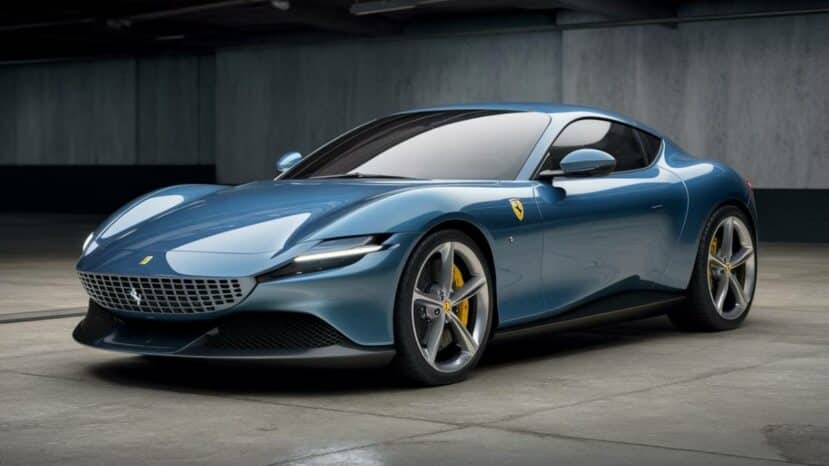
Ferrari unveils ‘Luce’: Its first fully electric supercar set for 2028
Pricing is anticipated to sit well above €500,000
Malta’s trade deficit narrows as import shifts and export rebalancing continue in 2026
Over the full year, Malta’s trade deficit narrowed by €444.1 million compared with 2024
Thinking of housing as part of an urban system: what Malta can learn from Singapore’s public housing
Five lessons we can take from the nation twice the size of Malta