


A practical workshop and a fireside chat at the Malta Women & Finance Summit 2026 shifted the focus from financial systems to personal habits and lived realities, examining how women relate to money and how financial control can, in some cases, become a form of abuse.
Led by Vanessa Borg from Bank of Valletta, the workshop titled Be smart with your money began with a simple audience poll asking how participants feel about money. The most common response was “curious”, selected by 33 per cent of attendees.
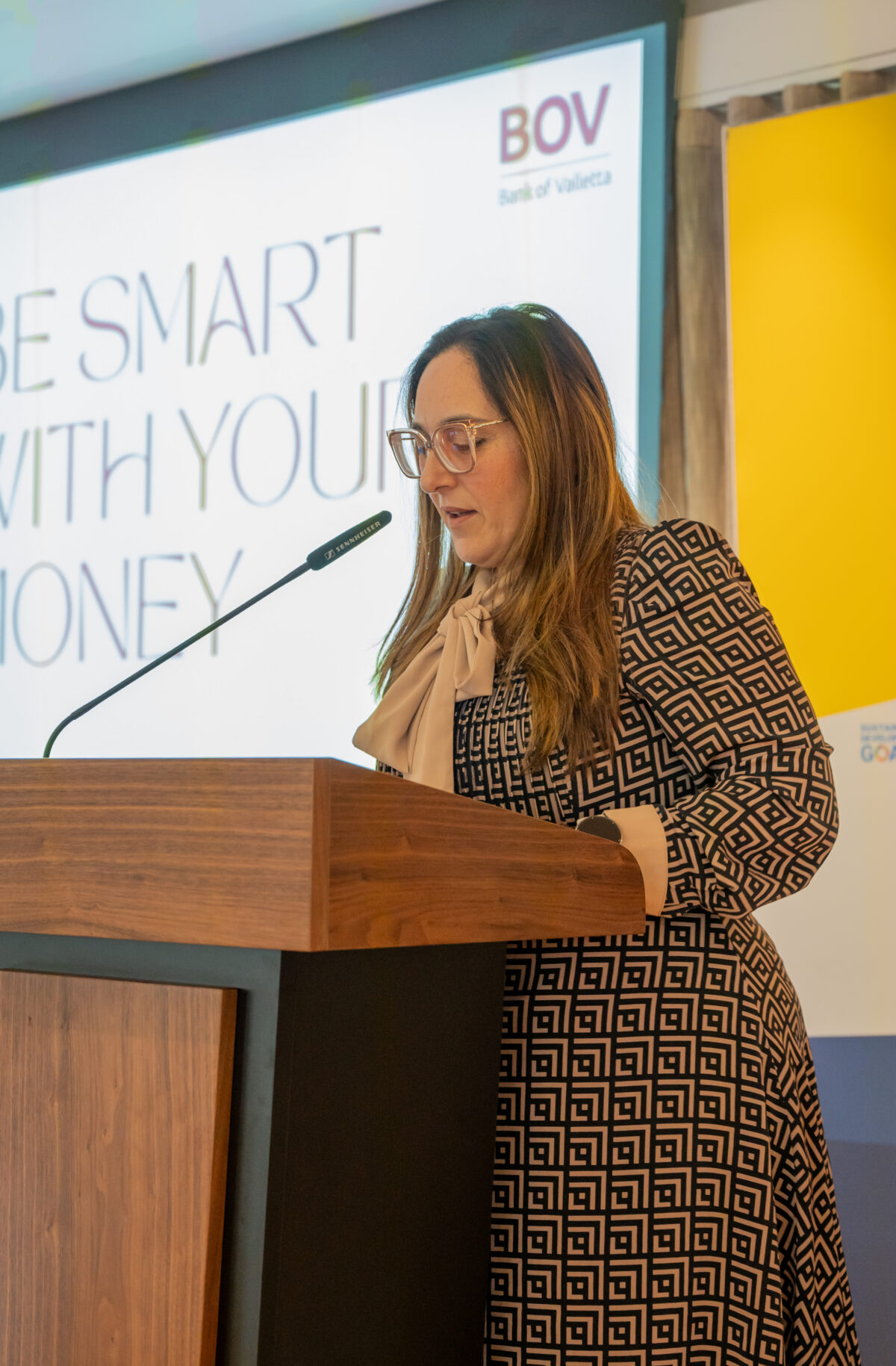
Ms Borg contextualised this by outlining structural realities that affect women’s lifetime income: persistent pay gaps, career interruptions due to maternity and caregiving responsibilities, and longer life expectancy requiring more extensive retirement savings. She noted that many women also carry responsibility for children, parents and household finances simultaneously.
A key message of the session was that money management is a habit rather than a measure of intelligence. Participants were encouraged to view financial confidence as something built gradually through small, consistent actions rather than complex knowledge.
Ms Borg outlined four practical pillars of financial literacy:
- Earning – understanding one’s value, negotiating salaries and asking for raises
- Spending – tracking expenses without guilt, distinguishing needs from wants, and recognising that awareness creates control
- Saving – building an emergency fund and planning for both short-term and long-term goals
- Protection – understanding insurance basics and avoiding high-interest debt
She also addressed a common misconception among younger adults that retirement is too distant to consider, stressing that early pension contributions can have a significant long-term impact and that property should not be viewed as the only form of security.
Financial control as a form of abuse

The conversation then moved into a fireside chat moderated by Petra Ellul Mercer, founder of Capable Minds, with Samantha Pace Gasan, Commissioner on Domestic and Gender-Based Violence.
The discussion addressed financial abuse as a lesser-known but significant form of control within relationships. Ms Pace Gasan explained that financial abuse can take different forms: preventing a partner from working, controlling all household finances regardless of who earns the income, or restricting access to money and financial information.
She noted that financial abuse is among the least discussed types of abuse, often compounded by shame and stigma surrounding money matters.
The speakers also examined how financial roles are assigned within relationships, suggesting that responsibilities should be based on skills and circumstances rather than gender expectations. Questions were raised about whether financial contributions should be split equally or proportionally to income, highlighting the importance of open discussion and transparency between partners.
Across both sessions, the emphasis remained on awareness – of personal financial habits and of the ways financial control can affect autonomy – reinforcing that confidence with money begins with understanding, conversation and small, practical steps.
The event was organised by Business and Professional Women (BPW) Valletta Malta in collaboration with Market Accents and Capable Minds.

Financial knowledge alone is not enough to improve financial wellbeing, experts warn
Experts are discussing how financial education can be translated into better financial decisions

Tourism intensity climbs as Malta’s effective population tops 670,000 in August
During August 2025, St Julian’s tourism intensity reached 143 tourists per 100 residents

Millions in taxable income declared by 81 companies with no employees
Tax declared by US multinationals in Malta rose to €118 million in 2024, up from €24.7 million in 2020