



Amid renewed controversy surrounding the decade-old policy of free childcare for working parents, a new study by the Central Bank of Malta leaves little doubt about its material impact.
Published as part of the Bank’s first Quarterly Review for 2026, the report highlights a striking 54 per cent reduction in severe material and social deprivation (hereafter ‘severe poverty’) among women aged 25 to 49 in the decade following the policy’s introduction. Over the same period, the proportion of women experiencing severe poverty fell from 7.2 per cent in 2013 to 3.3 per cent in 2024.
The reduction, the report notes, was “even more pronounced” among single mothers.
Free childcare was launched in 2014, enabling thousands of parents – predominantly women – to enter the workforce and, crucially, to work full-time. By that point, the employment rate among women aged 25 to 49 had already increased from 39.6 per cent in 2005 to 67 per cent in 2014. However, a significant share remained in part-time employment – nearly one-fifth in 2005, rising to almost a quarter by 2014 – a pattern likely shaped by family responsibilities.
By 2024, the employment rate for women in this age group had climbed further to 84.7 per cent, while the share in part-time work fell to 14 per cent.
“This means that the income earned from employment by women improved not just because more joined the workforce, but also because more were able to take up full-time rather than part-time jobs,” writes Aaron G. Grech, the report’s author and Chief Officer of the Economics Division at the Central Bank of Malta.
The impact of free childcare is also reflected in Eurostat data on childcare arrangements. In 2005, 76 per cent of children under the age of three in Malta were cared for exclusively by their parents. This figure fell to 60.6 per cent in 2014 and further to 43.6 per cent by 2024.
Similarly, the proportion of children under three receiving zero hours of formal childcare declined from 95.4 per cent in 2005 to 81.4 per cent in 2014, and to 55.9 per cent in 2024.
“These trends all suggest that the introduction of free childcare for working parents in 2014 resulted in a shift of caring responsibilities from parents to formal childcare institutions,” Dr Grech notes.
This shift has been at the centre of renewed debate in recent days, following comments by Gozo Bishop Anton Teuma, who said he “will never stop condemning childcare centres until the age of two”.
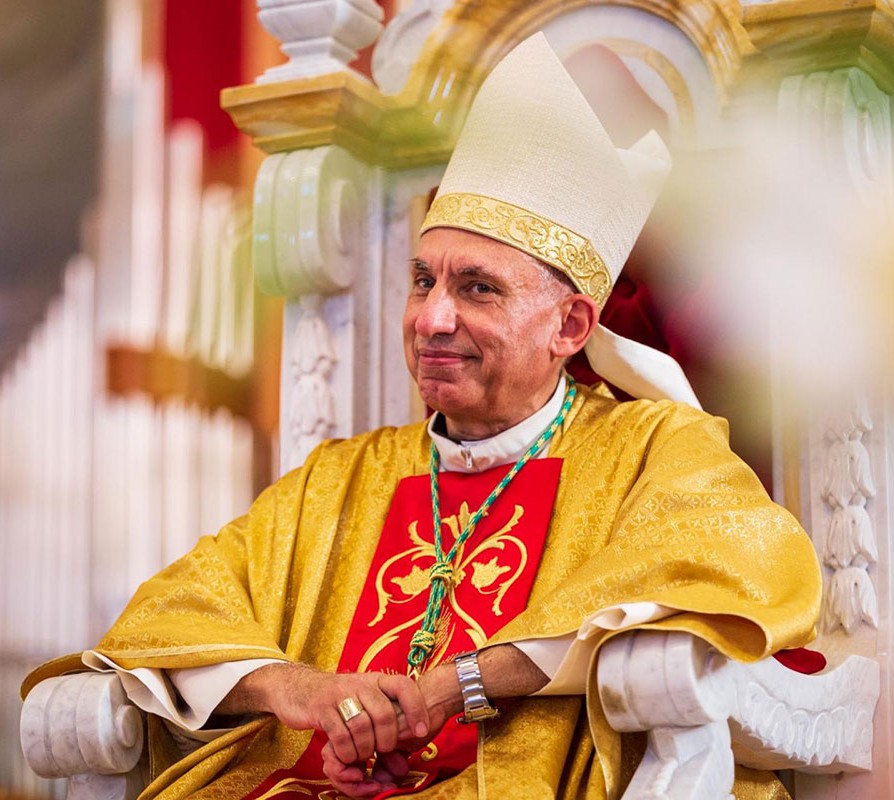
Speaking during a homily addressed to expectant parents, Bishop Teuma warned against treating children as “objects” to be “thrown into childcare centres.”
His remarks prompted swift condemnation from several quarters, including senior figures within the governing Labour Party, which considers free childcare one of its flagship achievements over its 12 years in government.
Others, however, came to his defence.
Among them was Maria Giulia Borg, a researcher in social wellbeing, who took to LinkedIn to argue that Bishop Teuma’s claim of psychological research backing his views was not unfounded.
“Whether we like it or not, there are numerous studies indicating that early enrolment and prolonged hours in childcare, away from the primary carer – whether mother or father – can have negative effects on infants, potentially manifesting later in adolescence and adulthood,” she wrote.
From an economic standpoint, she added that many parents responding to the controversy on social media pointed out that they “cannot afford not to send their children to childcare”, with some openly stating that they wished they had a choice.
“Is this really the independence we are aiming for?” she asked. “We are independent from our partners, but totally dependent on an economic system that does not allow space for a couple of years out of the labour market to enjoy our children in their most delicate years.”
That sentiment appears to resonate more broadly, judging by the muted reaction to a landmark “family-friendly” measure introduced in the 2026 Budget. In the Malta Government Budget for 2026, Finance Minister Clyde Caruana announced substantial tax cuts for families with children, amounting to as much as €257,000 over 23 years for families with more than one child.
The “historic” measure was described as “decisive action” to ease parents’ financial concerns about expanding their families. Yet the public response echoed the themes highlighted by Ms Borg: while financial support is welcome, many parents expressed a desire for greater flexibility to spend time with their children.
This reaction may be the by-product of a policy that has been highly effective on its own terms. As Dr Grech observes, “the improvement in employment rates [partly driven by free childcare] certainly helped to take thousands of working-age persons out of poverty.”
With material hardship becoming less acute, attention is increasingly shifting to other dimensions of wellbeing. In that sense, the debate on childcare reflects a broader national conversation – one in which economic imperatives are gradually giving way to questions of quality of life.


ACE: VAT cut to 7% ‘primarily aimed at supporting industry’, with consumers only indirect beneficiaries
ACE says it has long advocated for a VAT reduction

Malta’s rubbish recycling rate places it among EU’s worst performers
Malta continues to lag significantly behind leading performers such as Germany

EU-funded acceleration programme targets Maltese blue economy startups
Equity-free funding, international pilot testing and investor connections are on offer for Maltese startups through the MED-Hubs programme