


The rapid development of artificial intelligence, tokenised assets and digital payments is creating new opportunities for financial services, but also forcing regulators and businesses to prepare for an increasingly complex risk landscape.
These issues were among those discussed at FinTech2030, a conference organised by the Malta Financial Services Authority (MFSA), which brought together regulators, policymakers, industry representatives, academics and technology specialists from Malta and overseas.
The conference examined how financial services could evolve over the coming years, with discussions spanning the EU’s Markets in Crypto-Assets Regulation (MiCA), tokenisation, payments, artificial intelligence, cybersecurity, quantum computing and financial crime.
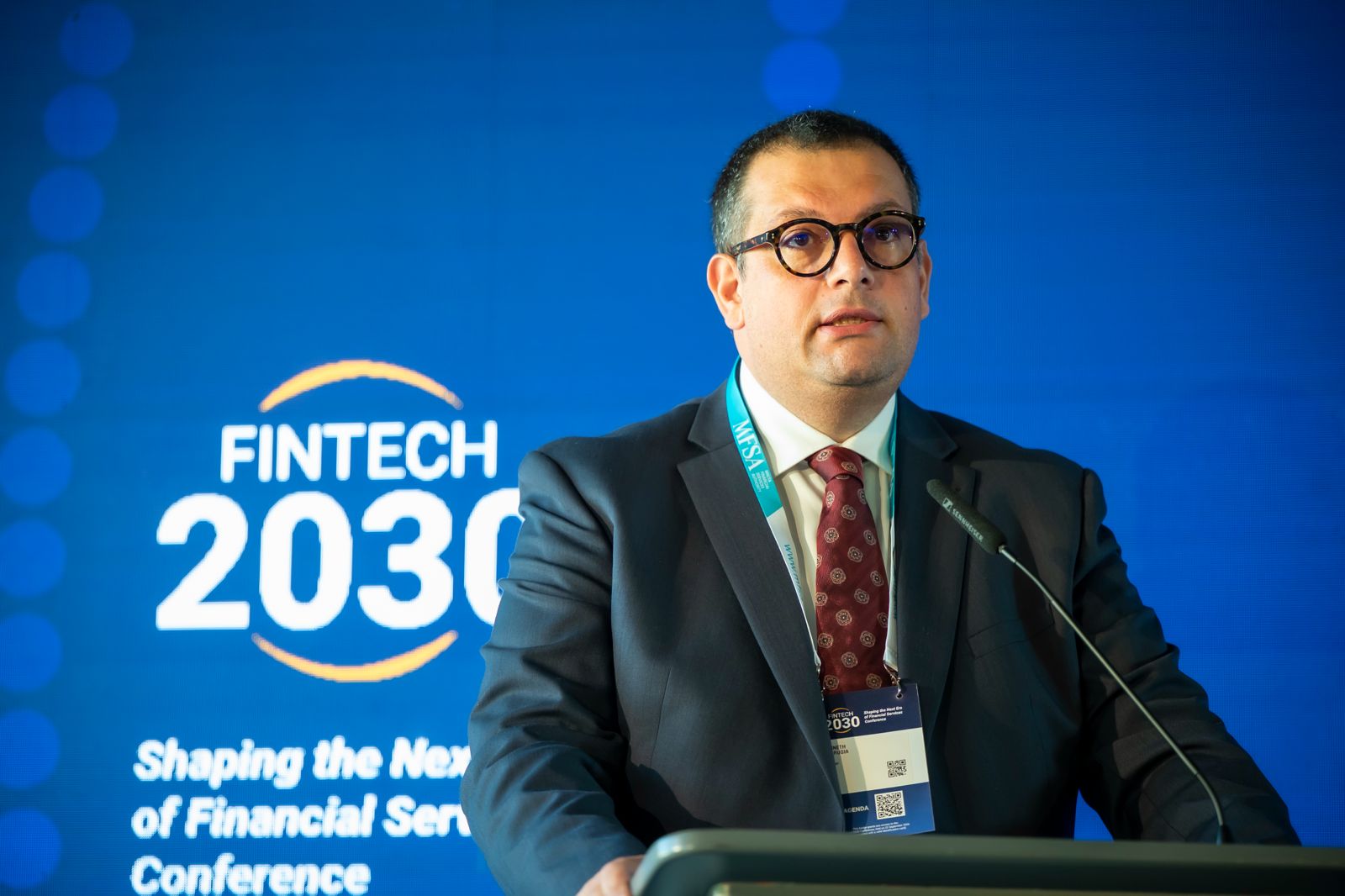
Opening the conference, MFSA CEO Kenneth Farrugia said technological change was simultaneously creating opportunities and new risks for the financial sector.
“The pace of technological change is reshaping financial services and creating both opportunities and new risks,” he said, adding that regulators need to remain responsive while ensuring innovation develops within a framework supporting resilience, market integrity and confidence.
Crypto regulation featured prominently during the conference, particularly as European regulators and financial services firms gain greater practical experience with MiCA.
MFSA Chief Officer Supervision Christopher P. Buttigieg provided an overview of the regulatory landscape, while Peter Kerstens, Advisor on Technological Innovation and Cybersecurity at the European Commission’s DG FISMA, discussed the next phase of MiCA.
Other discussions explored regulatory convergence and the lessons emerging from the implementation of the framework, alongside issues surrounding stablecoins, crypto derivatives and different supervisory approaches across jurisdictions.
Representatives from Malta, Luxembourg, Italy and Estonia discussed their respective experiences, while perspectives from Bermuda and the United States were also presented. Former New York Governor and current OKX board member Andrew Cuomo participated in a fireside discussion on the development of regulatory approaches to crypto-assets.
Tokenisation and payments
Attention also turned towards changes taking place in payments and financial market infrastructure.
Christopher Aquilina, Head of FinTech Supervision at the MFSA, addressed Malta’s readiness for the implementation of the EU's forthcoming PSD3 and Payment Services Regulation.
Tokenisation – the process through which rights to assets can be represented digitally through tokens – was examined in relation to securities and fund units, as well as its wider potential impact on financial markets.
Speakers from the World Federation of Exchanges, the MFSA and industry discussed both the opportunities associated with tokenised financial markets and the regulatory and practical challenges accompanying their development.
AI and cybersecurity create new risks
The growing use of AI within financial services was another major area of discussion, alongside cybersecurity and the longer-term implications of quantum computing.
MFSA Head of Supervisory ICT Risk and Cybersecurity Alan Decelis addressed emerging technological risks and regulatory responses, while representatives from the Malta Digital Innovation Authority (MDIA) and European Central Bank participated in a discussion on the implications of increasingly advanced AI systems for financial services.
The programme also examined so-called quantum readiness and how financial institutions may eventually have to adapt their cybersecurity infrastructure to technological advances capable of challenging existing forms of encryption.
Representatives from IBM, Resilia Connect and Safeheron participated in the discussion on the resilience of financial systems in a post-quantum environment.
Digital assets and financial crime
Alongside the opportunities created by digital assets, the conference also considered their implications for financial crime.
The final substantive session focused on money laundering risks connected to crypto-assets and brought together representatives from financial intelligence, supervision and industry.
Participants discussed the development of financial crime risks in the digital-asset sector and the role of effective anti-money laundering and counter-financing of terrorism frameworks, information sharing and cooperation between different parts of the financial system.
Closing the event, Mr Farrugia called for continued collaboration and knowledge-sharing between regulators, policymakers and market participants as both technology and financial regulation evolve.
The MFSA also used FinTech2030 to announce Malta Finance Week, which is set to become the regulator’s flagship financial services event.
Further details about its 2027 edition are expected to be announced separately.


MIA sees emissions per passenger fall as traffic tops 10 million during 2025
Malta International Airport’s revenue increased by 9.9% to €157 million in 2025

MFSA warns public about website impersonating the Authority
The MFSA urged the public to exercise caution and verify website URLs and email addresses

Budget 2027: MMF proposes National Maritime Certification Centre, cadet scheme to address skills shortage
Maritime sector requires renewed attention and resources to enable it to achieve the set objectives, MMF says