



The IBM & Tech Tends in Maltese Businesses event, focusing on agentic AI, infrastructure modernisation and development operations, is soon taking place at The Malta Chamber, in Valletta.
The event is expected to bring together senior business and technology leaders to explore how innovation is transforming organizations across Malta. During the event, Fernando Suarez, Vice President, Select Territory and Ecosystem at IBM, will be addressing how IBM supports the technology needs of business.
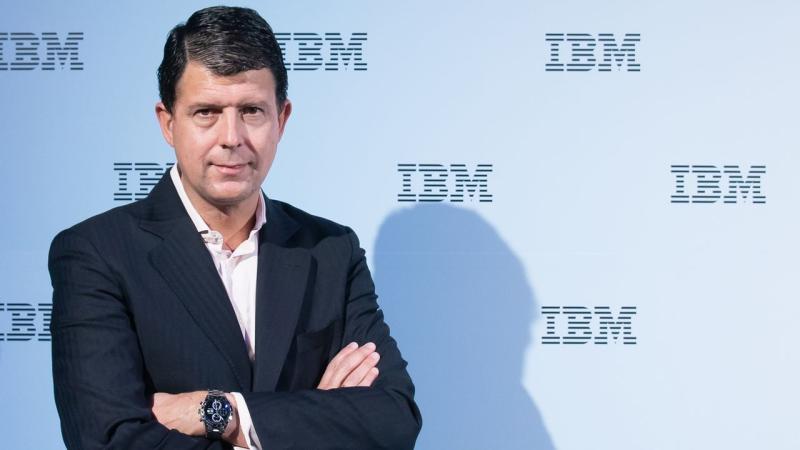
“Technology is becoming central to business performance in Malta. With 114 years of global experience and more than 40,000 AI projects delivered worldwide, IBM is bringing vast expertise in AI, hybrid cloud, and digital transformation to support local organisations. Malta is well positioned for this shift: The country has strong digital public services, high levels of enterprise technology adoption and sectors – such as financial services and iGaming – that are already pushing for more advanced, data‑driven capabilities,” Mr Suarez starts off.
He adds that the same technologies IBM uses to power The Masters Golf Tournament can help Maltese organisations make faster decisions, modernise operations and compete more effectively. The tournament, for those not in the know, sees AI creating personalised insights, analysing play in real time and enhancing the experience for millions of users.
“This upcoming event is an opportunity to bring those capabilities into the local conversation. We will be focusing on how AI can help Maltese organisations transform their operations, concrete benefits of adopting it, and types of business problems where it already delivers results,” he elaborates.
From there, the conversation will directly tackle what matters for leaders today: How these capabilities translate into greater efficiency, stronger performance and new avenues for growth.
“IBM has seen this firsthand through our Client Zero approach, applying AI internally across thousands of applications before taking those solutions to market. The productivity gains and operational improvements achieved inside IBM show what becomes possible when AI is deployed at scale with the right foundations,” Mr Suarez states.
At its core, the session is about how organisations can stay ahead of fast-moving- digital trends by putting technology to work where it creates a meaningful advantage, with participants benefiting from the insights gathered from combining complementary perspectives.
“Business leaders bring a clear view of the challenges they must solve; specialists contribute the depth needed to turn those challenges into concrete technological steps; and partners help accelerate execution.”
In Malta, this last element is especially important. Mr Suarez explains how local business partners play a vital role as the link between technology and day‑to‑day operations, ensuring that solutions are adapted to the realities of the Maltese market and can be implemented with speed and precision.
“Their proximity to clients and understanding of the local business environment make them essential in turning ideas discussed in the room into practical results that organisations can build on over time.”
So what are his expectations for the session? While turnout matters, he measures real success by what leaders do next.
“This is the second year in a row we expect a full room of Malta’s leading business stakeholders, and last year’s strong attendance created the momentum for this year’s event. For us, success means something very concrete: leaders leaving with a clear idea of where AI can add value in their organisation and taking the first steps toward shaping that into an AI pilot. When a conversation in the room becomes a technological project that moves the business forward, that’s when the value of an event like this becomes clear,” he replies.
Building on this, Maltese business leaders need to be focusing on whether technology is helping the organisation work more efficiently. Are they experiencing faster processes, better-informed decisions and less time spent on routine tasks? These elements matter because structural productivity in a large company hovers at only around 10 per cent, so even small gains can translate into meaningful results.
“Leaders should also pay attention to whether their organisation is gaining more control over its data and whether teams are able to focus more time on higher-value work. When these shifts occur, technology starts contributing directly to competitiveness and growth. In order to achieve all this, modern infrastructure is fundamental; without it, AI and data initiatives remain isolated pilots with limited impact,” Mr Suarez continues.
This includes building secure hybrid environments, high‑quality data pipelines and strong governance are what allow AI to operate reliably across critical processes – all elements that become even more important as the application landscape grows.
“International Data Corporation projects that around 1 billion new applications will be built by 2028. Organisations will only be able to support that scale if their infrastructure is designed to integrate new capabilities, protect data and ensure performance. With the right foundation in place, technology becomes an asset that strengthens the organisation rather than a cost that accumulates over time.”
Mr Suarez describes how, in all countries where IBM operates, companies face similar challenges, Malta included. Many businesses achieve quick wins in productivity and customer experience, but the gaps appear when they try to move beyond those initial gains.
“That next step depends on stronger data structures, clearer governance and more integrated systems. Without that foundation, AI remains limited to simple automation, which is why only around 5 per cent of enterprise AI projects deliver a meaningful return, according to the Massachusetts Institute of Technology,” he says, adding that real progress happens when organisations can use their own data in a consistent and governed way, allowing AI to produce outcomes that genuinely support their business priorities.
As for the upcoming session’s effects, the hope is that attendees are still thinking about where technology can make the strongest difference in their organisation.
“The most successful transformations start when leaders identify a strategic process that can benefit from better data, more automation, or faster decision making. Once leaders identify that, priorities become clearer, investment decisions become simpler and technology moves from being a concept to being an advantage,” he concludes.
IBM & Tech Trends in Maltese Businesses takes place on April 17 at the Malta Chamber in Valletta. Registrations are open here.


German court clears use of breached MGA documents in reporting, Lilith Wittmann says
The MGA has previously rejected the suggestion that its legal measures were intended to silence or intimidate her

Enemalta advances plans for new Malta-Gozo interconnector
This follows a €45 million general election pledge for a Malta-Gozo high-voltage link
MDIA to assess potential for new research and innovation network in Gozo
Research is intended to provide an assessment of how a future research and innovation ecosystem in Gozo could be structured