



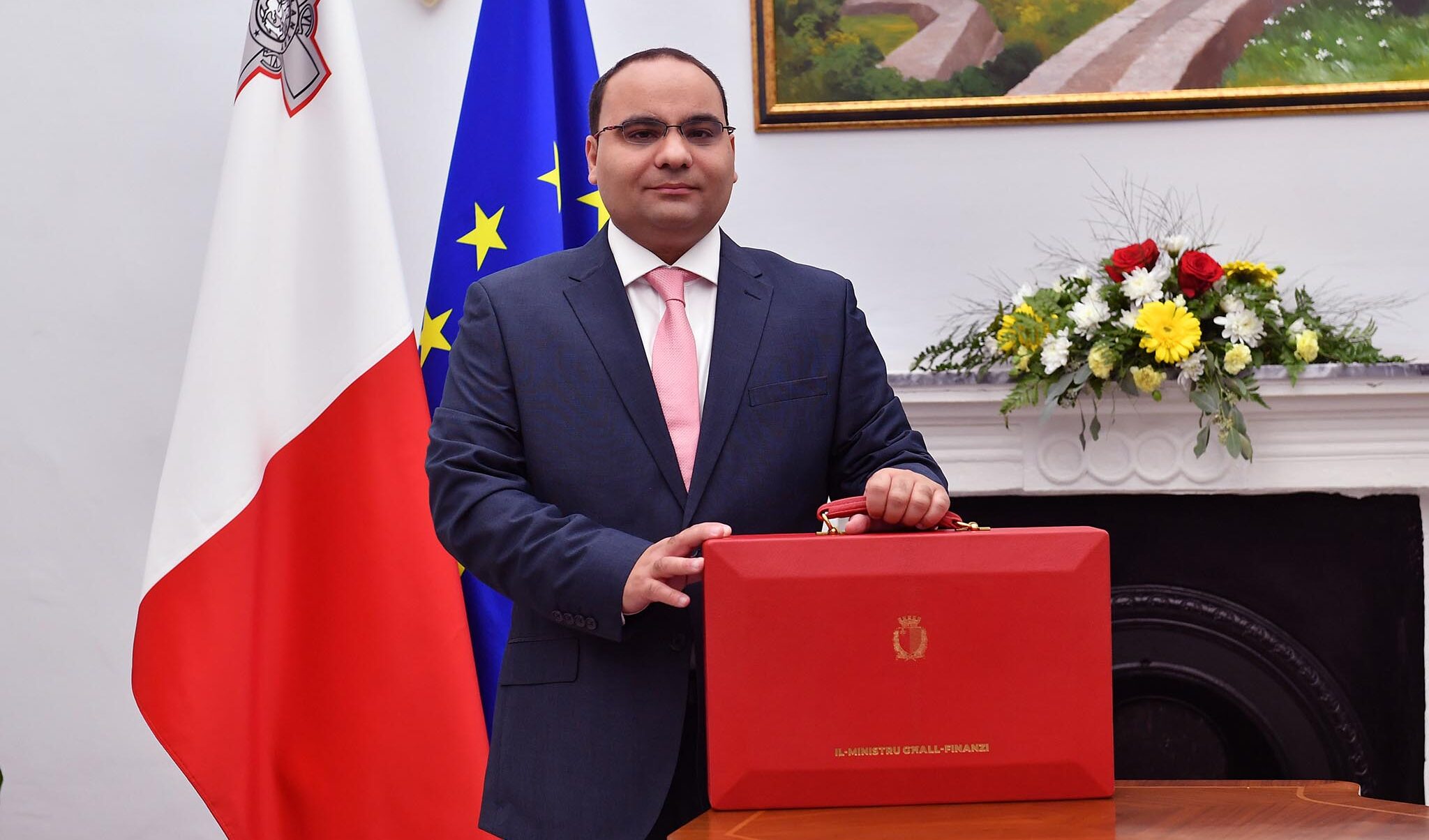
Malta’s Finance Minister Clyde Caruana spoke in Parliament about aspiring to the Dutch model, where people supposedly worked an average of just over 20 hours a week and earned roughly double the average Maltese salary. So how far are we from reaching that goal?
“The Netherlands is a small country and has a percentage of the population working similar to ours, with the difference that most people there work an average of a little over 20 hours while earning double or more our salaries. That comes from the factor that they have a high productivity due to their high level of skills” said Minister Caruana on 6th June (yesterday) in response to questions surrounding the local workforce.
It’s first important to get the facts straight on working hours.
In 2022 workers spent an average of 37.3 hours working per week in Malta, slightly above the EU average of 36.4 hours.
While the Netherlands was at bottom of the list of EU member states based on the average number of hours spent working, its workers didn't just work a little over 20 hours, but in fact worked an average of 32.4 hours a week.
Nevertheless, on average individuals had almost five more hours to themselves in the Netherlands than in Malta per week.
On the subject of gaining a higher-skilled workforce, it's a factor which requires a higher proportion of tertiary education attainment. On this there is a significant gap between the two countries.
In the Netherlands, nearly half of all individuals aged 25-54 have obtained a tertiary level of education (49.5 per cent) according to Eurostat. While in Malta figures have steadily improved, they’re still lagging behind at 35.1 per cent.
It is also worth considering that expats in Malta were almost twice as likely to have a tertiary level of education than the Maltese-born population.
In order to work fewer hours, workers also need to earn more, however, the difference in both minimum and average wages is stagging.
In Malta, the minimum monthly wage rose by 5.4 per cent in 2023 to €835, well below the EU average of €1,110, while in the Netherlands, this rose by 12.1 per cent to €1,934.
However, it is worth taking note that the Netherlands had a higher level of peak inflation (14.5 per cent in September 2022) than Malta (7.4 per cent in October 2022).
Nevertheless, minimum wage earners in the Netherlands earn more than €1,000 a month than they do in Malta.
However, the tax burden on workers is less in Malta.
While Malta has a zero per cent, 15 per cent, 25 per cent and 35 per cent tax bracket, the Netherlands only has two brackets; 36.93 per cent, and 49.50 per cent.
Taking a closer look at average wages, in Malta, the average monthly wage at the end of 2022 was €1,785, a month. Here it’s already clear that minimum wage earners in the Netherlands made more than the average worker in Malta.
Furthermore, the average monthly wage in 2022 in the Netherlands was around €3,200.
Despite relatively lower wages, a workforce and skills shortage coupled with wage pressures have been a top concern for local businesses.
While both Malta and the Netherlands operate predominately service-based economies, the Netherlands are leagues ahead in terms of wages and working hours, despite being a more expensive country to live in.
2027 COLA expected at around €5, says Finance Minister
The figure is expected to become clearer once the latest Retail Price Index data is available
Malta’s tourism success should not be measured by arrivals alone – Robert Abela
The Prime Minister wants s a model increasingly based on quality, value and sustainability
Pushy insurance salesmen exposed in MFSA mystery shopping exercise
The exercise involved 17 mystery shopping interactions and covered insurance intermediaries