

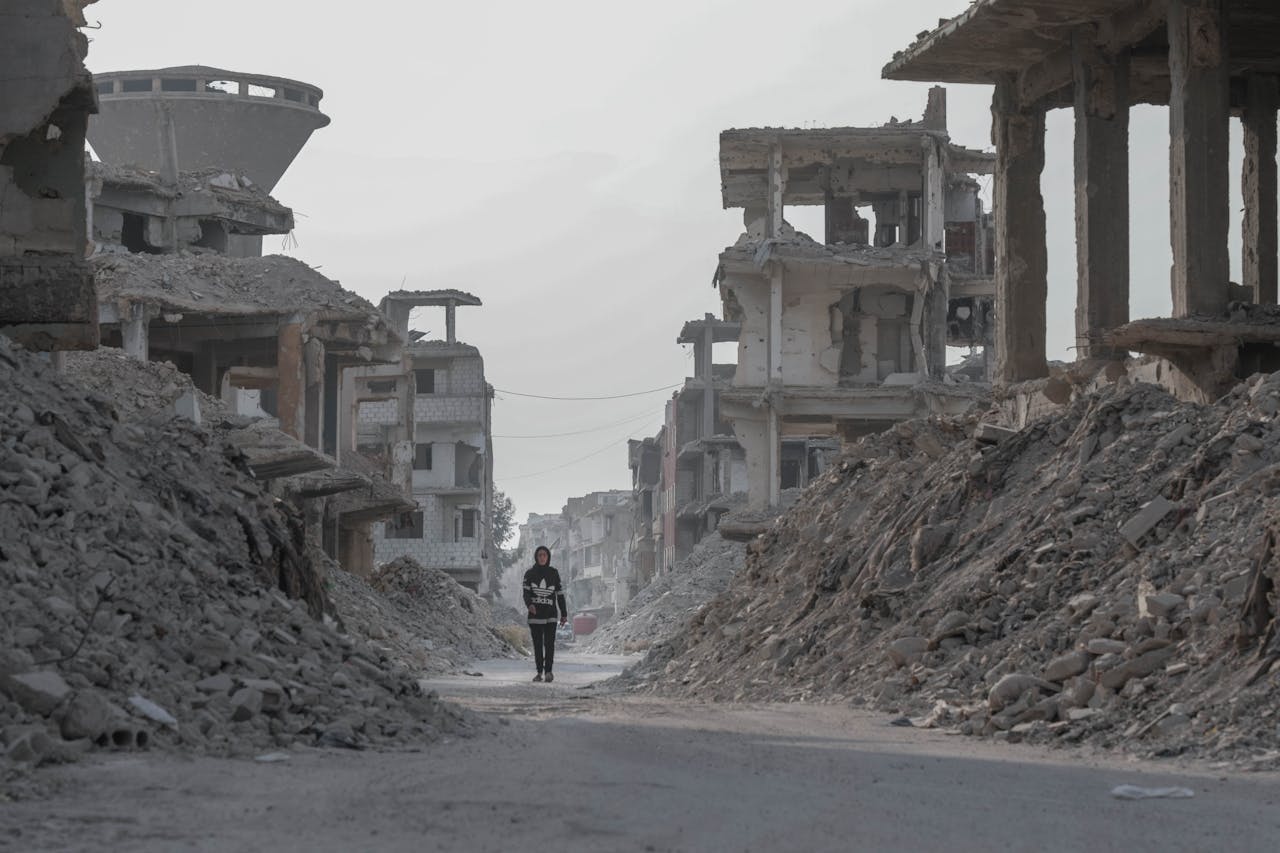
The unfolding developments in the Middle East late last week with the attacks on oil and gas infrastructure first in Iran and immediately after in Qatar, led to a further downward movement in equity prices as a result of the evident deepening of the global energy crises since the commencement of the present conflict on 28th February.
The escalation of the war in Iran took place on the day of important central bank meetings in the UK and Europe. In fact, although the European Central Bank held its deposit facility unchanged at the 2 per cent level, a member of the Governing Council stated that the central bank could hike rates during the next monetary policy meeting at the end of April if the Middle East conflict pushes inflation expectations sharply higher. The ECB stated last week that in an extreme scenario where oil and natural gas supply disruptions persist until late 2026, the rate of inflation would peak at 6.3 per cent in the first quarter of 2027.
Given the very uncertain times we are experiencing, I thought it would be appropriate to highlight some important investing principles of Warren Buffett who is widely regarded as one of the greatest investors of the modern era. In my view, these investing principles provide an important reference to navigate the extreme uncertainty being faced by many investors.
Essentially, the legendary investor, who has only very recently relinquished his role as CEO of Berkshire Hathaway Inc, always spoke of the notion of investing in high-quality businesses with resilient balance sheets. In fact, Mr Buffett has a strong track record of viewing periods of crisis as opportunities for long-term investment gains as he believes that investors should avoid placing too much weight on political and economic forecasts as such predictions often turn out to be inaccurate.
As Buffett often reminds investors, “the world has always been uncertain”. Unfortunately, in recent years, investors have had to deal with very troubling developments. The current war in Iran is the 5th major episode of instability across the capital markets since the outbreak of COVID-19 in early 2020 which was followed by Russia’s invasion of Ukraine in February 2022, the attack by Hamas on Israel in October 2023, and ‘Liberation Day’ in early April of last year.
Shares as ownership, not speculation
The starting point of Mr Buffett’s principles is very simple indeed but somewhat different from how most investors nowadays behave in an era of an information overload from multiple sources. When Mr Buffett buys a share in a company, he is not acquiring an instrument or what he refers to as a ‘trading symbol’ which is moved in and out of a portfolio according to the prevailing mood of the market. He views an investment as a fractional ownership interest in an operating business with employees, customers, cash flows and competitive advantages that have been accumulated over several years.
If a company continues to function by producing its goods and/or services, then the underlying economic reality that gives that company its value has not disappeared. The share price may indeed plunge as investor sentiment worsens. However, in most cases, the company itself survives and the shares eventually reflects it value – as long as the investor has the patience, and the financial resilience, to wait.
The market’s remarkable resilience
In some of his annual shareholder letters over the years, the legendary investor made repeated reference to the resilience of equity markets during the 20th century (despite two world wars, the Great Depression, the Cold War, oil shocks) and also at the start of the 21st century with the terrorist attacks of 11 September and the Global Financial Crisis in2008.
The message of Warren Buffett is that the temporary chaotic environment does not erase the long-term upward trajectory of productive economies. In fact, the compound annual growth rate of the S&P 500 over an extended period of time is circa 10 per cent per annum.
Cash in not a safe haven
While many investors may instinctively increase their holdings of cash during a crises, the philosophy of Warren Buffett concerns the danger of large cash holdings during wartime.

He argues that wars lead to higher inflation that erodes the purchasing power of savings held in cash. Instead, his preference is to invest in companies with strong balance sheets and genuine pricing power with the ability to pass cost increases on to customers. A cash deposit, by contrast, is simply eroded by inflation.
This does not mean that Mr Buffett is indifferent to cash as he maintains substantial liquidity at Berkshire Hathaway specifically to deploy during times of instability. However, holding cash as a permanent refuge from uncertainty is, in his mindset, a form of “slow-motion capital destruction”.
Betting against humanity
Another fundamental principle advocated by Warren Buffett is that investing in productive economies is a bet on human creativity and problem-solving. Although, several generations have faced times of crisis and extreme periods of instability that were believed to be terminal, each time, thankfully, economies are rebuilt and continue to expand through technological innovation, demographic growth, rising standards of living and the accumulated knowledge of modern capitalism.
As such, according to the legendary investor, pessimism about the long-term prospects for productive economies is not just bearish, but “historically unjustified”.
Fear creates the greatest buying opportunities
During periods of conflict and instability, the share prices of quality businesses very often drop to very low levels. Warren Buffett explains that in the midst of extreme market stress, these are the opportunities for investors who have the courage and ability to act when others are exiting the market out of fear. In fact, one of the most famous quotes of the legendary investor is “be fearful when others are greedy, and greedy when others are fearful”.
Given the fluidity of the situation in the Middle East, it is impossible to predict whether this can lead to an energy crisis over an extended period of time. Most market strategists continue to believe that the conflict will be short as a diplomatic agreement will be reached between the parties. In fact, there were very sharp moves across different asset classes last Monday as the US President postponed attacks on energy infrastructure in Iran following “good and productive” talks.
Although it is very concerning to follow daily developments of wars and conflicts and equity markets are extremely volatile in such times, Warren Buffett always opined that, over time, economies continue to grow as human beings continue to produce, innovate and rebuild as companies continue to serve customers. Those investors who understand this and have a clear view of the long-term value they own through equity ownership is “on the right side of history”.
The article contains public information only and is published solely for informational purposes. It should not be construed as a solicitation or an offer to buy or sell any securities or related financial instruments. No representation or warranty, either expressed or implied, is provided in relation to the accuracy, completeness or reliability of the information contained herein, nor is it intended to be a complete statement or summary of the securities, markets or developments referred to in this article. Rizzo, Farrugia & Co. (Stockbrokers) Ltd (“Rizzo Farrugia”) is under no obligation to update or keep current the information contained herein. Since the buying and selling of securities by any person is dependent on that person’s financial situation and an assessment of the suitability and appropriateness of the proposed transaction, no person should act upon any recommendation in this article without first obtaining investment advice. Rizzo Farrugia, its directors, the author of this article, other employees or clients may have or have had interests in the securities referred to herein and may at any time make purchases and/or sales in them as principal or agent. Furthermore, Rizzo Farrugia may have or have had a relationship with or may provide or has provided other services of a corporate nature to companies herein mentioned. Stock markets are volatile and subject to fluctuations which cannot be reasonably foreseen. Past performance is not necessarily indicative of future results. Foreign currency rates of exchange may adversely affect the value, price or income of any security mentioned in this article. Neither Rizzo Farrugia, nor any of its directors or employees accepts any liability for any loss or damage arising out of the use of all or any part of this article.

Related

APS Bank continues to gain market share
APS is Malta’s third largest bank in terms of total assets but second largest in loans
CrediaBank aims to ‘supercharge’ Malta
The upcoming plans by CrediaBank could prove to be important for the Maltese banking sector and the domestic capital markets
A Liquidity Provider for the corporate bond market
Edward Rizzo suggests the Malta Development Bank could play an important role in revitalising the secondary market for corporate bonds