


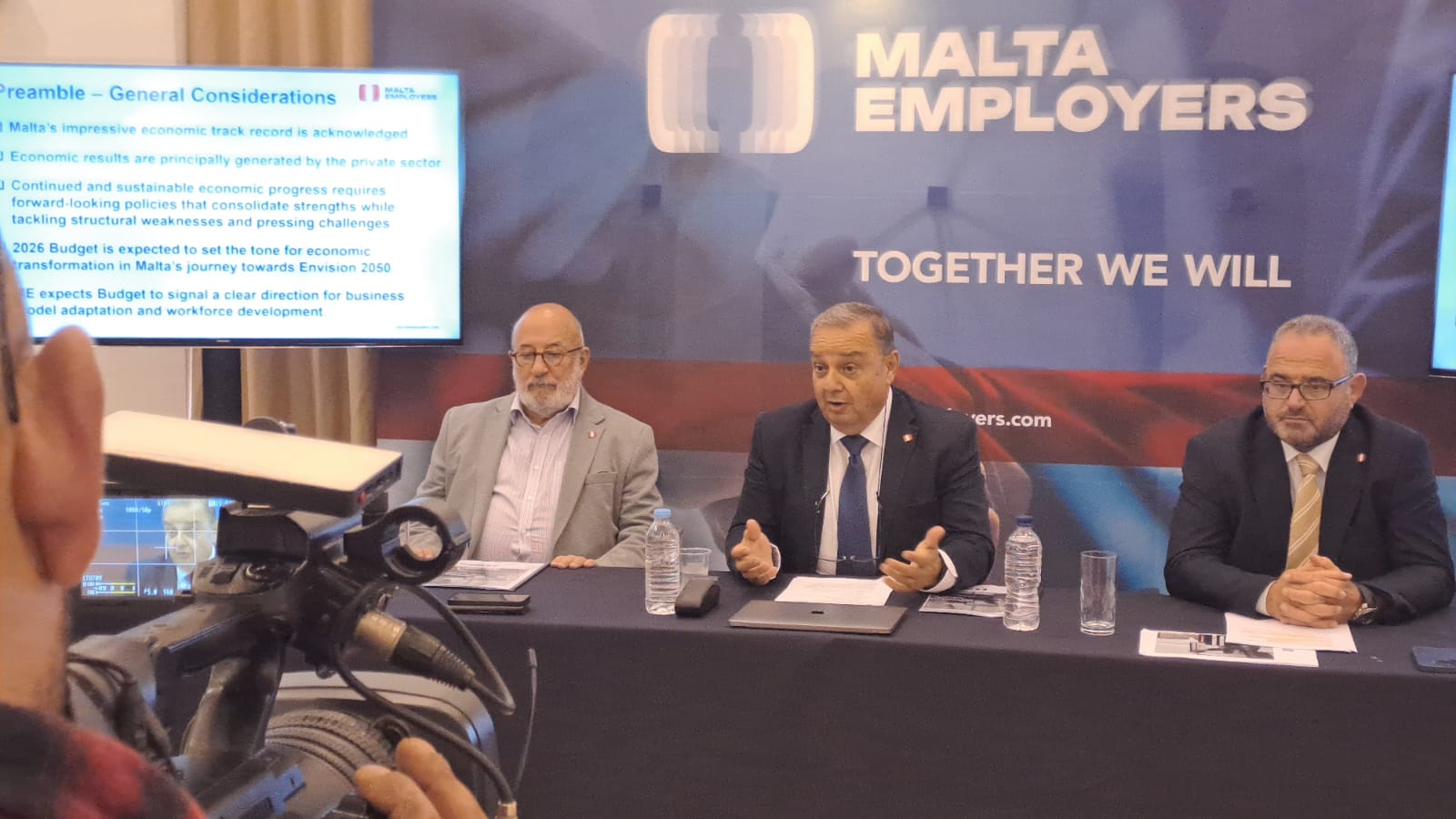
As Malta prepares for the 2026 National Budget, the Malta Employers Association (MEA) has unveiled a comprehensive set of proposals aimed at steering the country toward sustainable economic transformation – one that strengthens competitiveness, supports social wellbeing, and aligns with Malta’s physical and demographic realities.
MEA President Ivan Refalo said the Association’s vision “extends far beyond short-term fiscal adjustments and immediate employer interests, focusing instead on securing Malta’s long-term competitiveness and social well-being.”
The document, which outlines priorities across education, innovation, productivity, and demographic sustainability, positions the Budget as a strategic opportunity to modernise Malta’s economic framework and equip its workforce for future challenges.
Education as the cornerstone of transformation
Central to the MEA’s proposals is a radical overhaul of Malta’s education system, which it describes as the foundation of any meaningful economic transformation.
“People are the Islands’ only national resource,” the Association stated, calling for a shift from rote learning and exam-based teaching towards a model that prioritises transversal skills, adaptability, digital agility, and critical thinking.
The MEA also urged greater recognition and support for educators through continuous professional development and an expansion of work-based learning opportunities at all levels, to bridge the gap between classroom instruction and workplace realities.
Director General Kevin J. Borg highlighted a concerning trend of resistance to training among some employees and proposed Budget incentives for lifelong learning, upskilling, and quality assurance to strengthen workforce adaptability and innovation.
Boosting productivity through digital investment
The MEA stressed that Malta’s economic growth has been driven disproportionately by labour rather than capital productivity – a dynamic it says must change.
It called for targeted incentives to drive digitalisation, automation, AI, and robotics across all sectors, arguing that these technologies are the foundation of Malta’s next leap in competitiveness, resilience, and value creation.
“These investments will enable both traditional and emerging sectors to sustain growth in the face of labour shortages and international pressures,” the Association said.
Sectoral priorities: Manufacturing, tourism, and maritime logistics
In manufacturing, the MEA said that automation and reskilling could help mitigate operating cost pressures and maintain competitiveness.
For tourism, it urged a shift towards quality enhancement and sustainable planning, aligning growth with the Islands’ carrying capacity and ensuring a positive visitor experience.
The Association also called for renewed investment in maritime freight infrastructure to alleviate current bottlenecks and prepare for future demand. Looking further ahead, it expressed support for the development of a regional logistics hub to leverage Malta’s strategic Mediterranean position and attract multinational operators, reinforcing economic diversification and trade connectivity.
Addressing demographic realities
The MEA reiterated its long-standing concern over Malta’s declining birth rate, advocating for a national, cross-sectoral strategy that includes family-friendly fiscal measures, expanded childcare infrastructure, and flexible work arrangements to make family life more compatible with professional aspirations.
At the same time, it encouraged policymakers to view the country’s ageing population as part of the solution to workforce shortages. Older workers, it suggested, should be incentivised to remain active through retraining schemes, flexible work options, and fiscal measures supporting voluntary extended participation in the labour market.
A call for strategic collaboration
Concluding its pre-Budget proposals, the MEA said: “The National Budget is not just an accounting exercise – it is the government’s annual opportunity to translate national vision into tangible outcomes. Malta Employers stands ready to work hand-in-hand with the policymakers and social partners to chart a sustainable, competitive, and inclusive future for Malta.”
Featured Image:
Left to right: Joseph Farrugia (Advisor), Ivan Refalo (President) and Kevin J Borg (Director General)
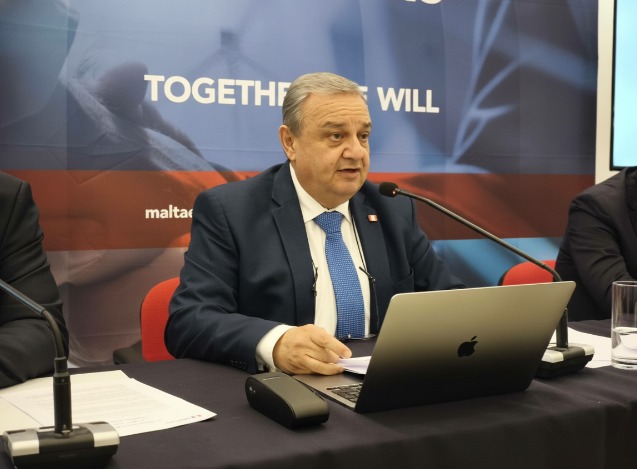
Education system ‘stifles creativity’, Malta Employers’ chief says as association calls for ‘transformation’
Association's Director General says system is geared towards conformity

MFSA flags missing information in pension statements
Some pension statements omitted key details on investments, fees, contributions and account changes
Budget should support sustainable economic growth, promote financial stability – BOV
Maintaining a stable and predictable business environment, encouraging investment in productivity remain important, it said