


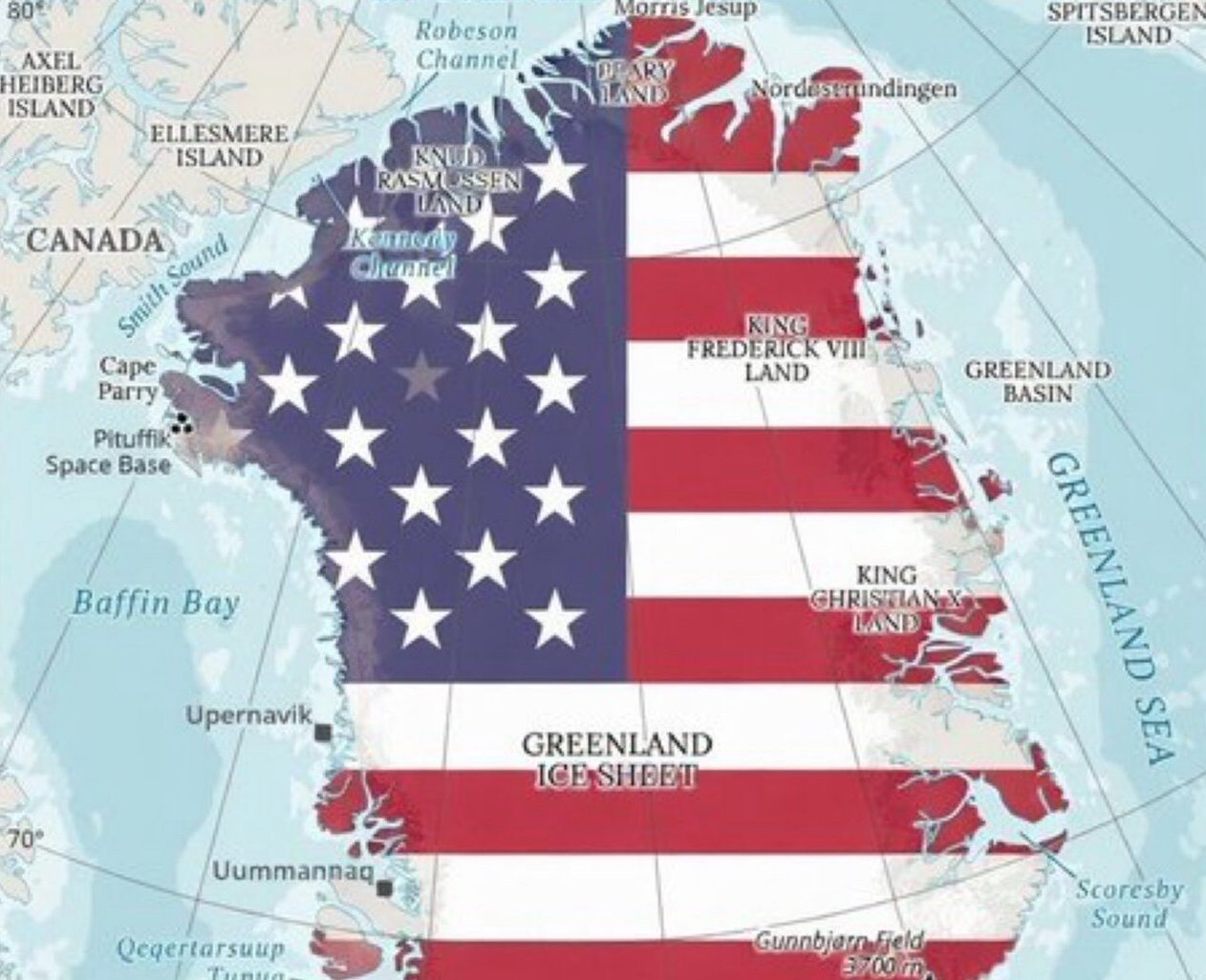
Malta could find itself caught in the economic crossfire if the United States follows through on threats to impose tariffs on selected European Union countries amid escalating political tensions linked to Greenland.
While US President Donald Trump has threatened to target a handful of EU member states – namely Denmark, Sweden, France, Germany, Finland and the Netherlands – EU officials and economists warn that such a move would be extraordinarily difficult to implement in practice, and could ultimately trigger retaliation affecting the entire bloc.
According to the European Commission, the EU’s legal and operational framework makes it extremely challenging to single out individual member states for tariffs.
In comments made to BusinessNow.mt, the European Commission noted that “the EU operates as a Single Market and under a Customs Union, ensuring the free circulation of goods between member states without internal customs formalities.”
Under EU law, goods manufactured within the bloc are assigned an EU origin, rather than a national one.
While third countries may request information on where goods originate, this becomes problematic in reality. Many EU products are manufactured through complex, cross-border supply chains involving multiple member states. Components may be produced in one country, assembled in another, and shipped from a third – all without internal customs checks or formal origin tracking.
“From a customs and operational perspective, it is practically very difficult to attribute goods exclusively to a single member state,” the Commission said, noting that production and transformation processes are often distributed across the EU.
As a result, although country-specific tariffs are theoretically possible, they would be “immensely bureaucratically and procedurally complex” to implement.
Such measures would introduce layers of additional red tape into EU–US trade, significantly disrupting transatlantic supply chains and placing a heavy administrative burden on US importers.
Any disruption to EU–US trade flows would likely have knock-on effects for smaller economies such as Malta, which are deeply integrated into European manufacturing and logistics networks, despite having limited direct exports to the US.

Economist Professor Philip von Brockdorff underlined that trade policy remains an exclusive EU competence, with the European Commission responsible for negotiating and enforcing trade agreements with third countries, including the United States.
“Any change in an existing trade deal affects the EU as a whole,” he said.
However, Trump’s threat differs from previous trade disputes in that it appears to target individual member states, regardless of the current EU–US trade framework. If implemented, such tariffs would represent a unilateral US decision rather than a renegotiation of existing agreements.
The key risk, Prof. von Brockdorff noted, lies in the political response from EU leaders whose economies would be directly hit.
“Their response is likely to increase tariffs on US exports to the EU,” he said, adding that any retaliatory measures would be enacted through the EU’s existing trade mechanisms, binding all member states – including Malta.
The EU is a major importer of several US goods, all of which could become targets in a retaliatory escalation. Beyond traditional goods, the bloc may also revive discussions around imposing a digital tax on online services provided by US tech giants – a proposal that has been mooted in the past but never fully implemented.
“I wouldn’t be surprised if that’s the card the EU plays,” Prof. von Brockdorff says, warning that such measures would ultimately affect European users and businesses as well.
As tensions simmer, the episode highlights how geopolitical disputes – even those seemingly distant from Malta – can quickly translate into economic risks for small, open economies embedded within the EU’s single market.
Featured Image:
Related
More planning appeals filed in Sliema than anywhere else in Malta
St Julian’s and St Paul’s Bay followed Sliema with 32 third-party appeals each during a six-year period
Enemalta gradually restoring electricity following widespread power cut
It has not yet indicated when electricity supply is expected to be fully restored
Who really holds the power in Malta’s maritime sector? New study maps the key players
New research examines how power, legitimacy and urgency are distributed among the key players in Malta’s maritime logistics sector