


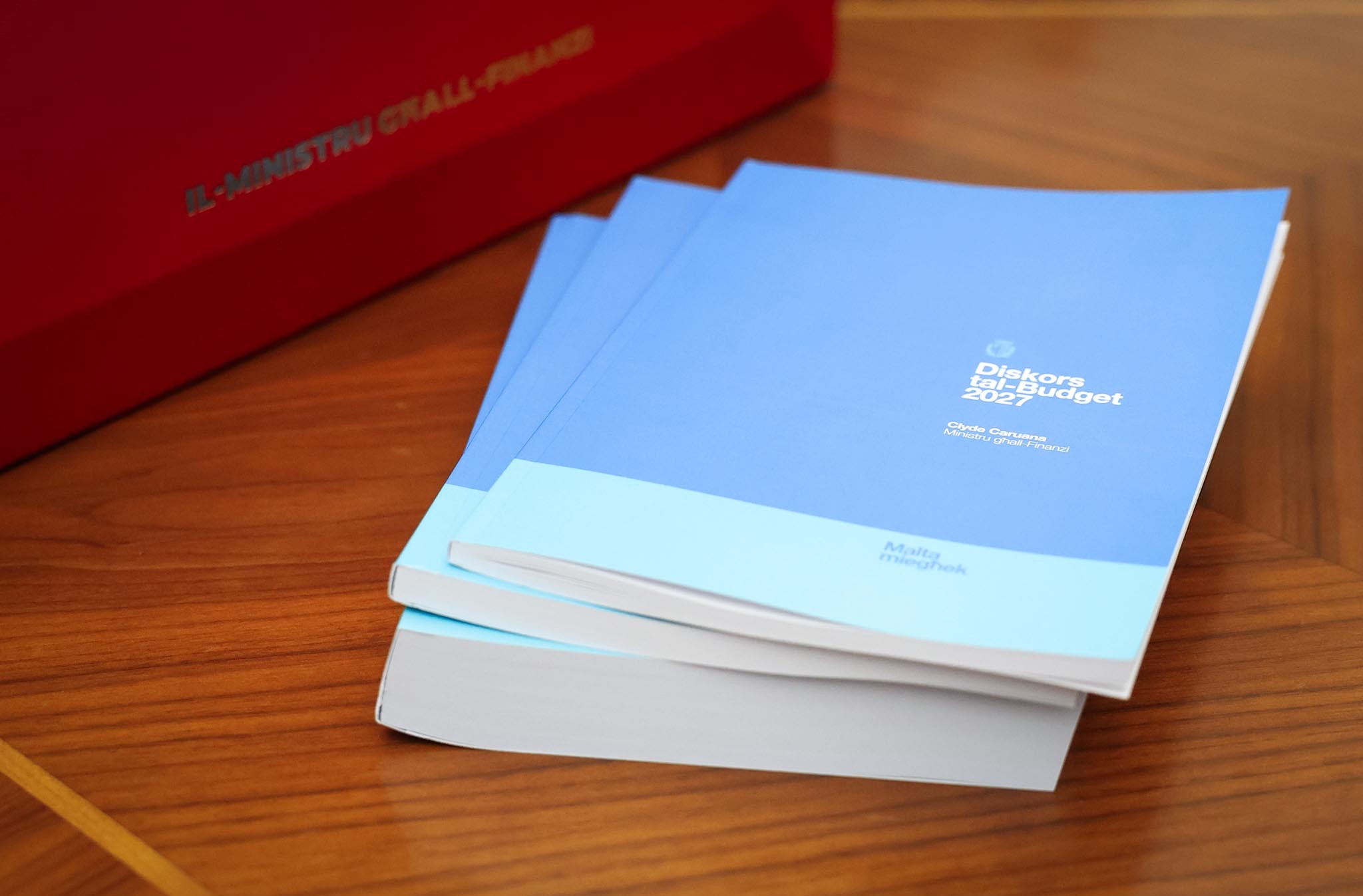
With the Budget speech over, the first reactions to Malta's fiscal plan for 2027 are trickling in from the local business community.
After a Budget marked by stiff increases on fees and taxes on foreign workers and especially tourists alongside a €1,000 'super bonus' given out to local workers and those on long-term residency, Malta's business lobbies have provided mixed views.
The Malta Chamber: "More action needed for long-term growth"
The Malta Chamber believes clearer direction is needed on productivity, business competititveness, infrastructure and long-term transformation. It noted that Budget 2027 is one that helps families and increases pensions but falls short from outlining clearly how it will be transforming Maltese economy and address productivity effectively.
While welcoming tax relief for families and increased pensions, the Chamber expressed disappointment that the new 25 per cent corporate tax rate was not extended to all businesses, and noted a concerning lack of clarity on how the Government plans to effectively boost national productivity and business competitiveness.
The Chamber broadly supported the newly announced eco-tax increases for tourists, provided the generated revenue is strictly reinvested into improving local tourism products and infrastructure. However, it strongly criticised the hike in third-country national (TCN) work permit fees. Rather than acting as a strategic economic tool to curb reliance on foreign labour, the Chamber views the fee increase primarily as a revenue-generation exercise for the Government, warning that the financial burden will inevitably fall on employers.
Crucial infrastructure and structural issues were also notably absent from the budget speech. The Chamber expressed serious concern over the lack of a comprehensive strategy to tackle traffic congestion, which cost the economy an estimated €770 million in 2025. Proposals such as mobility e-wallets, smart parking management, and logistics consolidation hubs were entirely ignored.
Ultimately, the Chamber argued that this first budget of the new legislature missed a critical opportunity to outline a five-year vision. While strong on social measures, the Chamber concluded that the budget failed to address essential reforms in education, planning, public procurement, energy resilience, and bureaucratic efficiency needed to secure Malta's long-term economic growth.
Malta Chamber of SMEs: Budget ‘does not introduce concrete incentives to help businesses improve efficiency’
While welcoming a number of measures in the Budget, such as the corporate tax reduction to 25 per cent for businesses with a turnover of up to €1 million, the Malta Chamber of SMEs has underlined that certain measures risk placing additional burdens on employers.
“One such example is the withdrawal of free childcare eligibility for employees who are Third-Country Nationals (TCNs) and the steep increase in single permit license and Infrastructure fees, both measures that could further increase employment costs and create additional labour shortages,” it said.
It is also concerned that, despite the emphasis on productivity, “the Budget does not introduce concrete incentives or solutions to help businesses improve efficiency and achieve more with fewer resources. Instead, certain measures risk limiting immediate workforce availability and increasing the burden on employers, without providing enough tools or support to address productivity challenges.”
Malta Hotels and Restaurants Association: "Contradictory approach must stop"
The Malta Hotels and Restaurants Association (MHRA) raised concerns that the increase of the tourist eco-tax to €8 per night could harm Malta’s competitiveness.
MHRA said that while it recognises the importance of responsible economic management, the tourism sector is being asked to shoulder a significant share of the financial burden.
It said the Government should display the same sense of financial discipline when controlling its own expenditure.
Moreover, it said that rising costs associated with the employment of third country nationals will also burden the tourism industry, which relies significantly on foreign workers.
“The combined impact of these measures extends beyond price-sensitive visitors,” it said. “Higher-spending tourists also assess the overall cost of their holiday against the quality of the destination experience. Malta cannot assume that its ambition to attract higher-value tourism makes it immune to price competition.”
Instead, MHRA urged the Government to control the expansion of Malta’s tourist accommodation capacity, warning that the more beds the country adds, the greater the pressure becomes to attract tourists.
“This contradictory approach must stop. Malta cannot continue encouraging the development of additional accommodation capacity while increasing the cost of visiting the destination and expecting a shift towards higher-value tourism,” it said.
Gozo Tourism Association: Tourism taxes "risk undermining Gozo's competitiveness"
The Gozo Tourism Association (GTA) has warned that the series of new tourism-related taxes announced in Budget 2027 risk severely undermining the island's competitiveness, placing a disproportionate financial burden on Gozitan operators and potentially dampening the vital domestic tourism market.
While the GTA acknowledged the Government’s efforts to maintain stable energy prices and streamline foreign worker engagement, its budget reaction firmly criticised the decision to impose higher eco-contributions on short-let accommodations compared to hotels.
Under the new rules, short-lets will be taxed at €10 per night (capped at €80), while collective accommodation is taxed at €8 per night (capped at €64).
This uneven playing field will hit Gozo significantly harder than Malta. The GTA highlighted that approximately 72 per cent of Gozo's tourism bed stock consists of short-let accommodations – such as holiday apartments, farmhouses, and villas – meaning the vast majority of visitors to the island will be subjected to the higher tax bracket.
This is compounded by the fact that Gozitan establishments already experience lower average annual occupancy rates than their Maltese counterparts.
The Association expressed serious concern that these new costs will deter Maltese residents from taking short breaks on the sister island, a demographic that remains crucial for sustaining Gozitan tourism businesses year-round.
The GTA expressed frustration that the eco-contributions collected in Gozo are not ring-fenced to be directly reinvested into the island’s tourism product and infrastructure. "If visitors are expected to contribute more towards environmental and tourism sustainability, a fair share of these funds should be directed towards improving the destination from which they are generated," the statement read.
The GTA also voiced disappointment over the newly announced increases to the Gozo ferry fares for non-residents. While acknowledging the need for sustainable transport services, the Association noted that the budget entirely lacked any corresponding investment measures to enhance inter-island connectivity, such as the long-proposed rural airfield, which remains a key priority for the sector.
Malta Employers: Short-term stability prioritised over future growth
Malta Employers’ Association also criticised the Budget for prioritising short-term stability over future productivity-led growth.
“Malta Employers expected Budget 2027 to set out a clearer roadmap for economic transformation, with concrete measures to encourage productivity, innovation, investment in technology, skills development and higher-value economic activities,” the association said.
“While the Budget addresses a number of immediate needs, it offers insufficient detail on how Malta will move towards a more sustainable and productive economic model, reduce its reliance on population growth and labour-intensive activity, and improve the quality of life of its residents.”
It welcomed the reduction in tax for SMEs with a turnover of less than €1million from 35 per cent to 25 per cent, as well as the continuation of energy subsidises and additional tax relief for parents.
However, it voiced concern at the lack of concrete detail on incentives for businesses to invest in digitalisation, automation and higher-value activities, as well as the absence of a clear direction on mass transport and economic diversification.
“At the same time, increases in fees affecting foreign workers and tourism require careful assessment of their implications for employers, competitiveness and prices. Investment in education must also deliver stronger outcomes to equip the workforce with the skills needed for Malta’s future economy,” it said.
More to follow.
Tax on reinvested earnings slashed to 25% for companies with under €1 million turnover
A reduction in the corporate tax rate has been a long-standing demand from the local business community
Bidnija ODZ land eyed for wellness centre as application gets approval recommendation
The proposal would see the disused livestock farm on the site demolished
Malta becomes new home for Superyacht Builders Association
The Prime Minister said the Government aims to strengthen Malta’s position as a leading maritime centre