


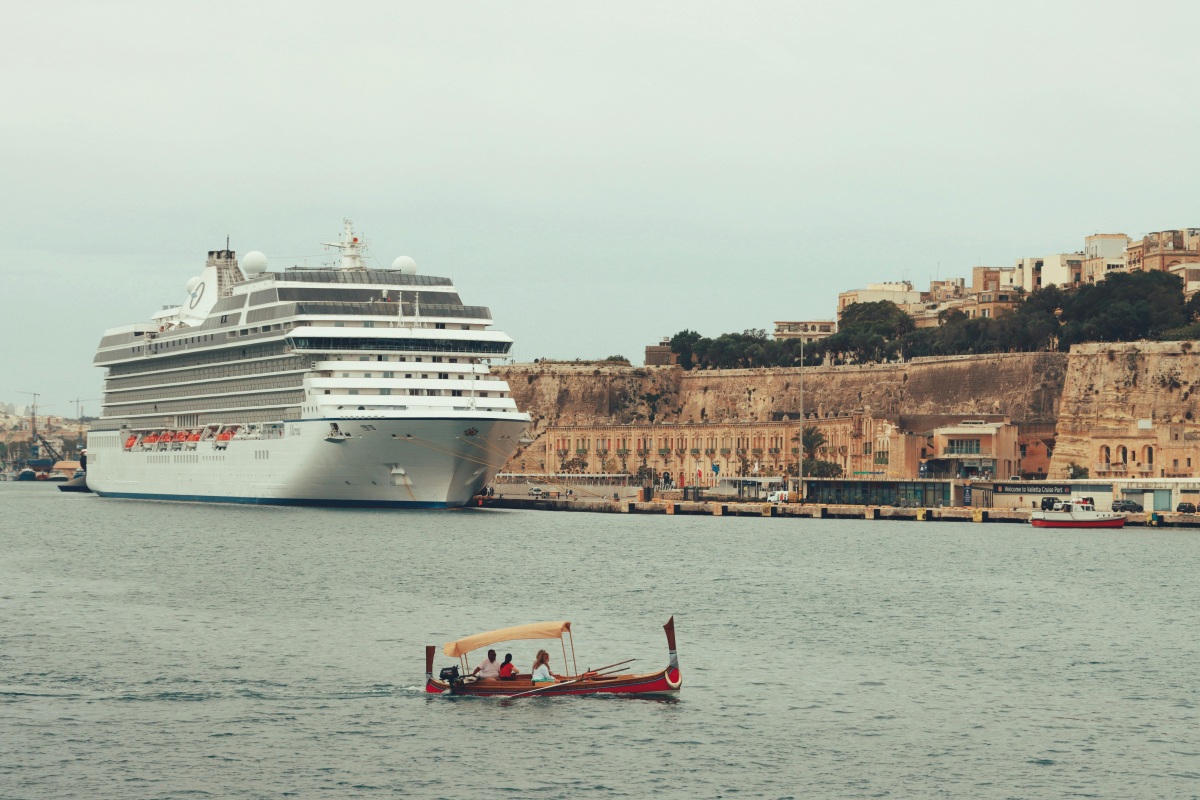
Malta’s cruise industry experienced a notable rebound during the third quarter of 2025, as total passenger traffic rose by 8.9 per cent compared to the same period last year, according to data from the National Statistics Office.
Between July and September, 350,338 cruise passengers visited Malta, up from an approximate 321,760 in Q3 2024.
The number of cruise liner calls also increased, rising to 140 – an additional 16 calls compared to the corresponding quarter of the previous year. Transit passengers comprised the vast majority of arrivals, reaching 294,501 or 84.1 per cent of total traffic.
On average, each vessel carried 2,502 passengers, slightly lower than the 2,595 passengers per vessel reported in Q3 2024.
EU vs non-EU markets
Passengers from EU Member States represented just over half of total arrivals (50.2 per cent), with Italy and Spain remaining the leading EU source markets. Italian travellers accounted for 19 per cent of all cruise visitors, while Spanish passengers made up 10.4 per cent.
Non-EU tourists numbered 174,427, with the United Kingdom and the United States the dominant sources, accounting for 37.1 per cent and 32.7 per cent of non-EU arrivals, respectively.
Demographics
Female passengers continued to outnumber males, making up 53.7 per cent of total arrivals. The most represented age group was 40-59 years, comprising 33 per cent of passengers, followed closely by those aged 60-79 years (29.9 per cent).
Year-to-date performance
Looking at the first nine months of 2025, Malta welcomed 691,261 cruise passengers, slightly down from last year’s comparable period.
Of these, 47 per cent were EU nationals, and women made up 53.4 per cent of arrivals. Unlike the Q3 pattern, the dominant age group year-to-date was 60-79 years, accounting for 34 per cent of passengers, followed by those aged 40-59 years (31 per cent).
During January-September, the number of cruise liner calls reached 294, with an average of 2,351 passengers per vessel, compared to 271 calls and 2,481 passengers per vessel during the same period in 2024.


‘Immense pride’: Gozo business lobbies welcome Victoria’s selection as European Capital of Culture
Victoria (Rabat) will hold the title of European Capital of Culture in 2031

Digital euro moves closer to reality as ECB launches first wholesale system
European policymakers are attempting to modernise the euro for an increasingly digital financial system

Number of part-timers also holding full-time jobs increases 12.5% year on year
In April 2026, administrative and information and communication contributed mostly to the increase in full-time employment