


Malta’s projected population growth has been revised downwards for the first time in years, as new demographic assumptions point towards lower net migration and fertility than previously expected.
A new Central Bank of Malta analytical article examining Eurostat’s EUROPOP2025 projections finds that Malta’s population is expected to increase by around 21 per cent between 2025 and 2100, equivalent to roughly 150,000 people.
The population is projected to peak at 766,348 in 2073, around 25 per cent above its 2025 level, before declining to 723,710 by the end of the century.
However, the latest projections represent a notable change from previous editions. The Central Bank noted that since EUROPOP2010, Malta’s population projections had consistently been revised upwards, largely because migration inflows proved stronger than anticipated.
EUROPOP2025 marks the first significant downward revision. EUROPOP2023 had projected Malta's population to reach around 744,000 by 2050, while the latest projection puts the figure approximately three per cent lower.
Average annual population growth between 2025 and 2050 has consequently been revised from around 1.2 per cent in EUROPOP2023 to 0.9 per cent under the latest projections. Although EUROPOP2025 begins from a higher population base, the two projections are expected to cross around 2037, after which the latest estimates remain lower.
Migration sees largest downward revision
The biggest factor behind the change is a downward reassessment of net migration.
From 2026 onwards, projected net migration is consistently lower than assumed under EUROPOP2023. By 2027, the difference amounts to 734 fewer people, widening to around 2,200 fewer by 2031.
Between 2026 and 2050, the latest projections imply around 32,000 fewer net migrants cumulatively than previously projected. The Central Bank said the assumption is also consistent with a moderation in foreign net migration observed in Malta.
Nevertheless, migration remains central to Malta's projected population growth. Under the baseline scenario, net migration remains positive throughout the projection period but falls from around 10,600 people at the beginning of the horizon to 3,450 by 2100.
At the same time, Malta's ageing population is expected to push annual deaths from around 4,300 in 2025 to approximately 10,000 by the end of the century.
Fertility assumption cut by around 14 per cent
The second major downward revision concerns Malta's fertility rate.
EUROPOP2025 uses a base total fertility rate of 1.01 children per woman, compared with 1.15 assumed in EUROPOP2023 – a downward revision of approximately 14 per cent.
The Central Bank estimates that the revised fertility assumption translates into 16,730 fewer people cumulatively over the projection horizon, partly because a smaller number of births eventually results in fewer women of childbearing age in subsequent generations.
The latest assumptions reflect fertility rates which turned out to be lower than previous projections across most childbearing ages. Women in their early and mid-thirties continue to record the highest age-specific fertility rates, but these now amount to around 70 children per 1,000 women aged 31 to 34, compared with more than 80 previously projected.
At 1.01, Malta's assumed fertility rate for 2025 is the lowest in the EU and around 23 per cent below the bloc's average. EUROPOP2025 assumes fertility will gradually recover over the long term, although at a slower pace than previously anticipated.
More recent NSO figures cited by the Central Bank put Malta's actual total fertility rate in 2025 even lower, at 0.98. The bank noted that the country's fertility rate declined by an average of four per cent between 2017 and 2025.
Malta remains heavily reliant on migration for population growth
The projections illustrate the extent to which Malta's future population depends on continued migration.
Under a scenario where migration stops after the first projection year, Malta's population would fall to around 530,000 by 2050 and just 252,000 by 2100 – 56 per cent below its 2025 starting level.
Under a lower non-EU migration scenario, meanwhile, the population would stabilise at around 600,000 until 2069 before beginning to decline. At the other end of the spectrum, higher migration could push Malta's population towards one million within six decades.
Migration also has implications for the country's ageing population and workforce. In 2025, Malta had approximately 27 people aged 65 and over for every 100 people aged between 15 and 64.
Under the baseline projection, this old-age dependency ratio rises to 31.6 per cent in 2050 and 67.5 per cent by 2100. With lower migration, it would reach 70.7 per cent, while in a no-migration scenario it would rise to 104 per cent – meaning people aged 65 and over would outnumber those of working age.
The Central Bank stressed that the figures should not be treated as forecasts. Eurostat's population projections are “what-if” scenarios based on predetermined assumptions about fertility, mortality and migration rather than predictions that incorporate future Government policies.
It nevertheless concluded that the different scenarios point towards one consistent feature of Malta's demographic outlook; positive net migration remains the principal driver of population growth, even when fertility is assumed to recover.

Pushy insurance salesmen exposed in MFSA mystery shopping exercise
The exercise involved 17 mystery shopping interactions and covered insurance intermediaries
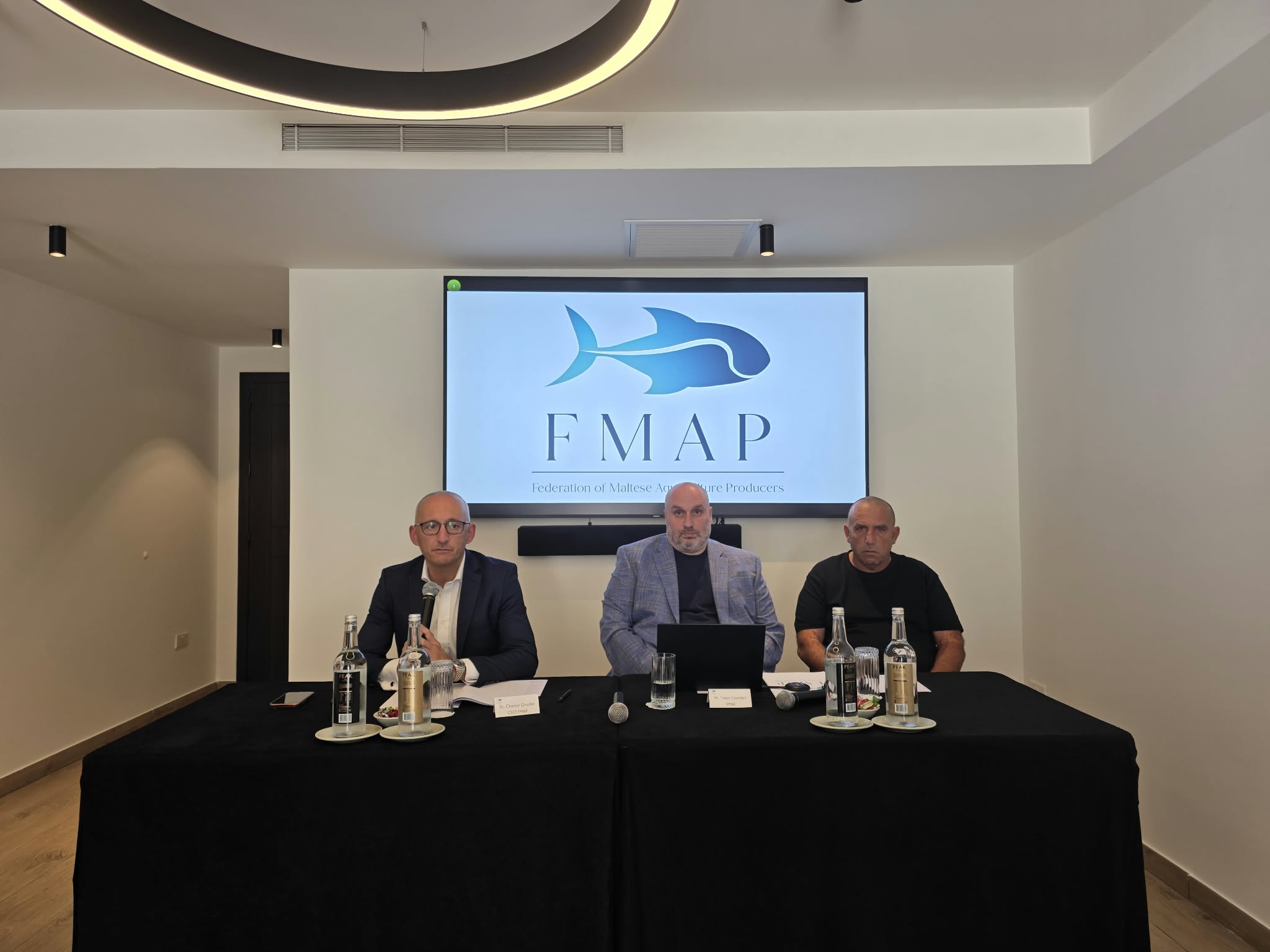
Aquaculture federation CEO hails cleanup campaign a success as 25,500 litres of oily liquid collected
Charlon Gouder said the industry had registered a notable improvement in coastal water conditions this summer

PA orders immediate removal of unauthorised structure outside Piccolo Padre in Sliema
The restaurant is owned by Carlo Stivala and is the first expansion since it was set up in Balluta