


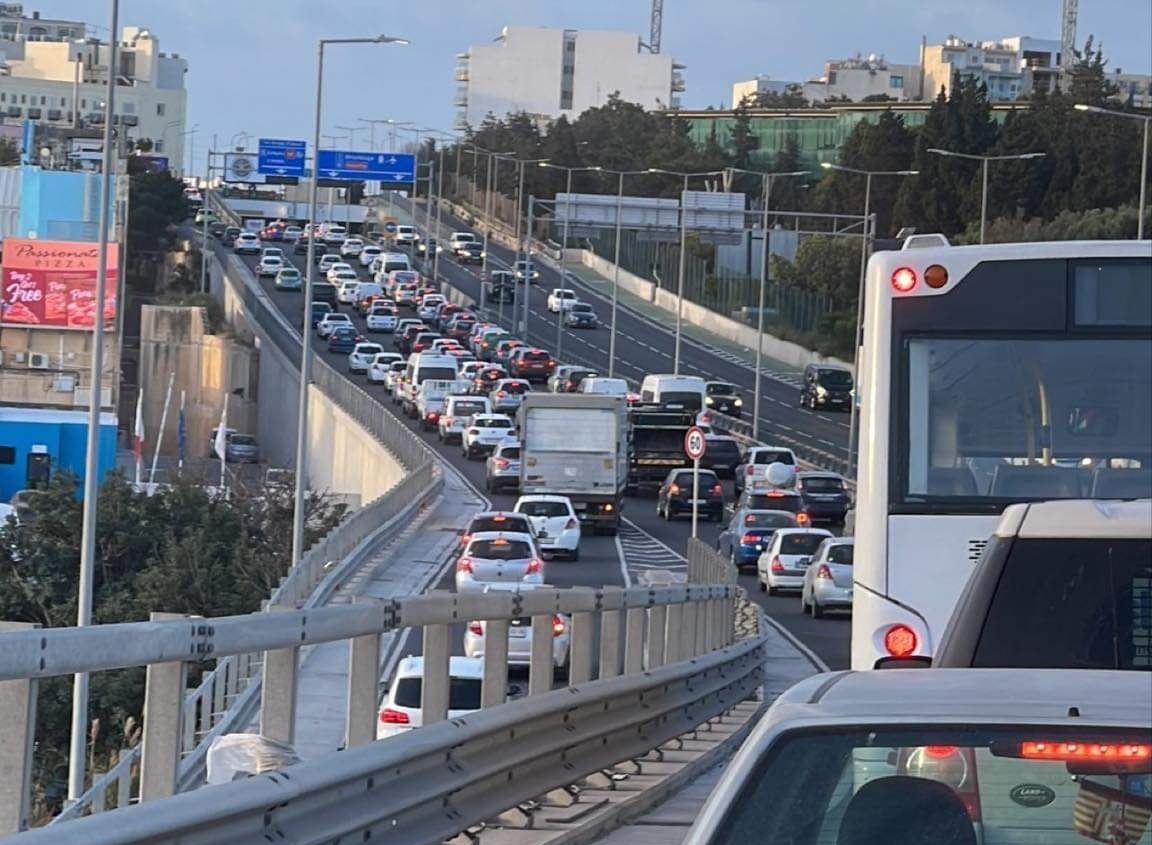
Maltese drivers are spending the equivalent of nearly four full days a year stuck in rush-hour traffic.
According to the latest TomTom Traffic Index, motorists in Malta spend an average of 94 hours annually in rush-hour congestion. The island ranks 82nd out of 492 places studied worldwide, placing it among the more congested urban areas globally.
Congestion levels in Malta now stand at an average of 50.5 per cent, marking an increase of 1.99 percentage points compared to 2024. This means that a journey which would take 30 minutes in free-flowing traffic takes over 45 minutes during peak periods.
The average speed recorded across the Maltese road network is 26.6 km/h, while the average distance driven per trip stands at 6.7 kilometres, a relatively short commute that nevertheless absorbs a disproportionate amount of time.
For many, these figures are not abstract statistics but daily reality. Yesterday alone, I personally spent one hour and 15 minutes in traffic in the morning, followed by another hour returning home from Imrieħel to Żejtun, a journey that, in theory, should take a fraction of that time – about 30 minutes. In a single day, over two hours were lost simply navigating congestion.
Scaled across a year, the economic and personal cost becomes stark. Lost productivity, delayed meetings, higher fuel consumption, increased vehicle wear and tear, and rising stress levels all feed into a broader impact on businesses and employees alike.
Recruiters are even saying that traffic and commute times have become a decisive factor for candidates when choosing whether to accept a job offer.
Featured Image:
Traffic in Malta / Facebook: Maltese Roads Traffic Updates

Mandatory culture and language course introduced for foreign workers seeking longer permits
The reform aims to improve labour market stability by ensuring that foreign workers are better integrated and trained
Malta explores importing renewable energy from North Africa
The project is targeting the importation of approximately 0.8 terawatt-hours (TWh) of renewable energy annually
Employers call for moratorium on public sector recruitment ahead of elections
Malta Employers President Ivan Refalo once against raised concerns about politically driven recruitment