


Until recently, the former Royal Naval Hospital in Mtarfa was substantially underused. It served for years as a school, its corridors busy with pupils moving between classes, before it relocated and left the building to a quieter fate, one shared by a surprising number of Malta’s older institutional buildings once their original purpose runs out. Underused does not mean forgotten, though, and this year the site has been brought back into active use as Haileybury Malta, under permits granted by the relevant authorities for its rehabilitation and conversion.
What makes the project worth a closer look is not only the building’s return, but the financial mechanism used to support sustainable investments within the wider rehabilitation. Malta Development Bank (MDB) has mobilised €10 million towards the rehabilitation through its Guaranteed Co-Lending Scheme for Sustainability (GCLS-S),splitting the package into €5 million of its own co-financing and €5 million from a commercial bank, while also guaranteeing part of that bank’s exposure.
That structure brings together MDB’s own lending, commercial bank financing and an EIF-supported guarantee to help viable green projects move from plans to reality, with environmental results that can be measured. The Mtarfa project is a large-scale example of the mechanism at work.
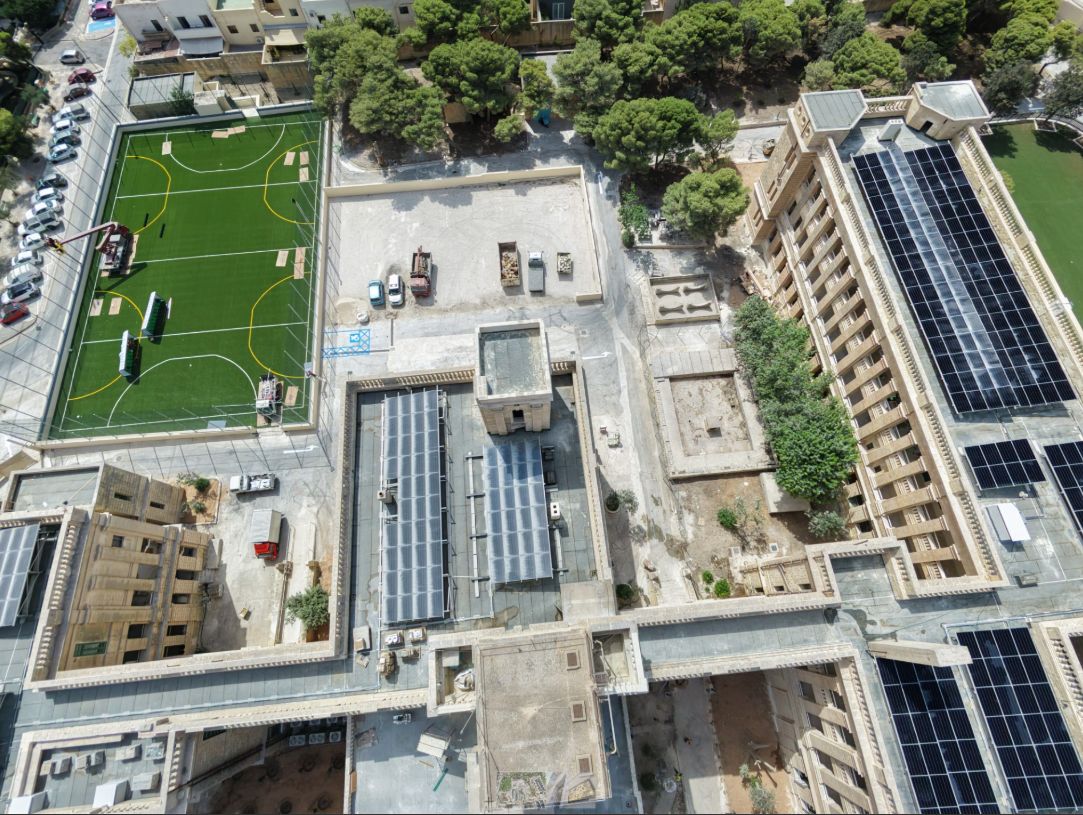
According to the project’s Energy Performance Certificate, the building is projected to use roughly 75 per cent less primary energy than it did before. Measures supporting this reduction include solar panels, high-efficiency air-conditioning with centralised controls, energy-efficient water heating, and lighting controlled by motion sensors and timers. MDB’s assessment also found that the project met the relevant green criteria for its European Investment Bank-supported financing and the European Investment Fund’s Sustainability Guarantee.
The same type of financial support exists on a much smaller scale and is available to eligible businesses of different sizes. A boutique hotel upgrading its heating and cooling system, an office adding step-free access or a factory swapping in more efficient equipment may qualify for a guarantee under MDB’s sustainability schemes, subject to the applicable eligibility and credit requirements. Smaller projects may fall under the SME Guarantee Scheme for Sustainability, where MDB provides a guarantee to the commercial bank and terms can run for up to ten years. Larger projects may fall under the Guaranteed Co-Lending Scheme for Sustainability, which combines MDB co-financing with a guarantee on part of the commercial bank’s share over terms of up to fifteen years.
In practical terms, the guarantee absorbs a share of the lender’s risk rather than handing the borrower cash outright. Subject to the bank’s assessment and the scheme conditions, this can support a longer repayment period, lower collateral requirements or a more favourable interest rate. Eligible investment spans climate-change mitigation and adaptation, the transition to a circular economy, the sustainable management of natural resources, and accessibility improvements to premises and services. The schemes may also extend to eligible SMEs recognised as green through an eco-label, a sustainable business model or environmental certification.
The schemes are open to eligible SMEs, small mid-caps with up to 500 employees, and small public enterprises across most sectors, subject to the applicable exclusions and conditions. They are currently available through APS Bank, Bank of Valletta and HSBC Bank Malta. The window for including new loans under the schemes runs until 19th April 2027, which leaves a defined but finite period for a business considering an efficiency upgrade, a heritage conversion or an accessibility investment to bring a proposal to its bank.
Businesses considering an investment that may qualify can approach any of the three partner banks directly or contact MDB at business.mdb@mdb.org.mt for guidance on eligibility.

2027 COLA expected at around €5, says Finance Minister
The figure is expected to become clearer once the latest Retail Price Index data is available
Malta’s tourism success should not be measured by arrivals alone – Robert Abela
The Prime Minister wants s a model increasingly based on quality, value and sustainability
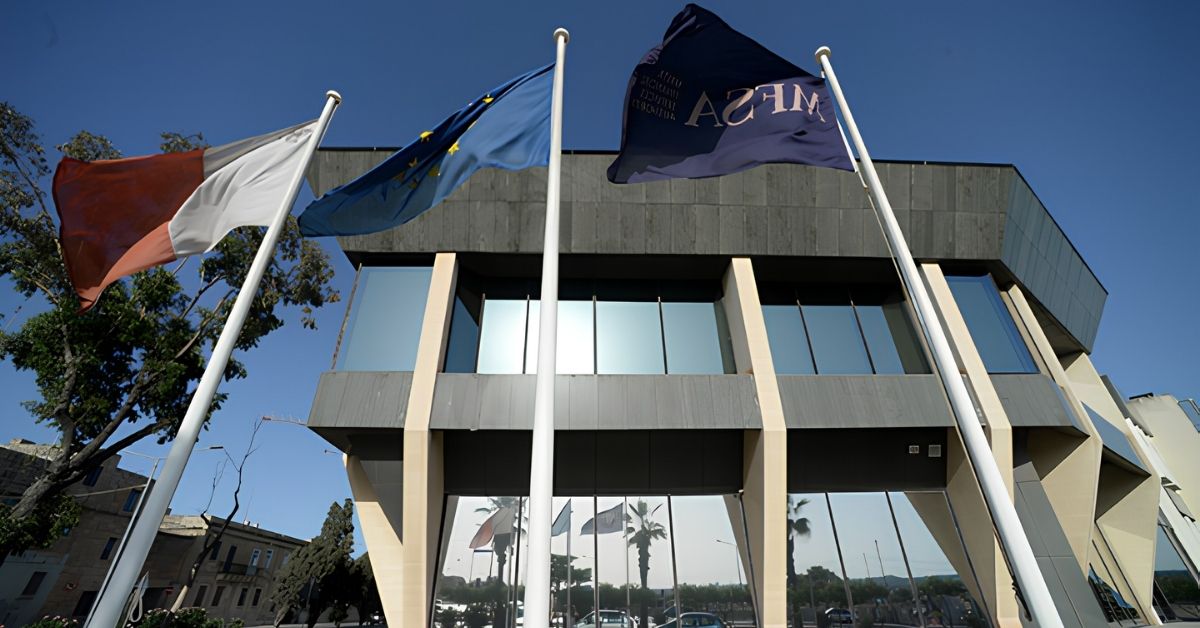
Pushy insurance salesmen exposed in MFSA mystery shopping exercise
The exercise involved 17 mystery shopping interactions and covered insurance intermediaries