



Foundation for Affordable Housing (FAH) CEO Jake Azzopardi said a new EU plan gives clarity and reassurance to the FAH’s approach of providing housing to average-income earners.
The EU’s Affordable Housing Plan, announced this week, proposes the loosening of state aid rules to make it easier for governments to build affordable housing for middle-class earners who have been priced out of the market. This will be done by revising the SGEI (Services of General Economic Interest) criteria to include affordable housing as an essential service.
This is a similar approach to the raison d’être behind the Foundation for Affordable Housing, which was set up as a joint venture between the government and the Archdiocese to target people who have been price out of the market but don’t qualify for social housing.
It recently announced a tender for the construction of 250 new affordable housing units that must be sold at reduced rates of as low as €110,000.
The FAH adopts a unique business approach; it is a private-law entity that operates with the efficiency and financial discipline of a commercial enterprise, but voluntarily caps its profitability to pursue a clear social objective.
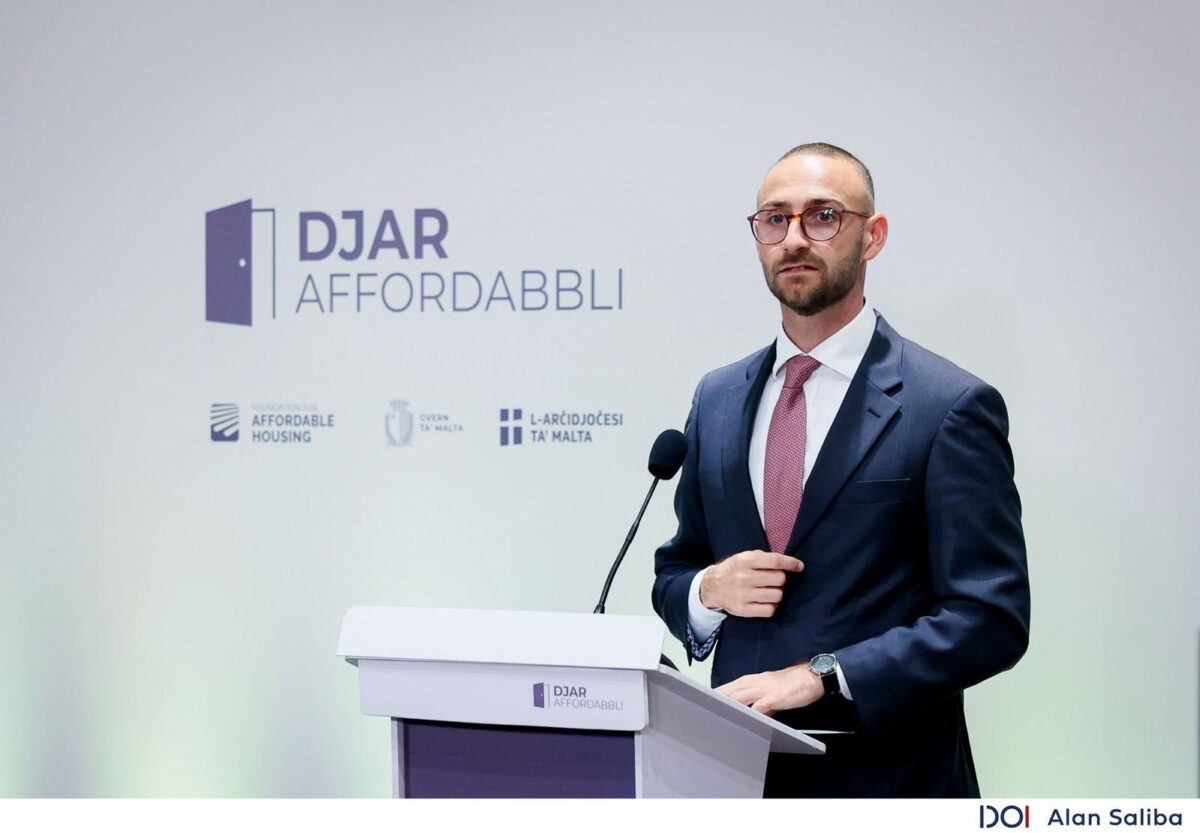
Dr Azzopardi said the EU’s Affordable Housing Plan effectively confirms that the FAH’s focus on lower- and middle-income households is fully aligned with EU rules and that the Affordable Homes Initiative operates comfortably within the European legal framework.
This provides a stronger legal basis for treating FAH assistance as compatible state aid.
Dr Azzopardi added that the FAH’s 20-year requirement before converting a temporary emphyteusis into a perpetual one aligns with a new EU decision linking affordability to long-term commitments rather than speculative investment.
“The FAH’s capped-profit structure and claw-back mechanisms in favour of the Housing Authority ensure proportional compensation and prevent over-compensation to the FAH, in line with EU State aid principles,” he said.
“Moreover, because the FAH is legally required to reinvest any surpluses into further housing initiatives, profit extraction is structurally limited.”
“This significantly reduces the risk of triggering over-compensation concerns, since the organisation cannot distribute profits.”
“Rather than ‘increase the flexibility’ for the Foundation for Affordable Housing, the Affordable Housing Plan mostly confirms the legal space within which the Foundation was already operating prudently.”
“It gives reassurance and clarity, especially regarding middle-income households, while rewarding the fact that the Affordable Homes Initiative was carefully designed from day one around the stricter version of the SGEI rules.”
“The EU Housing Commissioner’s acknowledgement that even average-income earners now require some form of assistance to purchase a home, further confirms that housing is a current concern across Europe and not just Malta. In fact, Malta has the highest homeownership rate in Europe.”
"The Commissioner’s statement acknowledges that housing systems must now cater for a much wider affordability challenge, and that new delivery vehicles are needed to reach households who are above traditional social-housing thresholds but still cannot access decent housing at market prices.
"The Foundation was created precisely as a response to this situation.”
Photo credit: Jake Azzopardi (LinkedIn)


Malta Maritime Summit puts geopolitical risks, regulation and decarbonisation in focus
The summit brings together maritime industry representatives, international experts and global institutions to discuss challenges and opportunities

2027 COLA expected at around €5, says Finance Minister
The figure is expected to become clearer once the latest Retail Price Index data is available

Malta’s tourism success should not be measured by arrivals alone – Robert Abela
The Prime Minister wants s a model increasingly based on quality, value and sustainability