


When Simon Agius Muscat bought his first home, he thought he had done all the homework – researching the area, weighing the pros and cons and looking out for nearby developments that might affect his quality of life.
But just months later, he was blindsided. A nearby house was set to undergo major renovation, and he had missed the 30-day appeal window to raise objections. Then it happened again. And again.
That frustration – combined with the data he had already gathered through his own research which he had gathered purely for fun – pushed Mr Agius Muscat to create app.permess.mt, a website he launched recently to make planning permits easier to track.
“When I was developing this website, I always found fascinating the fact that this public data wasn’t being used by a lot of people working in the industry, for example real estate agents,” he shares.
Using publicly available information from the Planning Authority (PA), the site reorganises information and presents it in a way that’s far more accessible to ordinary citizens.
“Right now, the PA website only lets you check what’s happening on a specific street,” Mr Agius Muscat explains.
“But I wanted to know about developments happening all around me. If someone on the next street over is planning to build a block of apartments that could affect my access to natural light, I’d like to be aware of that too.”
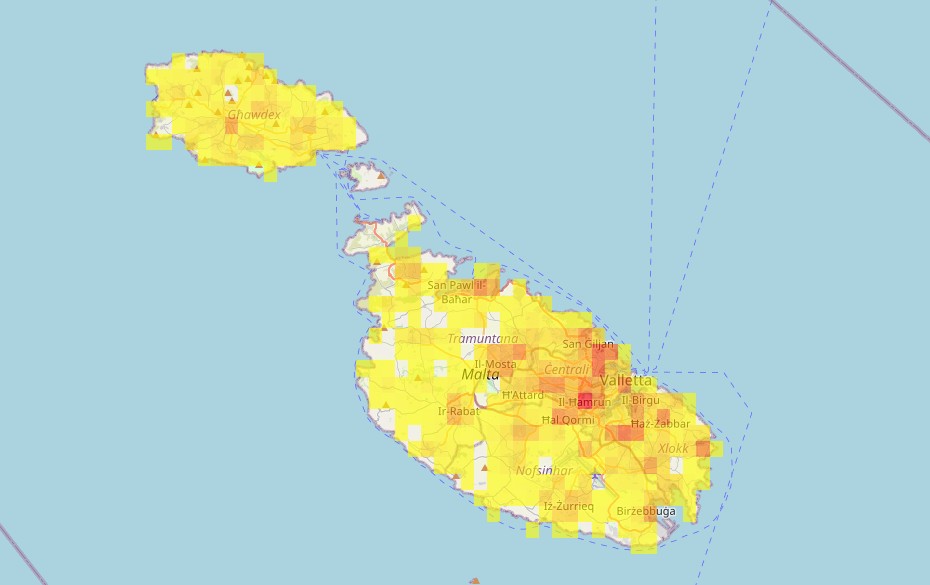
At a glance, the familiar map of Malta presents a heatmap of yellow, orange, and red boxes, each representing the number of active permits in that area, yellow indicating the fewest, red the most. Each box covers roughly 1 square kilometre, providing a quick overview of permit activity.

Users can click on the box icon on the left of the page to highlight a selected area – such as your block – revealing the precise locations of permits within it. The app also displays the latest five permits in the area, with direct links to the PA website for more details.
Alongside the map, Mr Agius Muscat also developed a separate application alerts.permess.mt that sends users email alerts for any developments in areas they choose.
“Technically, the PA already has a notification system,” Mr Agius Muscat notes, referring to letters sent to residents on the same street as the development.
“But it’s not always reliable. Sometimes the letter simply doesn’t arrive, and even when it does, developments in a parallel street can still affect me, even though they’re not on my street.”
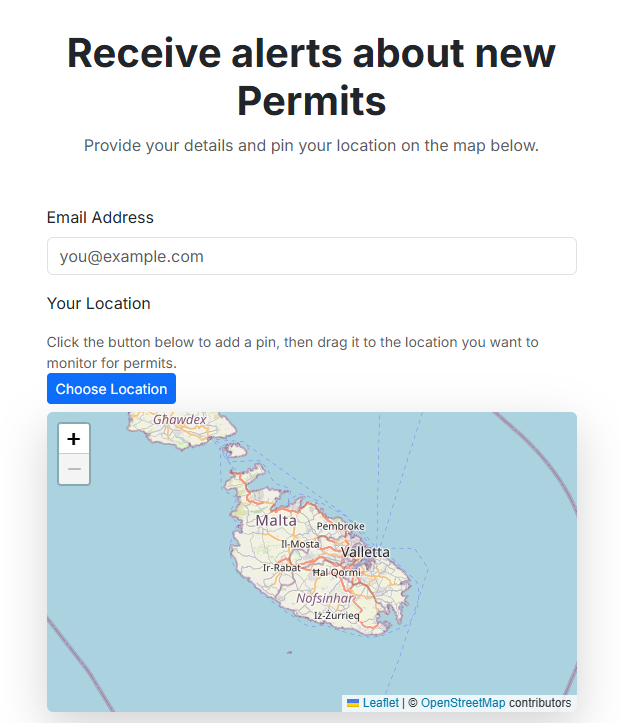
With the digital notification system, users simply enter their email address, select an area of interest, and receive alerts whenever new developments are registered there.
Mr Agius Muscat explains that the technical process used to collect the publicly available information is called web scraping. The system scans the PA website, including data going back to the 1980s, and extracts the raw information.
“Web scraping is the hardest part of it all,” he admits. “It’s true that it’s public data, but that doesn’t make it easy to retrieve. Think of it as having a cake that’s already baked and trying to extract the eggs from it,” he says.
Asked about his future plans, Mr Agius Muscat says he hopes to dedicate more time to improving the existing systems – but raising two kids, working full time and doing these websites without any financial gain, makes it a challenging balancing act.
He also shared his interest in creating a functional website – vuci.mt – aimed at preserving the Maltese language, using Artificial Intelligence trained to communicate in proper Maltese.

“It’s a fact that nowadays there are a lot of foreigners in our country. That brings about social challenges, creating a downward pressure on the Maltese language,” he explains.
“In my daughter’s class, if there are just two kids who don’t understand Maltese, the whole lesson is conducted in English, leaving the majority of the class excluded.”
Mr Agius Muscat explains that anyone can contribute by volunteering as much time as they wish to transcribe audio files available on the website, small efforts that collectively help train AI to use proper Maltese. Although not yet fully functional, the website currently allows users to register their interest.
“If we act now, we can preserve Maltese in time and make sure it’s never lost,” he concludes.
If you want to keep informed about the latest updates on Mr Agius Muscat’s latest work, click here.

Planning Authority proposes fast-track rebuilds, but draws a hard line on abuse
The PA is clear about the fact that this is about restoring what was lawfully there, nothing more

Wolfgang Tweraser’s relentless drive for efficiency, sustainability and excellence
He brings 40 years of international business experience into his most recent endeavour – TW Consulting & Trade Ltd

KM Malta will start flying to Tel Aviv this summer
New route announced as part of KM Malta Airlines' largest summer schedule to date