


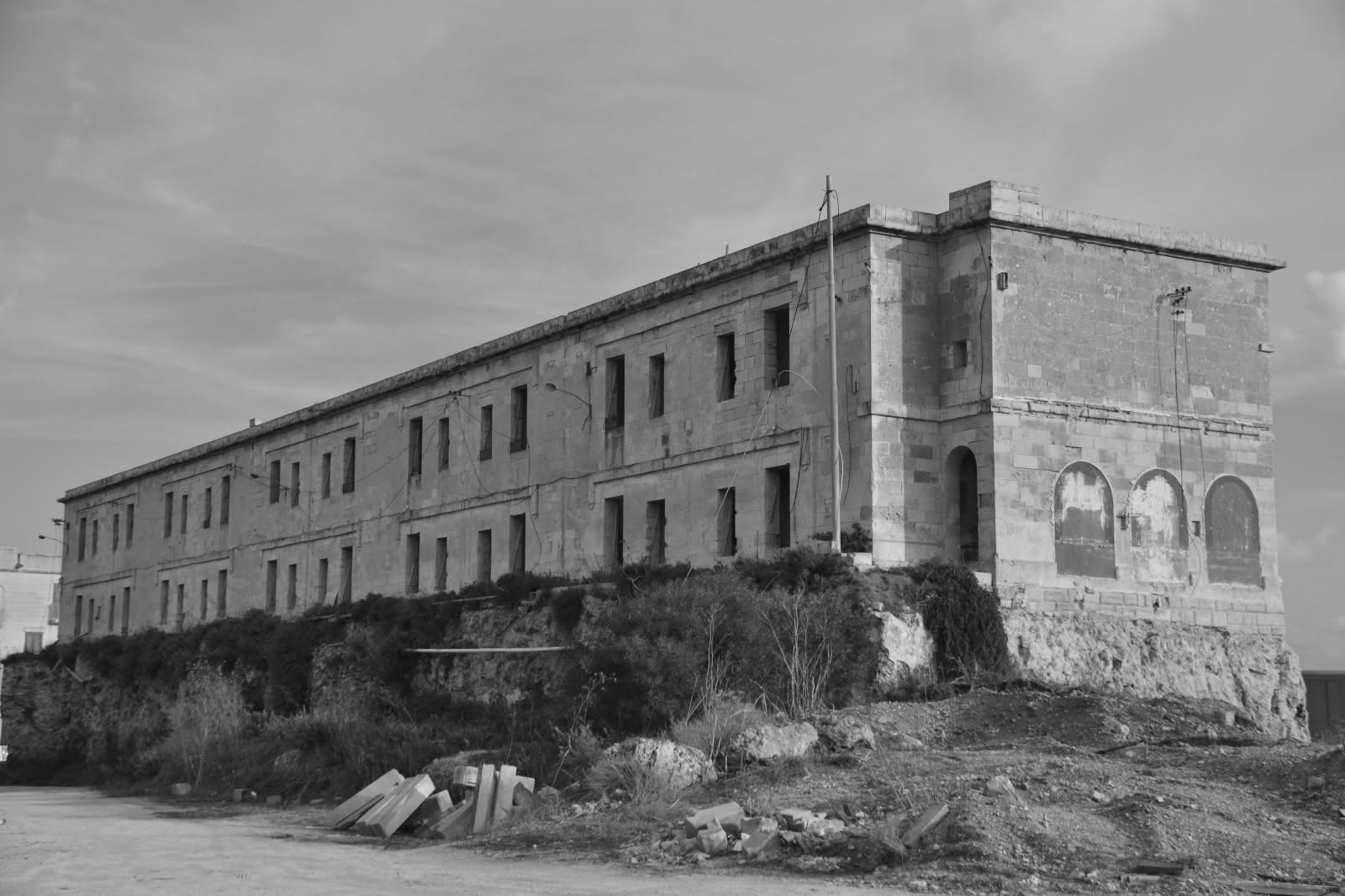
Associations Gozo Tourism Association, Din l-Art Ħelwa, and the Coalition for Gozo have welcomed the decision to incorporate the historic British-era barracks into the Fort Chambray Master Plan.
The Gozo Tourism Association (GTA) said the decision demonstrates that tourism development and the preservation of historical buildings need not be mutually exclusive.
"The Association has consistently maintained that tourism development and heritage conservation should not be viewed as opposing objectives," the GTA said.
It added that, when planned responsibly, the two can complement each other, creating a tourism product that is more sustainable and reflective of Gozo's character.
According to the Association, integrating historical buildings into accommodation projects can help preserve architectural features and cultural heritage while strengthening Gozo's appeal as a tourism destination.
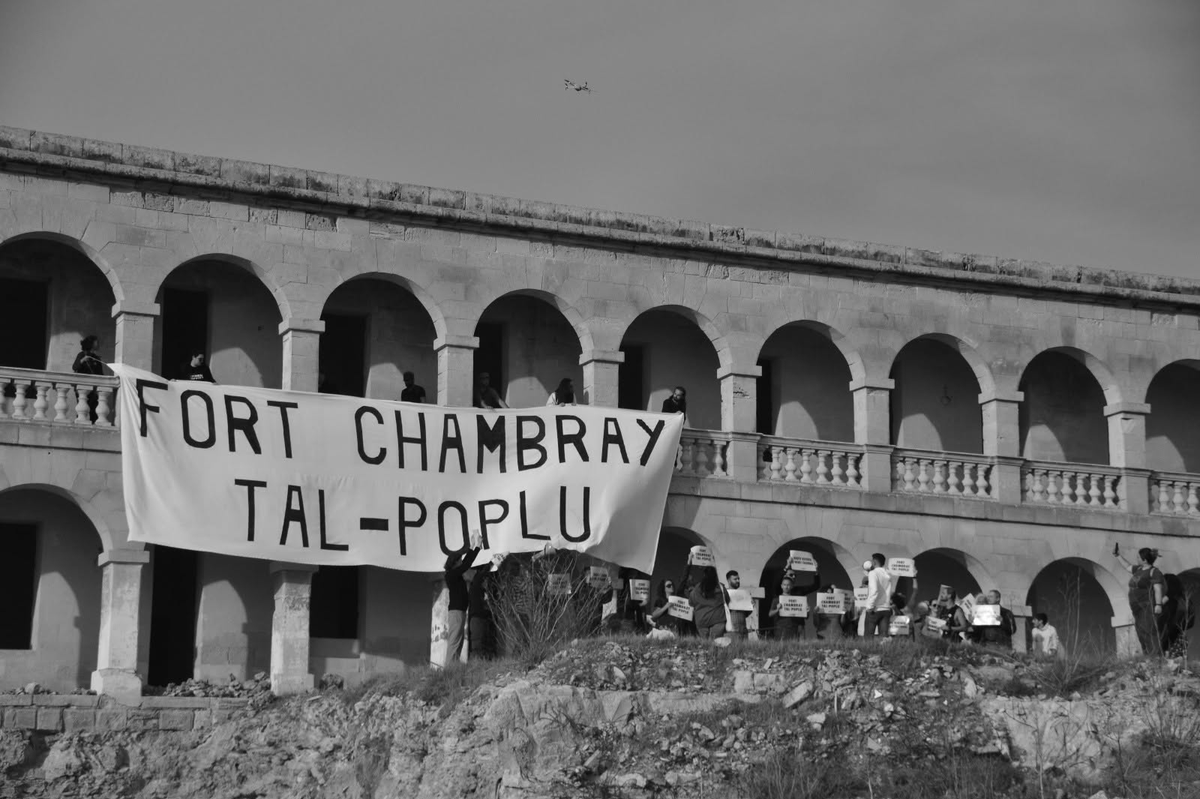
Din l-Art Ħelwa and the Coalition for Gozo issued joint a statement, highlighting however that the Fort has not been granted the "highest level of statutory protection through Grade 1 scheduling."
"Without Grade 1 protection, however, we risk seeing the barracks suffer a fate similar to that of the Grade 2 scheduled St George’s Barracks, incorporated into the Hard Rock Hotel development, or Cambridge Barracks, whose Grade 2 scheduling did not prevent approval being granted for a 31-storey hotel within the barracks’ footprint," it added.
GTA also stressed that Fort Chambray occupies a prominent position within Gozo's tourism landscape, making it particularly important for redevelopment projects to strike a balance between economic investment and the protection of historically significant structures.
It further argued that the adaptive reuse of heritage buildings within accommodation developments could help distinguish Gozo from competing destinations, while supporting investment and economic growth in the tourism sector.
The GTA also welcomed the dialogue that led to the latest decision and called for continued cooperation between the Government, developers, heritage stakeholders, NGOs and the wider community.
It said such collaboration would be important in ensuring that future tourism developments respect Gozo's historical identity while contributing to the island's economic development.
The Association reiterated its support for tourism initiatives that combine sustainable growth with heritage protection, maintaining that preserving Gozo's distinctive character remains essential to its long-term attractiveness as a destination.
The history of Fort Chambray
The statements follow controversy surrounding earlier plans for the redevelopment of the 18th-century fort in Għajnsielem. In 2024, the Planning Authority approved plans to demolish the historic barracks as part of a wider redevelopment project that included a five-star hotel and apartment blocks.The two-storey façade was to be dismantled and relocated to the rear of the site.
Fort Chambray has a rich history that goes beyond its architecture, which dates back to Malta's era as a fortress island, encompassing decades of controversies.
Fort Chambray lies on a hill, ‘Ras it-Tafal’, in Għajnsielem situated between Mġarr port and Xatt l-Aħmar. It was originally built during the reign of Grand Master Pinto by a Norman Count of the Order of St John, named Francois Chambray.
The initial idea behind the fort was to construct a new town akin to Valletta, replacing the Citadel in the same way that Valletta replaced Mdina as the capital. The Knights believed that its construction would increase the safety, increase commerce between the islands, and attract new populations to Gozo. However, this project was shelved due to a lack of funds. In 1749, Bailiff Jacques Francois de Cahmbray, Lietuenant General of the Ships, was appointed Governor of Gozo and offered to finance the fortifications’ construction. By 1770, Fort Chambray was built but the idea of building a town around it never materialised.
During the 20th century, specifically during the First World War the British built barracks within the walls. In 1934, the Government started using it as a mental institution and in World Ward II it was used as a hospital,
Later, the Nationalist Government introduced plans to develop it into a tourism establishment, including a 320-bed hotel. However, in 1971, a Labour Government scrapped plans and had refurbished the mental hospital. In 1979, patients were moved elsewhere and the fort was allocated for tourism. Little development occurred but interestingly, in 1987, Labour Party activities took place in the area ahead of the election. Additionally, pre-election, the Government transferred the fort to the Zammit Tabona family, who headed Fort Holidays.
In 1993, the land was granted to an Italian businessman Roberto Memmo on a 99-year lease, however questions arose as to how this transfer took place. In 1998, Joseph Muscat – who would eventually become Prime Minister – had written a book about the alleged irregularities that took place surrounding the concession.
The businessman had plans to turn the barracks into a hotel with 236 residential units and render it a commercial centre. However, the plan was cut short when the Government terminated the agreement and transferred the land to Michael Caruana in 2005 for around Lm3.7 million, a value of approximately €8.6 million.
Mr Caruana’s lease was granted for 87 years and was set to expire in April 2092. He had told Times of Malta that he wanted to transform Fort Chambray into “an internationally renowned landmark.” However, former Minister Austin Gatt had remarked that the developers would be facing a Lm100 fine every day if they did not keep up with the timelines and that Government had the right to dissolve the contract.
Since then, the barracks have remained in place, teetering on the edge of structural failure until last year when two planning applications were filed to demolish the apartments and construct a hotel and more apartments.
A Parliamentary committee met, with Minister Stefan Zrinzo Azzopardi stated that some construction works begun years earlier, but remained unfinished and restoration works on part of its historical structures were also carried out, but fortifications required “urgent intervention.”
The committee then unanimously agreed to amend the concession allowing parts of the site to be transferred to new investors. This means that Mr Caruana can sell the concession to a group of investors.
Minister Zrinzo Azzopardi remarked that the amendment would clarify how the development will be carried out and how fortifications will be restored. Additionally, he said that there will be clearer obligations for the building of the hotel, which will need to be completed within 48 months of a development permit being granted.
Main image: Fort Chambray photographed by Sonia S Scerri / Facebook

‘I think it’s a no-go’: Prof. Maria Attard on night-time deliveries in Malta
Shifting deliveries to night-time could disrupt residential areas, for one
Malta International Airport passenger traffic rises 12% to 1.1 million in September
Another record month for the island's airport
UAE ambassador highlights opportunities across key sectors during Malta business roundtable
The event brought together leading Maltese business executives, investors, and institutional stakeholders