


Only one in three family businesses in Malta has a written succession plan, a survey of 150 businesses found.
The survey also found that 142 respondents had recorded an increase in turnover, although half reported stagnant profits.
Meanwhile, 83 per cent said they had a functioning board of directors, while half had appointed independent directors. Dividend policies are also becoming increasingly common.
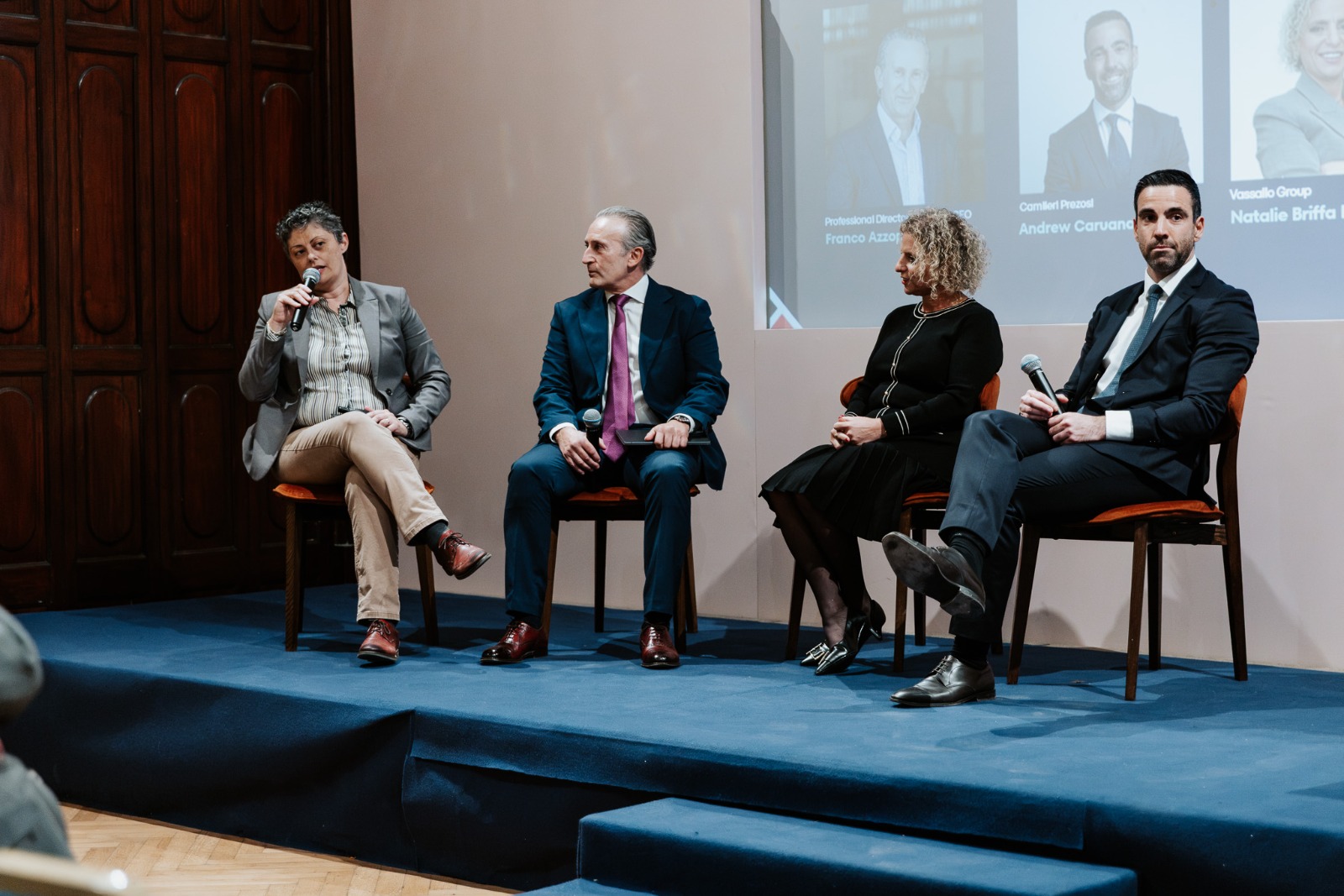
The findings were presented during a recent Malta Business Network panel discussion held at the Malta Chamber of Commerce in Valletta.
Opening the event, Malta Chamber President William Spiteri Bailey highlighted the importance of family businesses to the Maltese economy and the need for them to adapt to changing circumstances.
He noted that the way businesses had been managed over the past two decades would not necessarily be suitable for the next 20 years.
Moderated by former Malta Chamber President Marisa Xuereb, the panel brought together professional director and former CEO Franco Azzopardi, Vassallo Group Chairperson Nathalie Briffa Farrugia and Camilleri Preziosi Partner Andrew Caruana Scicluna.
Ms Briffa Farrugia discussed the succession process at Vassallo Group, which entered a new phase in 2021 when her father stepped down.
She explained that preparations had begun considerably earlier, with family members becoming shareholders upon turning 18. The company now has seven family shareholders.
According to Ms Briffa Farrugia, founders often take responsibility for most aspects of a business, making it necessary to gradually distribute responsibilities as the company evolves.
"The test of your success is if the company keeps going when you are not there," she said.
She also stressed the importance of distinguishing between executive responsibilities and those of shareholders.
Mr Azzopardi, a former President of the Malta Institute of Accountants, argued that while family businesses are often built on trust, this cannot replace formal governance structures.
He referred to his experience advising a family business to restructure its governance arrangements, including amendments to its memorandum and articles of association to allow shareholders to exit the company.
He maintained that the board of directors should be the starting point for improving governance and warned against paying family members more than other employees, arguing that such practices could discourage talented staff.
"The articles are written when everyone agrees. They are tested when someone disagrees," he said.
He also questioned whether family charters, despite reflecting shared values and intentions, provide sufficient mechanisms to resolve disputes.
Meanwhile, Dr Caruana Scicluna discussed Malta's family office framework, which he said could serve both local businesses and foreign families.
He outlined structures involving private trust companies, investment companies with variable share capital (SICAVs) and sub-funds, noting that non-prescribed funds benefit from a zero per cent tax rate.
However, he indicated that such arrangements are generally more suitable for families with wealth exceeding €5 million, given operating costs of approximately €75,000.
He also highlighted the challenges facing family businesses where no clear successor exists or ownership becomes increasingly fragmented across generations.
Ms Briffa Farrugia acknowledged the emotional complexities involved in family businesses, suggesting that external consultants can help families navigate difficult transitions and disagreements.
During the discussion, Pier Massa emphasised that a strategy without a plan for implementing change risks remaining ineffective.
Concluding the panel, Mr Azzopardi stressed that a budget should not be confused with a business strategy. He also argued that non-executive directors should contribute beyond compliance matters by helping businesses move away from day-to-day operational pressures and focus on longer-term priorities.
The Malta Business Network organises monthly discussions involving business leaders, policymakers and regulators.
Its November event will focus on trends, challenges and the outlook for Malta's supermarket sector.

Government responsible for ensuring infrastructure supports economic model – Employers’ Association
Economic growth has relied heavily on sustained construction and was encouraged by government’s pro-development policies, it said
‘Smart Regulation, More Agility’ event will see businesses propose ideas for more agile regulatory environment
It will focus on legislative amendments, the Malta Business Wallet, and the Youth Enterprise Framework, among other things
Moody’s affirms Malta’s A2 rating which ‘reflects the economy’s capacity to sustain strong growth’
It noted that continued untargeted energy subsidies and increases in other current expenditure will widen the fiscal deficit