


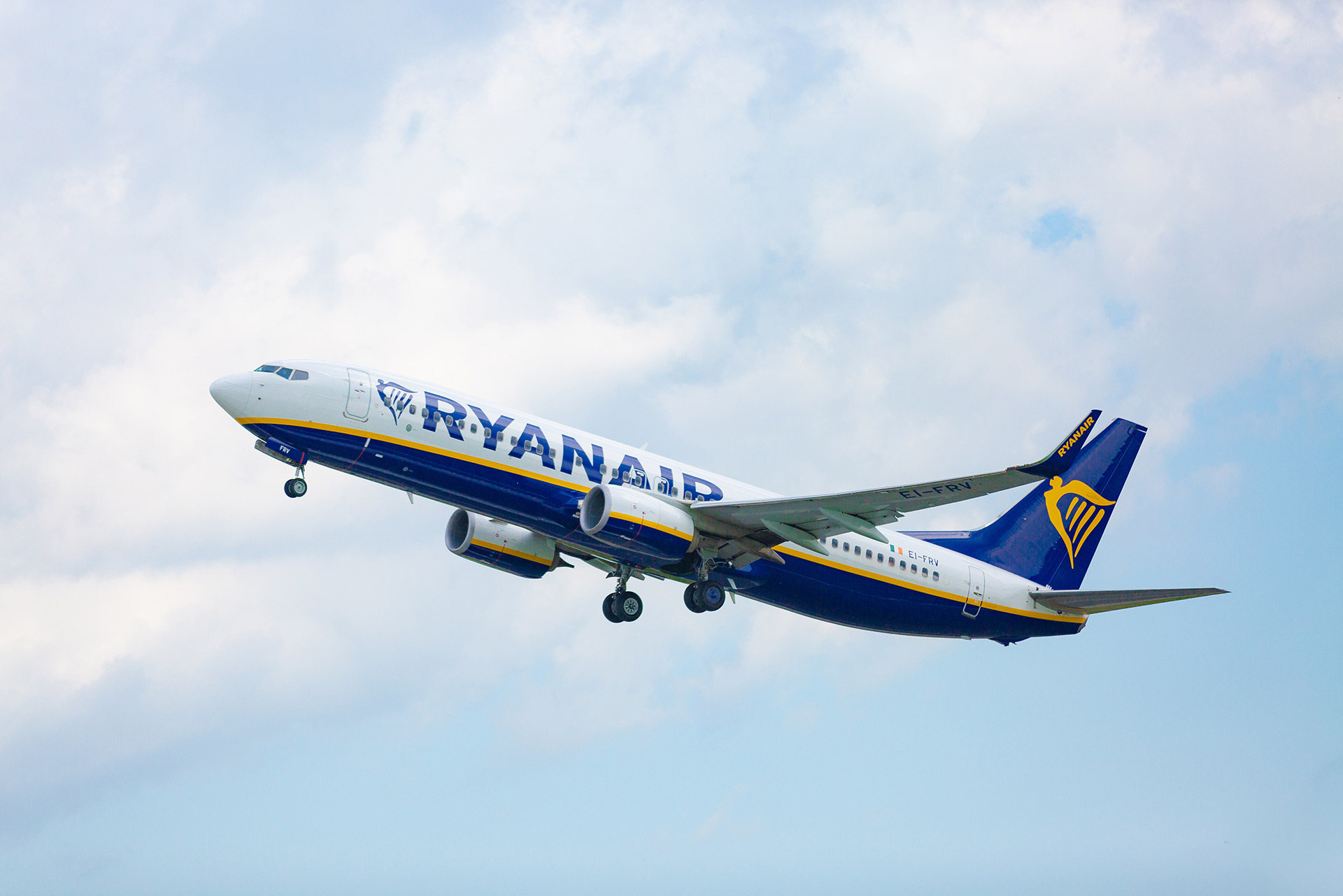
Irish low-cost airline Ryanair has slightly increased its forecast for full-year traffic after recording strong summer bookings, now saying it expects to fly between 90 and 100 million passengers in the financial year to end-March 2022, up from 80 to 100 million.
The airline, Europe’s largest low-cost carrier, revealed the revised estimates as part of its report for the first quarter of the financial year, which stretches from April to June.
An increase in bookings saw passenger traffic handled by the airline shoot up significantly.
Passenger numbers were around one third of 2019 levels in June, whereas they are expected to be around two-thirds in July.
Around 10 million passengers are expected to be served by the airline in August and September, representing around 70 per cent of the level recorded pre-pandemic.
Despite the strong booking figures, Ryanair recorded a quarterly net loss of €273 million, though this figure was slightly better than the €283 million forecasted by analysts.
The company’s balance sheet remains healthy, however, and it reported holding a €4.06 billion cash reserve.
It stated that fares remained significantly below pre-pandemic levels, with the average price standing at €24 in the quarter, down from €36 during the same period in 2019.
Discussing his outlook for Ryanair, CFO Neil Sorahan expressed optimism: “We’ve been encouraged by closing bookings, over the past number of weeks, particularly since the European COVID certificate has been rolled out”.
Featured Image:
Ryanair


Ferrari unveils ‘Luce’: Its first fully electric supercar set for 2028
Pricing is anticipated to sit well above €500,000

Malta’s trade deficit narrows as import shifts and export rebalancing continue in 2026
Over the full year, Malta’s trade deficit narrowed by €444.1 million compared with 2024

Thinking of housing as part of an urban system: what Malta can learn from Singapore’s public housing
Five lessons we can take from the nation twice the size of Malta