


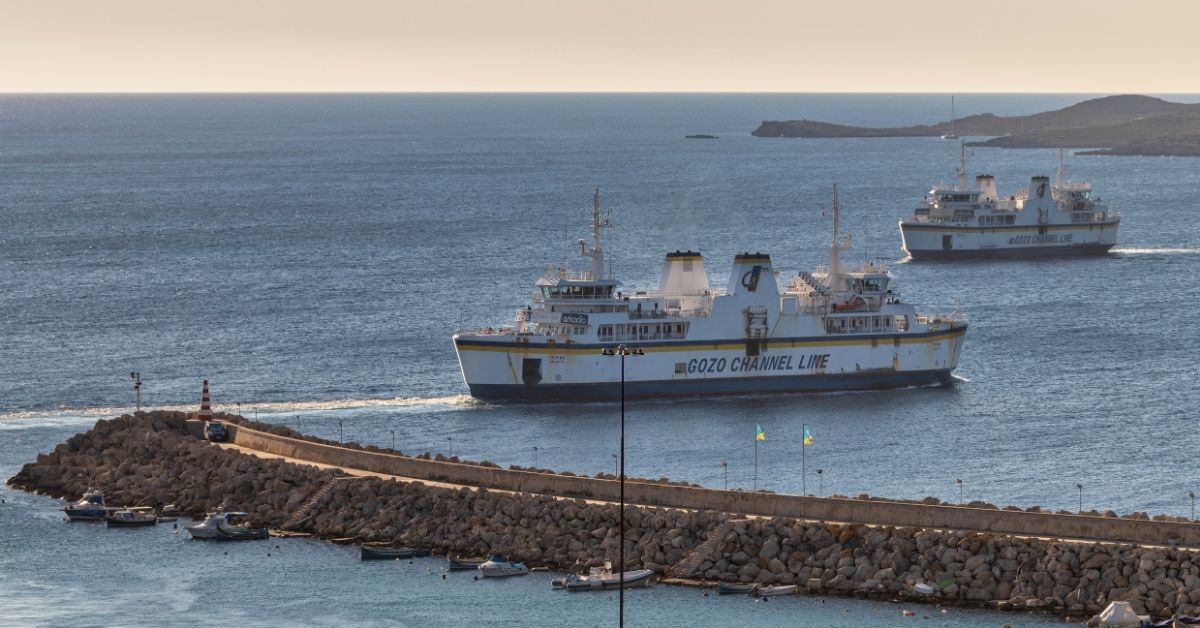
Malta’s sea transport activity registered a notable decline in the first quarter of 2026, with trips, vehicles and passengers all recording decreases when compared to the same period in 2025.
According to the latest data published by the National Statistics Office (NSO), the total number of trips between Malta and Gozo fell by 9.0 per cent year-on-year during Q1 2026, while the number of vehicles dropped by 5.8 per cent. Passenger movements were more resilient, declining marginally by 1.1 per cent over the same period.
In absolute terms, trips decreased from 10,526 in Q1 2025 to 9,579 in Q1 2026, representing a reduction of 947 crossings. Vehicle movements fell by 27,462 to 445,351, while passenger numbers dropped by 17,397 to just over 1.51 million.
Weather disruption
The NSO noted that sea transport was affected by adverse weather conditions during the period, specifically Storm Harry, which disrupted services on 20th and 21st January. This may have contributed to the overall decline in activity, particularly in trips and vehicle crossings.
Operational factors also played a role. Data in the release indicates that certain vessels were temporarily out of service for maintenance or docking during the quarter, potentially limiting capacity.
Mixed trends across services
A closer look at routes shows diverging trends between conventional ferry services and the fast ferry.
While the main Mġarr–Ċirkewwa route continued to dominate overall volumes, passenger numbers on this route actually increased slightly by 0.5 per cent year-on-year, suggesting relatively stable demand for commuter and vehicle-linked travel.
In contrast, the fast ferry service between Mġarr and Valletta experienced a sharper decline. Trips on this route fell by 20.6 per cent during Q1, while passenger numbers dropped by 11.4 per cent, indicating weaker demand for foot-passenger travel during the period.
Monthly fluctuations highlight uneven demand
Monthly data shows that January recorded the steepest declines, with trips down by 11.4 per cent and vehicles by 14.3 per cent year-on-year. Passenger numbers also fell by 5.2 per cent in the same month.
February presented a mixed picture, with passenger numbers increasing by 8.7 per cent despite a slight drop in trips, while March saw moderate declines across most categories.
These fluctuations suggest that while underlying demand remains relatively stable, it is sensitive to short-term disruptions such as weather conditions and operational constraints.


More than 50 startups collectively awarded €15 million in financial assistance
These businesses have created around 250 quality jobs, Government said

Insurers call for urgent clarity over EV disposal procedures while highlighting ‘practical difficulties’
Malta currently lacks suitable facilities for treating these batteries, association said

Working remotely abroad? Businesses warned of potential tax risks at Mobility Elite Summit
Working remotely abroad is not just a matter of finding a nice place