


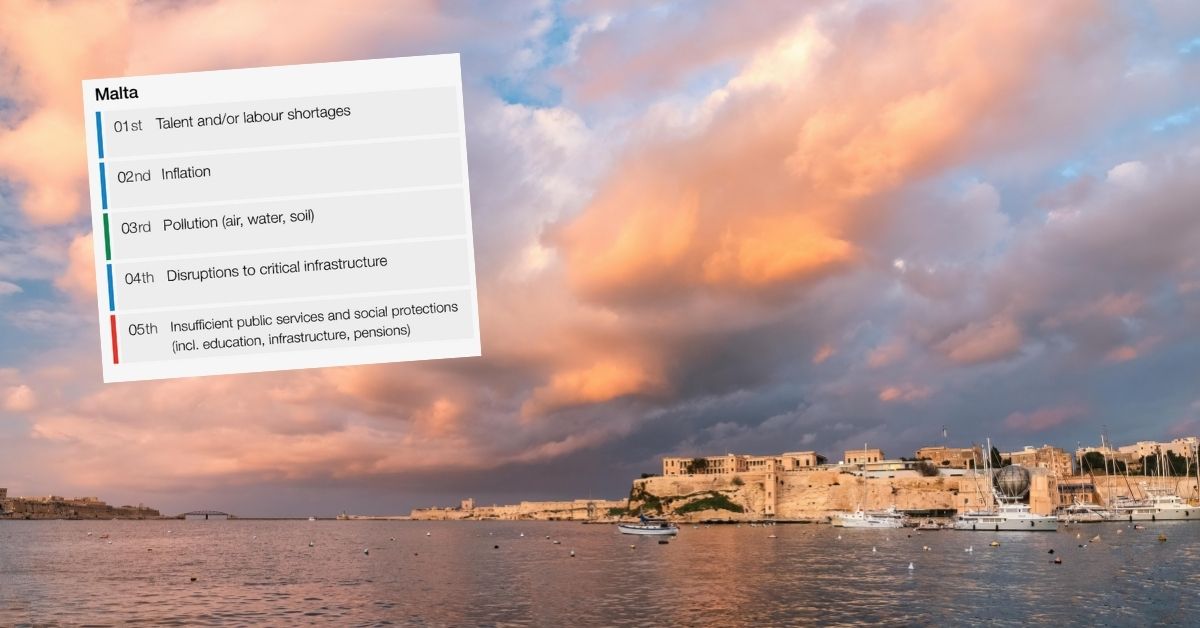
Talent and/or labour shortages top the list of Malta’s most serious near-term economic risks, according to the World Economic Forum’s Global Risks Report.
Malta and Japan were the only two countries to identity talent and labour shortages as their most imminent economic risk.
Both countries are currently figuring out how to deal with plunging birth rates and prevent demographic collapse, with Malta cutting taxes for parents and Japan expanding child allowances and free high school education.
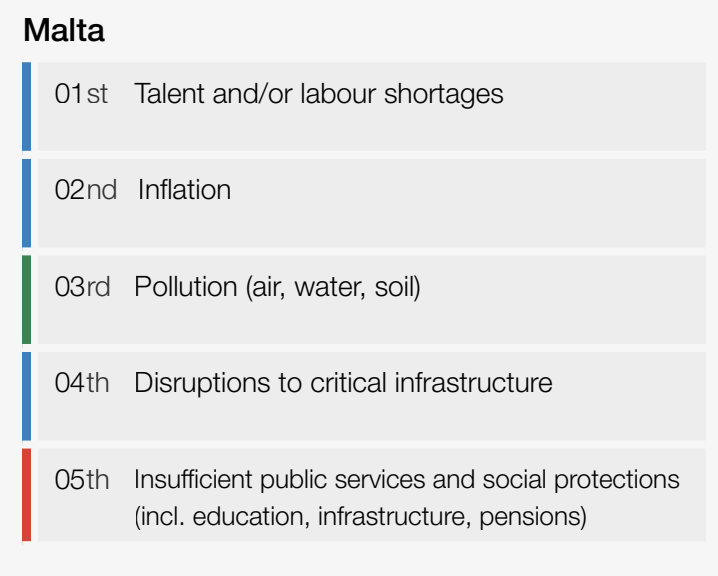
Inflation was ranked as Malta’s second most serious economic risk, followed by pollution, disruptions to critical infrastructure and insufficient public services and social protections.
Malta was one of only seven countries in which pollution was ranked as an economic risk, joining Azerbaijan, Kuwait, Kyrgyzstan, Liberia, Mongolia, and Nepal.
The World Economic Forum’s 2025 Executive Opinion Survey (EOS), was administered between March and June 2025 among leaders in government, business and other organisations.
On a global level, “geo-economic confrontation” has shot up to the top spot on the list of business economic concerns over the next two years, and the WEF warned that this could lead to a decline in global trade.
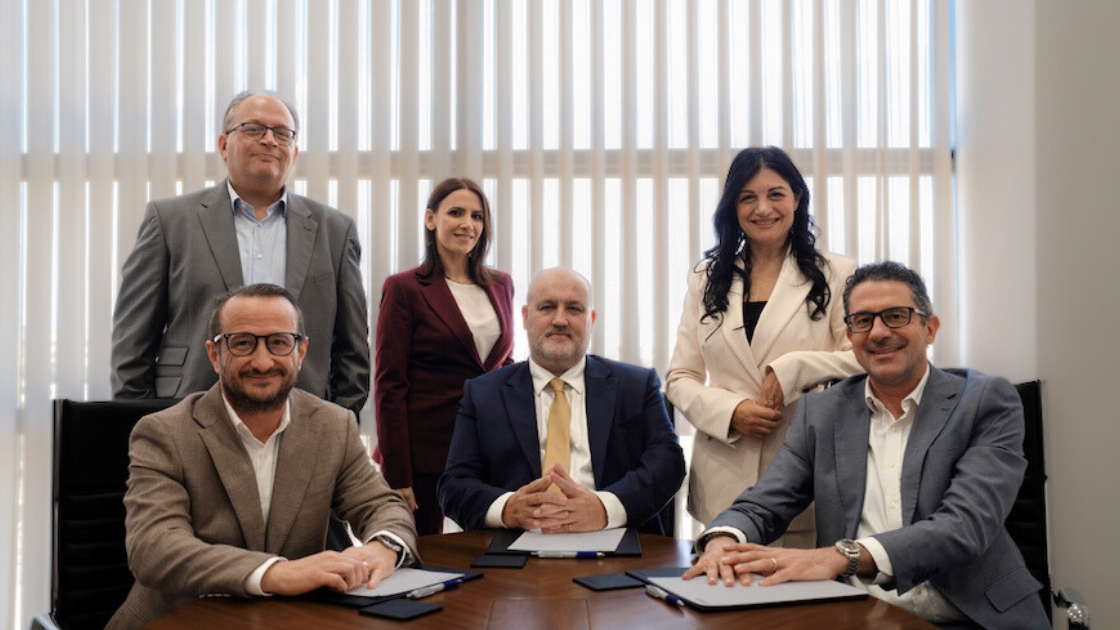
The Remarkable Collective welcomes collaboration with NOUV, completing end-to-end business services portfolio
The addition directly addresses the sophisticated needs of today’s businesses
Malta Maritime Forum warns EU ‘green’ law driving business to North Africa
Malta Maritime Forum warns southern EU ports risk becoming feeder hubs playing a secondary role to extra-EU ports

Hotel bedspace increases by 27% since 2022
The sector is steadily expanding its accommodation supply