


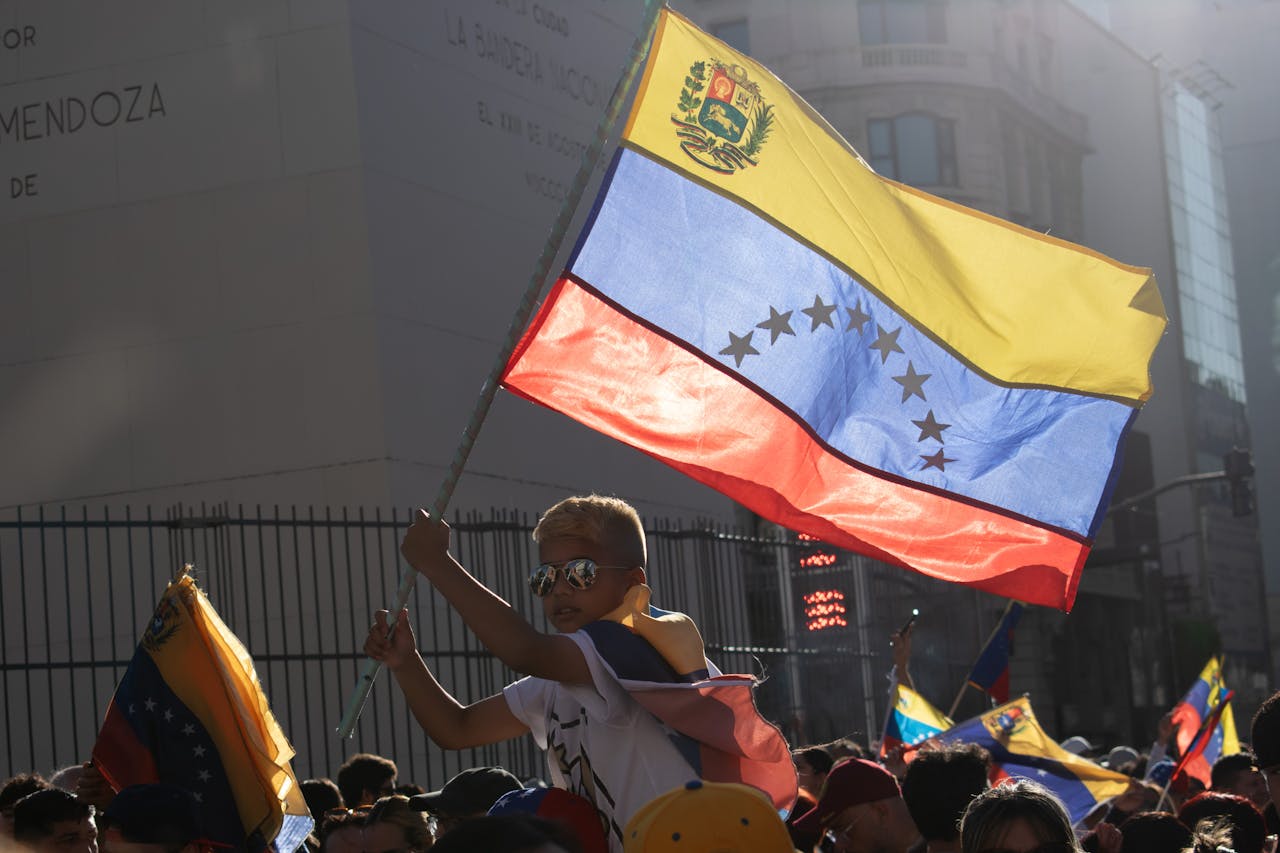
Recent developments involving Venezuela and the United States have generated significant political attention, but economists note that the immediate economic and market impact has so far been relatively contained.
Analysts caution, however, that the longer-term implications for global markets, international law and geopolitical stability remain uncertain.
BusinessNow.mt reached out to Economist JP Fabri and Valentina Cassar, a lecturer within the Department of International Relations at the University of Malta.
Mr Fabri said that financial markets have so far reacted calmly, particularly in relation to energy prices.

“The recent developments involving Venezuela and the United States are being absorbed first through the lens of global markets, where the immediate impact has been limited. Oil prices have dipped or remained subdued as ample crude supply and OPEC+ output curbs have countered short-term concerns about Venezuelan supply disruptions. Brent and WTI both slipped following the news, reflecting markets’ emphasis on fundamentals over geopolitical noise.”
Mr Fabri noted that, despite Venezuela holding the world’s largest proven crude reserves, any meaningful increase in production would take time.
“At the same time, analysts see room for Venezuela’s oil production to increase over the coming years if sanctions are eased and investment flows in, given that the country holds the largest proven crude reserves in the world. However, that potential hinges on legal certainty, political stability, and significant capital spending to modernise dilapidated infrastructure; meaning that any significant contribution to global supply remains a medium- to long-term proposition.”
From a broader economic perspective, Mr Fabri stressed that even when short-term fundamentals remain stable, geopolitical developments can still shape expectations and investment behaviour.
“From an economic standpoint, this episode underscores how geopolitical events can influence market expectations, risk premia and investment decisions even when immediate fundamental effects are modest. The broader implications for trade, investment and the global economic order will depend on how policy, sanctions and institutional credibility evolve in the coming months as it is still early days to assess the transition. What is certain is that we are living in a highly fragmented and volatile world order with profound changes happening regularly.”
Political uncertainty and questions of precedent
Dr Cassar focused on the political and legal implications of recent events.

She observed that while international reaction to the removal of Nicolás Maduro has been muted, the direction of Venezuela’s political future remains unclear.
“As Prime Minister Kier Starmer stated in his reaction to the United States’ removal of President Nicolas Maduro, it is unlikely that any tears will be shed about the end of his leadership in Venezuela. However, at this stage, it is unclear what his removal from power will mean for the future of Venezualan politics and democracy remains extremely unclear.”
Dr Cassar pointed out that although Donald Trump has stated that the US would be “running” Venezuela, the reality on the ground appears more complex.
“While President Donald Trump announced that the US would be ‘running’ Venezuela, what he means by this is still vague. In the meantime Maduro’s Vice President Delcy Rodríguez has been sworn in as President. Considering her long career in Venezuelan politics under both Chavez and Maduro, it is all the more uncertain whether we will actually see any changes in Venezuela’s democratic credentials, respect for human rights or fair economic welfare.”
In practice, Venezuela’s state structures remain largely intact. Delcy Rodríguez is acting president, many of Maduro’s ministers are still in post, and the military has, so far, remained loyal. While Trump continues to insist that the US is “in charge”, his influence appears to be political rather than administrative. He has issued strong warnings to Rodríguez, suggesting severe consequences if she does not comply with US demands, but Washington has stopped short of installing an opposition-led government – a scenario some analysts believe may be less convenient for US interests at this stage.
Shifting US foreign policy focus
Dr Cassar also linked the intervention to broader changes in US foreign policy priorities.
“While the concerns over the regime and the economic interests and resources in Venezuela have long been of concern, the US intervention is reflective of recent shifts in US foreign policy whereby greater attention is being paid to the Americas.”
She noted that this shift has revived comparisons with historical doctrines of influence.
“This has raised comparisons with the Monroe Doctrine dating back to the 1820s, where the America’s were declared as being within the US’ direct sphere of influence and that other powers should not intervene there.”
Such actions, she warned, raise legal and strategic concerns for the international system.
“This raises fundamental questions and concerns for other international actors. Many observers have questioned the legality of America’s actions, and whether the United States might be considering similar actions in other states.”
While discussions around Greenland have also surfaced, Dr Cassar noted that the nature of US relations with Greenland, Denmark and the EU differs significantly from the Venezuelan case.
For now, analysts suggest that Trump’s strategy may rely more on pressure than control. The Venezuelan government is likely to remain cautious, aware of the risks of defying US demands, while retaining formal power domestically. As Mr Fabri and Dr Cassar both emphasise, the real test will be whether these developments translate into structural political change in Venezuela or set wider precedents in an already volatile global order.


Mandatory culture and language course introduced for foreign workers seeking longer permits
The reform aims to improve labour market stability by ensuring that foreign workers are better integrated and trained
Malta explores importing renewable energy from North Africa
The project is targeting the importation of approximately 0.8 terawatt-hours (TWh) of renewable energy annually
Employers call for moratorium on public sector recruitment ahead of elections
Malta Employers President Ivan Refalo once against raised concerns about politically driven recruitment