


Women-led start-ups secured 12 per cent of total venture capital funding, found a study commissioned by the European Commission and the European Innovation Council and SME Executive Agency (EISMEA).
The study was presented at a high-level event held in Brussels during the European Parliament’s Gender Equality Week has marked a significant step forward in efforts to address Europe’s persistent gender investment gap.
The research, developed by CSES, dealroom, RAND Europe, and European Women in VC, provides the most comprehensive mapping yet of who receives venture capital funding and who allocates it, using harmonised definitions and integrated data sources. Findings highlight that deep-tech – a strategically important sector for Europe – remains largely male-dominated. Between 2020 and 2025, only 21.3 per cent of deep-tech start-ups had at least one woman founder. Women-led start-ups secured just 14.4 per cent of VC rounds. On the investor side, only 16 per cent of General Partners in venture and growth-equity funds are women, managing around 9 per cent of assets under management.
Opening the launch event, MEP Lina Gálvez emphasised a shift from discussion to action. “Europe has made real progress in increasing women’s representation in senior roles across government and business, yet access to capital remains one of the starkest and most persistent inequalities,” she said. Reliable data, she stressed, is essential for designing effective solutions.
Jean-David Malo, Acting Director for the European Research Area and Innovation at DG RTD, reinforced this point. “Empowering women innovators is essential for Europe’s competitiveness. We cannot talk about excellence in innovation if half of Europe’s talent remains underfunded,” he said, adding: “Evidence is what turns good intentions into measurable progress.”
A cornerstone of the work presented in Brussels is the newly introduced EU Gender Investment Dashboard – a prototype tool intended to support ongoing, pan-European monitoring. By creating a common data infrastructure, the dashboard aims to expose systemic patterns and establish clearer accountability. As participants noted, “What gets measured, gets done.”
Investors, policymakers call for systemic reform
The first panel of the day, moderated by Alain Heureux, explored how institutions and investors can use their influence to drive more inclusive innovation financing. Hrönn Greipsdóttir, CEO of Iceland’s Kría Innovation Fund, spoke about the power of visibility: “Once you start publishing the numbers, you can’t ignore them. Visibility drives accountability.” She added that in Iceland, “equality isn’t a slogan – it’s how we work.”
Hanadi Jabado, Managing Partner at Sana Capital, drew attention to structural dynamics in venture funding. “Less than two percent of venture capital in Europe goes to all-female teams,” she said. “This isn’t a pipeline problem; it’s a power problem.”
Meanwhile, Ulrike Kostense, Head of Fund Investments at Invest-NL, noted that inequality in capital allocation reflects inequality in decision-making: “We realised that unless we diversify the people making investment decisions, the system won’t change. We’re not doing this as social policy. We’re doing it because diverse teams outperform.”
A second panel, moderated by Marta Wysoczyńska of EISMEA/EIC, focused on the importance of robust, accessible data. Véronique Jacq of Bpifrance remarked, “Ten years ago, we had almost no numbers. Now, gender reporting is a normal part of how we manage our portfolio.” Lucrezia Lo Sordo of Invest Europe added, “Data create peer pressure – and peer pressure works.”
Katerina Svíčková of DG RTD highlighted the gap between research sectors, where gender data is mature, and innovation and venture funding, where it is far patchier: “Gender equality isn’t just a fairness goal. It’s a competitiveness goal.”
Louis Geoffroy Terryn of dealroom underlined the importance of consistent, comparable data to enable real change: “If we can see where the gaps are, we can start to close them.”
From data to action
The study outlines seven key recommendations aimed at policymakers and investors, including building a common EU data infrastructure, bridging funding gaps for women-led companies, incentivising diverse fund management teams, and strengthening STEM and entrepreneurial pathways for women from a young age.
In closing remarks, Jean-David Malo stressed the complementarity between data, policy, and investment: “If we want innovation excellence, we must make sure opportunity is open to everyone who can deliver it.”
Stéphane Ouaki, Acting Director of EISMEA and Head of the EIC Department, noted that targeted support is already yielding results within EIC programmes: women-led companies funded through the EIC have increased from 8 per cent in 2020 to 30 per cent in 2024. “The next step is to ensure that the rest of the market follows suit,” he said.
Summing up the broader ambition, Marta Wysoczyńska added: “We started with data, but what we are really building is trust – between institutions, investors, and innovators. That’s how change begins.”
The Brussels launch signals a turning point: from scattered initiatives to a unified European approach, and from recognition of the problem to measurable, data-driven progress.


Housing Authority doubles vacant dwelling restoration grant to €50,000
Eligibility criteria also widened to include properties built 20 years ago

Workplace accidents remain high in Malta despite slight decline – construction still tops risk list
High-risk sectors continue to dominate injury statistics
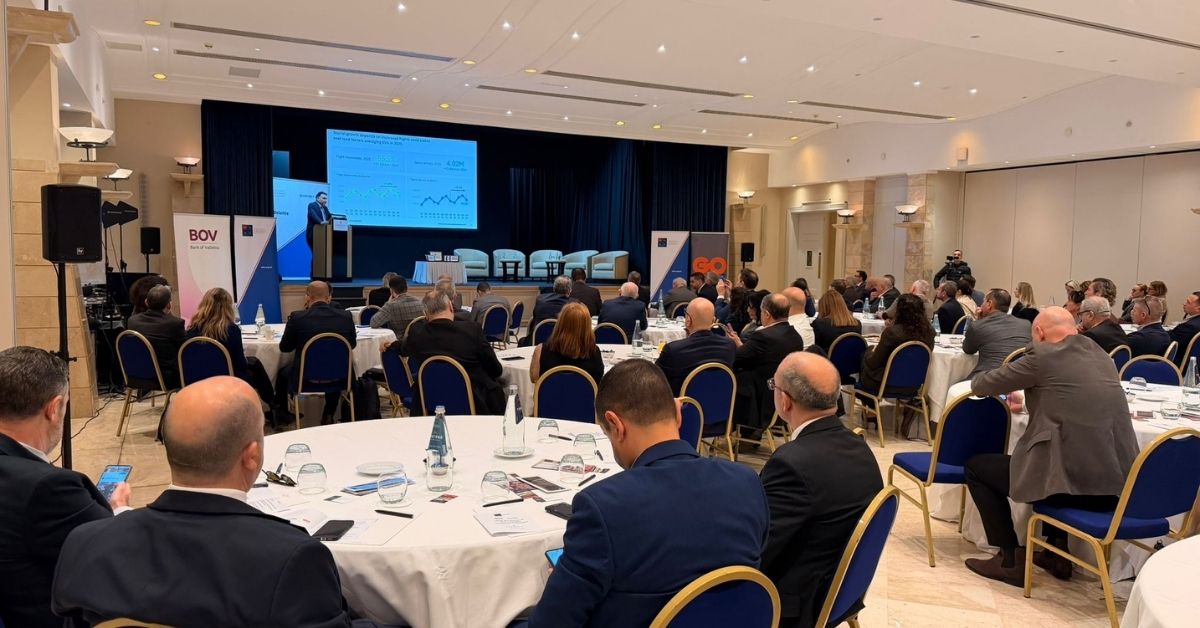
Five and four star hotel occupancy edges up in 2025, MHRA survey finds
Five-star occupancy levels stood at 71 per cent in 2025, up slightly from 2024 levels