


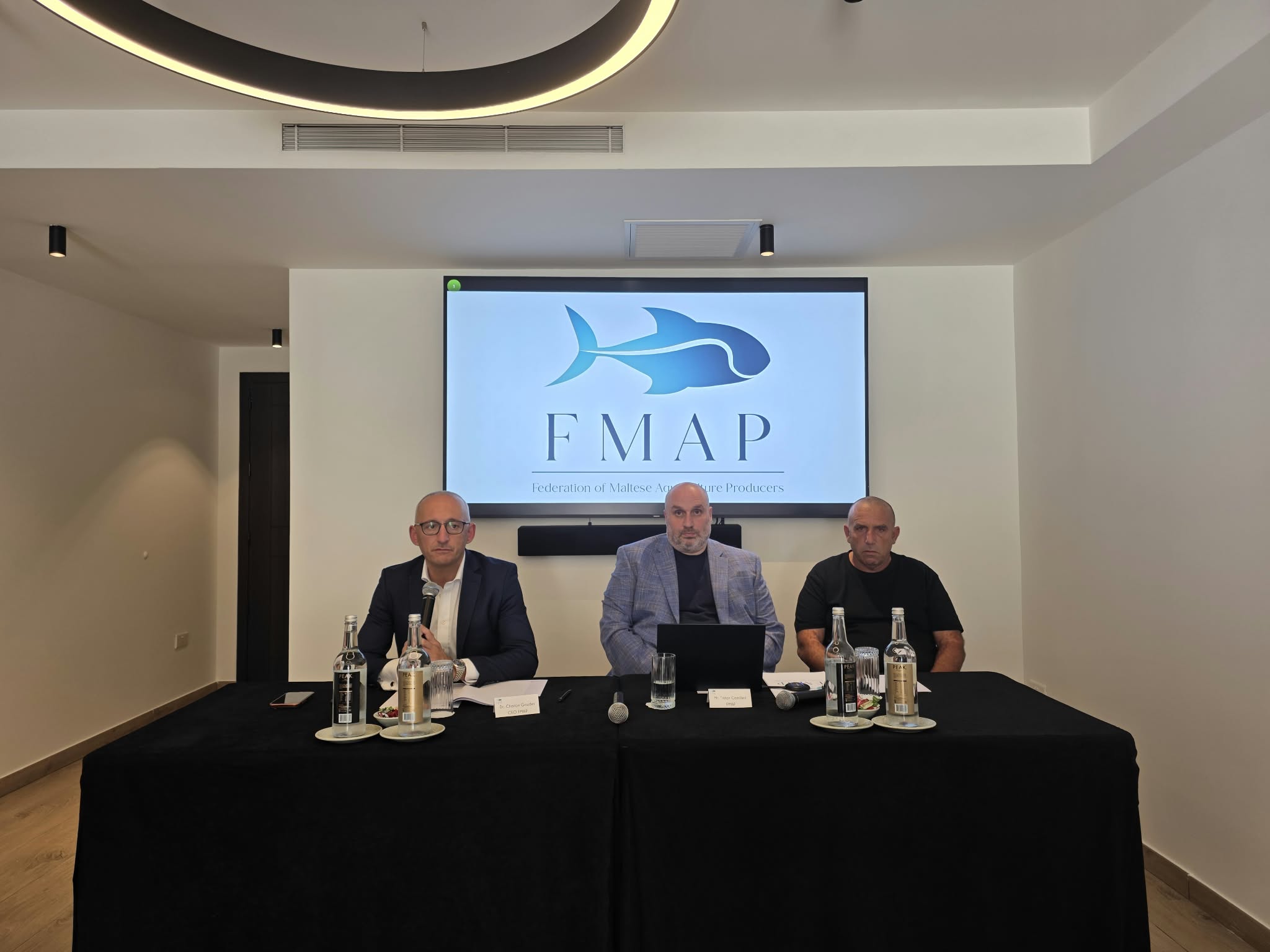
7,997 kgs of floating waste and 25,550 litres of oily liquid was collected during the summer cleanup campaign, carried out by the Federation of Maltese Aquaculture Producers (FMAP).
The Federation’s CEO, Charlon Gouder, together with Tristan Camilleri, FMAP’s Technical and Regulatory Affairs Manager, gave an overview of this year’s campaign.
The cleanup campaign lasted from 13th July until 21st September, and the boats utilised during the campaign operated in both the north and south of the island. On 15 days two vessels were used, on 50 days four vessels and on 6 days five vessels were used. Each vessel was manned by three people, and were equipped with collection equipment, storage containers, dinghies and oil booms. Collectively, a total of 260 vessel days (the cumulative vessel activity), they said.
Dr Gouder hailed the campaign a success, and said the industry had registered a notable improvement in coastal water conditions this summer, with limited and only occasional, if any, sightings of oily liquid affecting bathers and other sea users. He said there were no occurrences of reports being made to FMAP. He also said that, despite the same efforts carried out as last year, there was less waste collected, and attributed this to possibly improved waste disposal habits.
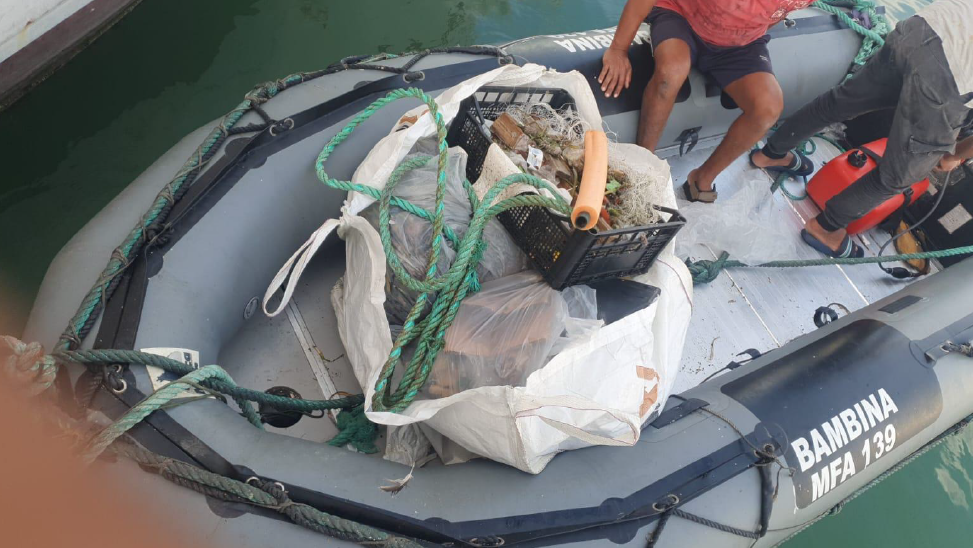
He noted that areas including Ħondoq, St Paul’s Bay, Sliema and St Julian’s, as well as coastal areas in the south of Malta, remained largely free throughout the summer from the oily liquid commonly referred to as “slime”. When mixed with other oily residues, this can form a thick slick on the surface of the water, causing considerable inconvenience to swimmers and other sea users, he explained.
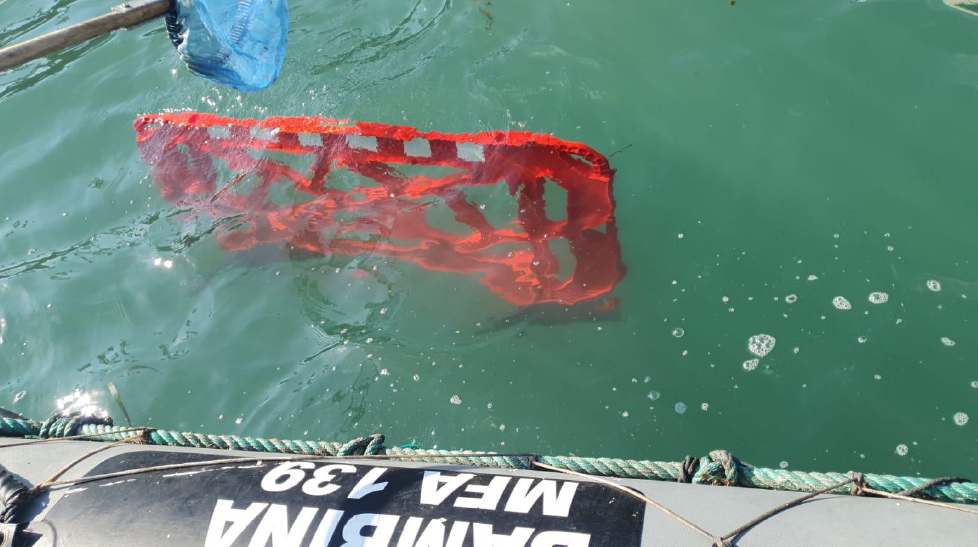
Dr Grouder said that one of the strangest items to be found at sea was a barrier typically used for road works.
“This is the result of an industry pulling in the same direction and recognising a very simple principle: the sea belongs to us all,” he said, referring to the campaign. “As an industry that uses the sea for commercial purposes, we also have a responsibility to protect it and leave it clean,” Dr Gouder said.
He appealed for other business sectors that use the sea for commercial purposes to also conduct such corporate social responsibility initiatives, mentioning that the sector spent around €250,000 on the campaign.
Mr Camilleri said that the results of this campaign are over and above the cleaning procedures that take place inside the fish farm pens.
Commissioned annually by the Federation, the campaign supplements the cleaning efforts carried out individually by FMAP members. It provides a coordinated operation across a wider stretch of coastline.
The operation combined routine patrols with adjustments to the areas covered according to prevailing winds, currents and the location of floating waste. This enabled crews to focus their efforts on areas where material had been identified or was likely to accumulate, the officials said.
On days when the seas were too rough, land-based or inshore cleanups were carried out, such as in the area around the Marsaxlokk slipway.
Featured Image:
FMAP
Malta looks to China and Asia to diversify tourism markets
The partnership aims to promote Malta, diversify its tourism offering and boost sustainability

Strong demand for Malta Government Stocks as offers reach €617 million
The Government had initially authorised an issue of €300 million
Employers call for ‘decisive’ shift in public spending ahead of Budget 2027
The upcoming Budget 'must be judged' on its capacity to deliver long-term transformation, not just sustain short-term consumption