


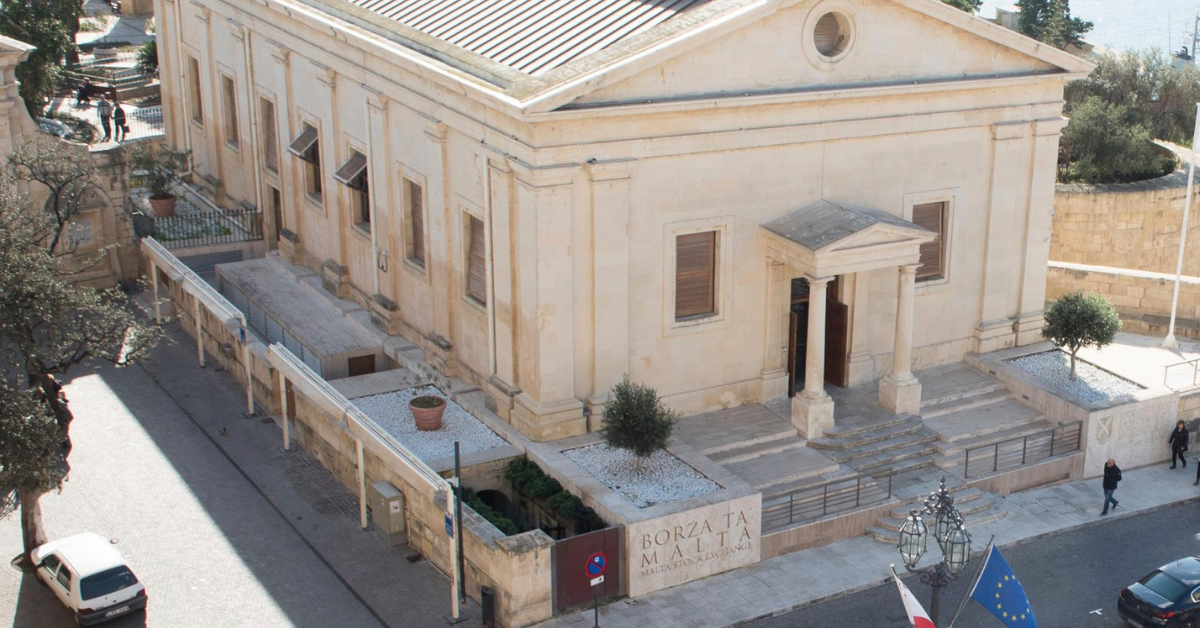
Last week, I was asked to participate in a panel discussion during the 2026 Camilleri Preziosi Capital Markets Conference. The theme of the first panel discussion during the conference was about Malta’s equity market in the age of the EU’s Savings and Investments Union (SIU).
In the opening remarks at last week’s conference, the Chairman of the Malta Stock Exchange Jospeh Portelli spoke about “a thriving and healthy capital market”. While the corporate bond market is indeed showing signs of this given the record issuance last year, the problems across the equity market that I have regularly highlighted over recent years have not been resolved. This is evident in the general investor apathy that is prevalent with very weak trading activity across most equities and the complete lack of new equity offerings.
Measuring Investor Participation
The Managing Partner of Camilleri Preziosi Louis de Gabriele who was the moderator during the first panel discussion made reference to the registered investor accounts at the MSE totalling over 75,000 which is a high figure when compared to the population in Malta. However, an account with the Central Securities Depository (CSD) of the MSE is purely a custody relationship and does not automatically translate into robust trading activity. Most retail investors have an overriding preference to invest in bonds and this is evident from the strong demand for most of the new bond issues and the increased trading activity across the secondary market in many corporate bonds. Household wealth in Malta is heavily skewed towards real estate with very low exposure to financial investments both in Malta and overseas. This low participation in the stock market is a Europe-wide phenomenon which is the central theme of the SIU in order to shift idle liquidity across the banking system into more productive investments. On the other hand, 55 per cent of the population in the US are invested in the stock market.
A good indicator to measure the investor participation in Malta is by extracting the number of shareholders across some of the largest capitalised companies on the MSE. Bank of Valletta plc has the highest number of shareholders at circa 20,000 which is equivalent to only 3.7 per cent of the population. Malta International Airport plc is a quasi-monopoly and the most popular gateway overseas with less than half of the shareholder numbers compared to BOV. This data shows that the large majority of Maltese investors are not invested in the so-called ‘blue chips’ on the MSE. The number of shareholders are even lower across all other companies.
Barriers keeping investors on the sidelines
I was asked to articulate my views on the barriers keeping investors on the sidelines. I believe that the main barrier is the ability for investors to have peace of mind that an exit route exists. It has become evident that many investors are reluctant to commit capital to a market which they fear they cannot get out of. Trading activity showing the depth of the market, which is referred to as ‘liquidity,’ is the precondition for participation. The thin volumes across most equities listed on the MSE discourages participation and creates a so-called ‘circular trap’.
The share buybacks by BOV and MIA, being the two largest capitalised companies on the MSE, could be one of the reasons for the improved trading volumes being registered in these specific companies. Other companies such as APS Bank plc, AX Real Estate plc, MedservRegis plc and Plaza Centres plc have also obtained shareholder approval to initiate share buybacks programs but these have not commenced as yet. The dynamics of the local market make it harder for the smaller capitalised companies to operate within the procedures of the safe harbour framework, which offers legal protection against allegations of market manipulation and insider dealing.
The share buybacks will invariably provide a good exit mechanism for the small retail investors. However, high net worth and institutional investors need a deeper market and the solution would be to have market makers or liquidity providers in place. Although these were never formally present in Malta over the years, the positive investor sentiment prior to the outbreak of COVID coupled with the injection of liquidity by the National Development and Social Fund (NDSF) as it built its portfolio of local securities under its wider mandate, provided the right environment to have a generally active two-way market and strong volumes across most companies on the MSE.
An ageing investor base
Another feature of the market which I also referred to as part of the panel discussion is the ageing investor base in Malta. This is clear when attending Annual General Meetings. The young generation are naturally more excited to invest across the large technology companies overseas and with the AI developments unfolding at a very fast pace, very handsome shareholder returns are being made. As such, a new breed of investors needs to be attracted into the domestic equity market to absorb the overhang that will continue to be created from succession planning issues which will accelerate in the years ahead.
Policy direction
Dr de Gabriele concluded the panel discussion by asking all participants about one decision or reform that would make Malta’s capital markets look materially different in five years. In my remarks to this, I stated that a shift in policy at government level is fundamental by acknowledging the importance of the capital market and articulating a detailed vision for the sector. I also reiterated my view that one of the central themes of the new policy would be to privatise the MSE. Earlier this year, I had publicly penned an article on the matter by stating that the privatisation of this important institution via the involvement of a strategic partner could be the key requirement to enable stakeholders to attract international institutional investors to consider the Maltese equity market which would be of major importance to deepen the market.
Moreover, Malta’s strong public finances with a very clear trend of a declining budget deficit and a healthy debt to GDP ratio, which are the basis of the positive reviews by the international rating agencies, indicate there is the fiscal space to consider a series of tax incentives to stimulate the capital market. Tax incentives for retail investors are necessary as part of the SIU to instigate savers to shift part of the billions in euros lying idle across the Maltese banking system into instruments listed on the capital markets.
The article contains public information only and is published solely for informational purposes. It should not be construed as a solicitation or an offer to buy or sell any securities or related financial instruments. No representation or warranty, either expressed or implied, is provided in relation to the accuracy, completeness or reliability of the information contained herein, nor is it intended to be a complete statement or summary of the securities, markets or developments referred to in this article. Rizzo, Farrugia & Co. (Stockbrokers) Ltd (“Rizzo Farrugia”) is under no obligation to update or keep current the information contained herein. Since the buying and selling of securities by any person is dependent on that person’s financial situation and an assessment of the suitability and appropriateness of the proposed transaction, no person should act upon any recommendation in this article without first obtaining investment advice. Rizzo Farrugia, its directors, the author of this article, other employees or clients may have or have had interests in the securities referred to herein and may at any time make purchases and/or sales in them as principal or agent. Furthermore, Rizzo Farrugia may have or have had a relationship with or may provide or has provided other services of a corporate nature to companies herein mentioned. Stock markets are volatile and subject to fluctuations which cannot be reasonably foreseen. Past performance is not necessarily indicative of future results. Foreign currency rates of exchange may adversely affect the value, price or income of any security mentioned in this article. Neither Rizzo Farrugia, nor any of its directors or employees accepts any liability for any loss or damage arising out of the use of all or any part of this article.


The move to T+1 settlement
The settlement cycle in Europe had already changed before when in October 2014, European markets collectively moved from T+3 to ...
From property to the stock market
The composition of household wealth locally remains heavily tilted towards real estate with very limited exposure to capital markets

What is driving the dollar’s strength?
The US Dollar ended the third quarter of 2026 with its sixth consecutive quarterly gain