


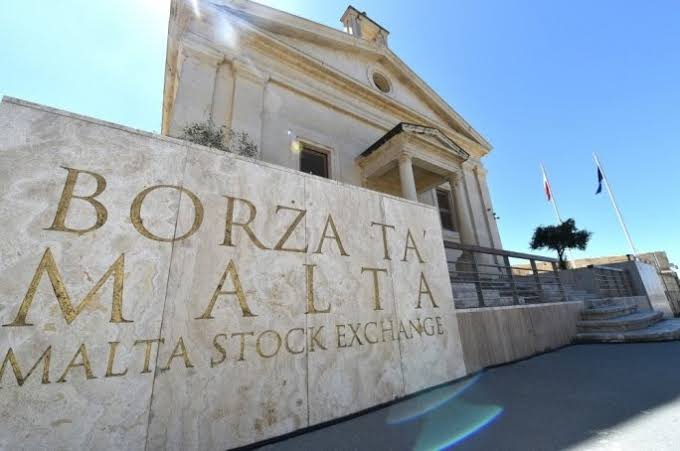
Earlier this year, I had expressed my view that Malta needs to consider formulating an Equity Market Development Programme similar to the one enacted in Singapore in order to stimulate activity on the local equity market. I also made reference to the poor participation in MSE listed shares at the start of the summer by noting that less than 4 per cent of the population in Malta hold shares in Bank of Valletta plc, which is the most widely held company on the Borża. In essence, it is a known fact that the domestic retail investor base is not only ageing but the large majority of retail savers overwhelmingly opt for bonds rather than equity.
Since the pool of Maltese retail equity investors is shrinking, the MSE together with equity issuers in Malta, also need to consider extending their reach beyond our shores to generate the required level of activity that is synonymous with a healthy capital market. The MSE’s internationalisation efforts must include a strategy focused on achieving improved connectivity, enhancing visibility, wider research capabilities and having a deeper secondary market.
Connecting to the international ecosystem
For over two decades, members of the MSE have used Deutsche Börse’s Xetra platform for trading purposes. Technologically, therefore, Malta’s capital market is not isolated.
Connectivity means building relationships with international players and stakeholders who are active across other small and frontier capital markets. The aim is for equities listed on the MSE to become easier for international investors to discover, understand, trade and settle. After all, Malta is generating the highest economic growth across the EU and some institutional investors may use this as a basis to consider which equities may be attractive.
The privatisation of the MSE, which I have argued for repeatedly over the years, could be a major focal point of the MSE internationalisation strategy. A strategic investor in the MSE that already operates an exchange elsewhere in Europe would bring with it various important benefits including a wider stakeholder base and enhanced custody links together with a management and business development mindset that would seek to communicate to a wide pool of institutional investors regularly.
Becoming more visible
While connectivity is an important condition to try to attract international investors, companies listed on very small bourses like that in Malta need to become increasingly visible on an international scale. The initiatives over recent years by the MSE are a good step for the local investment community. The most recent launch of the dedicated site Investi.com.mt is another good step providing detailed information on all securities. Next month’s conference organised by the MSE allowing a number of companies to articulate their investment case is another very important initiative which should prove to be successful.
However, very few international investors may be aware of companies listed on the MSE such as a quasi-monopoly airport operator with a very strong balance sheet and undergoing a heavy investment programme or a bank trading at below book value with a substantial deposit franchise. Specific initiatives need to be undertaken to showcase these examples and others to the right target market.
There are a cohort of institutional investors that deliberately seek opportunities in small and frontier exchanges. Companies on small exchanges are generally under-researched, under-owned and often mispriced precisely because they are ignored by the larger and generally more sophisticated investors.
As part of the objective of achieving improved visibility on an international level, the MSE and equity issuers need to collaborate to increase their investor relations efforts. It is a known fact that associations very often promote Malta as a financial centre in various international conventions. However, I do not recall any specific efforts to promote either Malta’s capital market or any local issuers abroad in order to achieve a more liquid secondary market. There are also industry events for small-cap and frontier markets that the MSE and issuers should participate in for increased visibility.
Achieving a deeper market
The importance of having a deep and liquid secondary market was a central theme of a number of my articles over the years. International investors need a certain level of confidence that that they can exit a stake with relative ease.
The share buybacks by BOV and Malta International Airport plc led to improved volumes in the two largest companies this year and this was an important step in achieving a more active market. However, buybacks can be regarded as a solution to achieve improved liquidity for retail investors generally.
On the other hand, institutional investors wishing to exit need to have a formal market-making framework in place for ‘qualifying’ equities, with designated liquidity providers obliged to quote continuous two-way prices in exchange for a package of incentives such as fee reductions and, if necessary, direct support from a government-backed liquidity fund. Looking at the Singapore set-up once again shows that this was achieved by having government institutions place funds with selected fund managers under mandates to invest in domestic equities thereby achieving a structural anchor of demand.
A deeper equity market also requires larger free floats (i.e. the number of shares held by the public and available to trade). Hopefully, with the growing need of succession planning requirements by various family-owned or controlled companies, a more active secondary market will assist individual members among large shareholders of companies to consider disposing of blocks of shares with some high net worth investors or international institutions. This would simultaneously widen the shareholder base, improve liquidity and possibly introduce international investors which subsequent shareholders may rely upon for an exit or partial disposal of shares. This in turn should instigate additional equity issuers to the market as they would recognise that the improved trading activity and a wider international dimension would complement the other benefits of an equity listing including the major tax incentives.
Limited research
Research is often defined as the backbone of a well-functioning equity market. Very little research is produced on companies listed on the MSE. It is evident that most financial intermediaries in Malta mainly focus their efforts on new issuance via the primary market instead of secondary market activity.
Singapore also recognised this problem and addressed this directly by offering grants to companies producing research on those companies which are not covered.
Given the set-up across the local community, similar styled grants by the MSE or another institution could instead be used to engage international research houses to produce research and promote MSE-listed companies to their network. This would generally include institutional investors, investment banks and also international brokers.
The MSE and equity issuers need to start seeking ways to communicate with international investors as capital has become increasingly global. We have heard a number of equity issuers speak about a secondary listing overseas given their evident frustration with the inactivity across the capital market in Malta. If companies shift their listing to an international bourse, it does not necessarily mean that they will achieve improved activity or more responsiveness to announcements if they are not researched upon and they do not make themselves visible to the right audience. The objective should therefore be to extend the reach of the domestic equity market.
Essentially, the real measure of success of a capital market is not solely based on the number of issuers listed but very importantly also on the activity across the market allowing buyers and sellers to easily trade their investments thereby improving price discovery.

The article contains public information only and is published solely for informational purposes. It should not be construed as a solicitation or an offer to buy or sell any securities or related financial instruments. No representation or warranty, either expressed or implied, is provided in relation to the accuracy, completeness or reliability of the information contained herein, nor is it intended to be a complete statement or summary of the securities, markets or developments referred to in this article. Rizzo, Farrugia & Co. (Stockbrokers) Ltd (“Rizzo Farrugia”) is under no obligation to update or keep current the information contained herein. Since the buying and selling of securities by any person is dependent on that person’s financial situation and an assessment of the suitability and appropriateness of the proposed transaction, no person should act upon any recommendation in this article without first obtaining investment advice. Rizzo Farrugia, its directors, the author of this article, other employees or clients may have or have had interests in the securities referred to herein and may at any time make purchases and/or sales in them as principal or agent. Furthermore, Rizzo Farrugia may have or have had a relationship with or may provide or has provided other services of a corporate nature to companies herein mentioned. Stock markets are volatile and subject to fluctuations which cannot be reasonably foreseen. Past performance is not necessarily indicative of future results. Foreign currency rates of exchange may adversely affect the value, price or income of any security mentioned in this article. Neither Rizzo Farrugia, nor any of its directors or employees accepts any liability for any loss or damage arising out of the use of all or any part of this article.

The move to T+1 settlement
The settlement cycle in Europe had already changed before when in October 2014, European markets collectively moved from T+3 to ...

From property to the stock market
The composition of household wealth locally remains heavily tilted towards real estate with very limited exposure to capital markets

What is driving the dollar’s strength?
The US Dollar ended the third quarter of 2026 with its sixth consecutive quarterly gain