

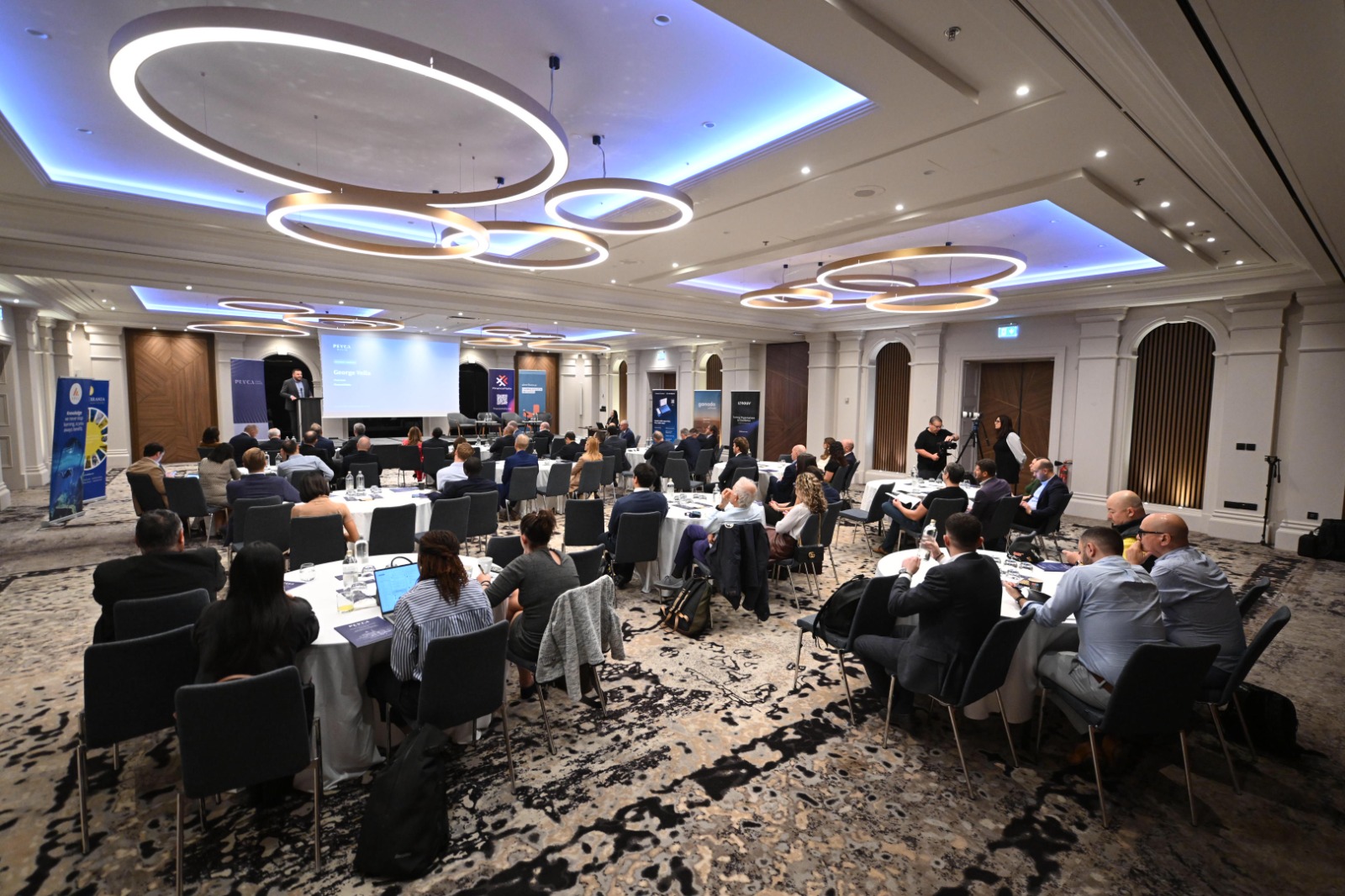
Several stakeholders discussed the current state of the Maltese economy during a seminar organised by The Malta Chamber in collaboration with Bank of Valletta (BOV), titled: The Maltese Economy: 2023 & Beyond.
Attendants shared their insights on what was needed for the country to remain competitive in attracting foreign direct investment in the future.
BOV’s chief executive office Kenneth Farrugia addressed the importance of sustainability and putting more weight on ESG in Malta’s businesses and operational models.
ESG stands for (E)nvironmental (S)ocial and (G)overnance, and measures the sustainability and ethical impact of businesses.
“We notice two extremes when meeting clients: those who have strategically embraced ESG in their business models, whilst others have a very limited understanding of sustainable development goals and ESG ambitions,” said Mr Farrugia.
He added that the bank had identified sectors which it felt were behind the curve regarding ESG and said that it will support those sectors in order to embed ESG principles in their business models and operations.
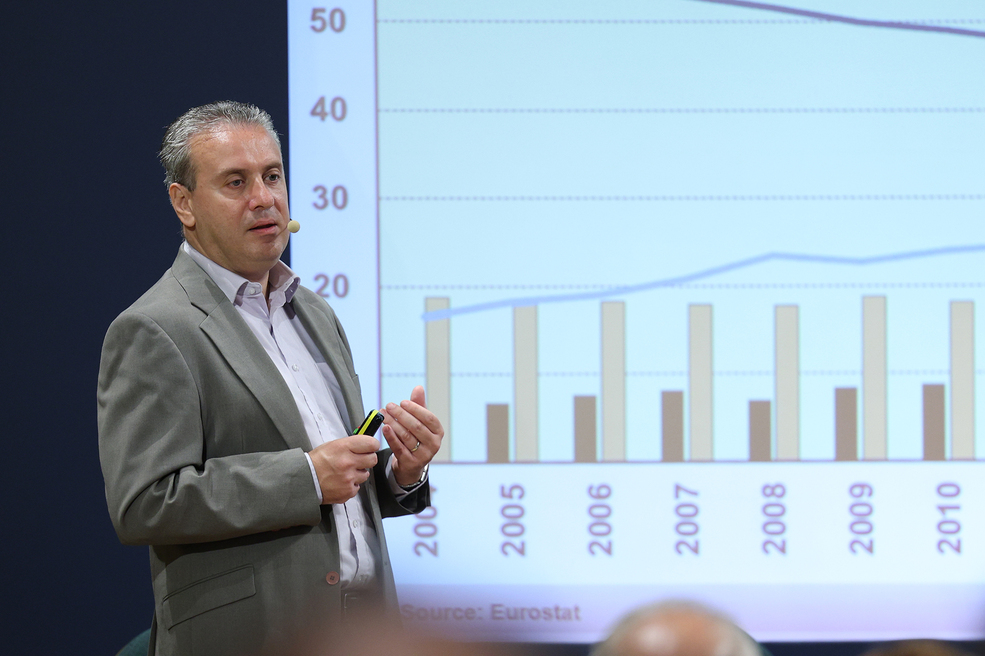
During the seminar, BOV’s senior manager in data insights and economics delivered a presentation where he outlined the salient features and latest developments of Malta’s economy. He demonstrated that pre-COVID-19, Malta’s economic growth was higher than the euro area average and it was forecast to continue throughout 2023 and 2024.
He remarked that economic growth tended to be ‘job-rich’, which contributed to the growing share of foreign workers, leading to population growth.
The Malta Chamber’s deputy president Nick Xuereb highlighted the pressure points the labour market was experiencing, and the impact of both inflation and interest rates.
“We are in a permacrisis state, and we must act diligently and in a timely manner to navigate and mitigate the challenges that lie ahead,” said Mr Xuereb.
During a panel discussion on the future of Malta’s economy, Kevin Rapinett, a member of The Malta Chamber board of management said, “considering the challenges of the past years, we did relatively well, however, several cracks can be seen.”
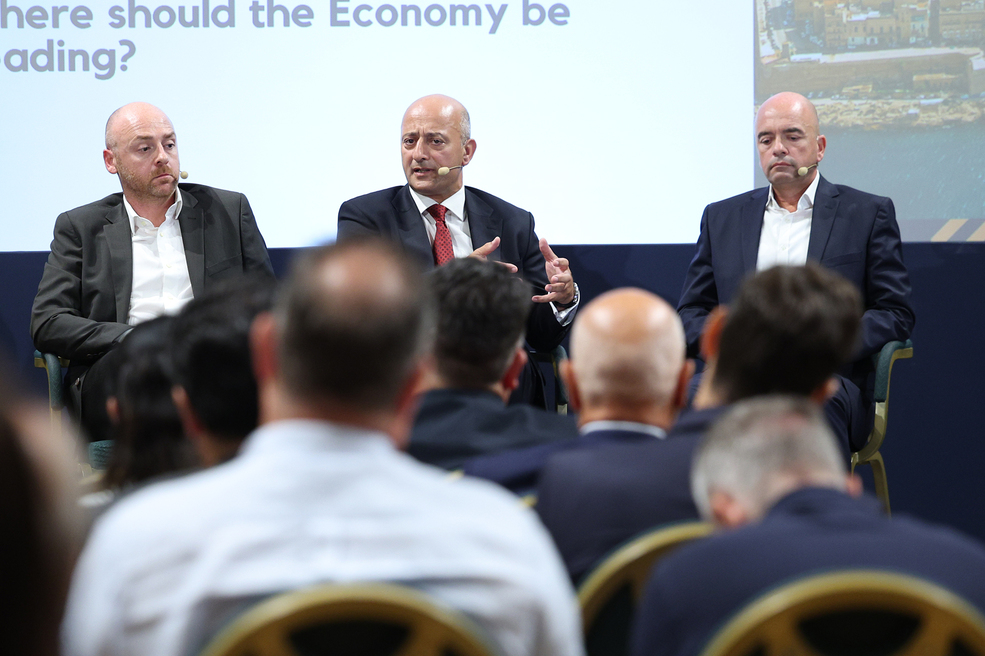
“These cracks are unfortunately present because Malta has adopted a model over the past 10 years that is solely focused on the ‘increasing numbers’ of our economy leading to a myriad of unsustainable practices. The recent call by the Minister of Finance, which is supported by The Malta Chamber, to revisit our economic model is a timely one as it will allow for sustainable growth when looking towards the medium and long term.”
The Malta Chamber council member Silvan Mifsud stressed the urgent need to reverse the current trend of increasing productivity with numbers.
What is driving cost expectations higher among Maltese businesses?
Labour shortages and geopolitical tensions fuel expectations of further cost increases among Maltese businesses
Businesses report slower improvement in operating conditions
The Central Bank’s latest Business Dialogue found that most surveyed firms reported stable or improving conditions
MCA at 25: taking the lead on the European stage
Robert Mifsud explains how a small regulator can still make its voice heard where the big decisions are taken